
Blog

A Liberty Reading List to Finish Up Your Summer

Summer is the perfect time to settle into a slower pace of life and savor a great book, whether it’s an old favorite that you continue to enjoy or an unfamiliar one with new ideas to ponder. And so before the summer ends, I have a challenge for you: I’m going to share five of my favorite books and essays with you, and I’m hoping you’ll read at least one before the beginning of the semester.

Not only are these fun summer reads, they are classic works that were foundational to my intellectual journey as an economist. They will shape the way you think about society while helping you articulate your beliefs about how to effect human prosperity and liberty across the world.

  1. “I, Pencil” by Leonard Read. This essay changed not only my views about the economy but my classroom teaching as well. It is timeless and action-packed. This short essay is written from the perspective of a pencil about how it came into being. There is so much economic thinking in this little story. It turns out that the ordinary pencil, which we take for granted and is seemingly so simple, is actually quite sophisticated: so much so that no one person, not even the CEO of the pencil company, knows how to make it. It is a story of the coordination of millions of strangers who come together to serve each other. If you haven’t read this essay, put it at the top of your list, and if you have, it’s a great one to read again!
  2. We the Living by Ayn Rand. Can you imagine the atrocities of living under Communist rule? This book takes us there, and it’s a great introduction to Rand if you are new to her work. We the Living remains my favorite Rand novel. It’s not a book about economics per say, but about economic systems and how they are so critical to whether we thrive or perish — both personally and socially.
  3. Economics in One Lesson by Henry Hazlitt. I love this short, pithy book written in 1946 by American journalist Henry Hazlitt because of how easy it is to understand — it’s both accessible and timeless. Hazlitt begins by encouraging us to think like economists by seeing the unseen and forcing us to take the long-term perspective so that we fully account for the costs of our actions. I come back to this book every year and am reminded of the power of the economic way of thinking.
  4. Basic Economics by Thomas Sowell. This book does not disappoint and is loaded with stories and evidence to help elucidate the economic way of thinking. Economist and author Thomas Sowell takes us through the market system of prices, property rights, profits and losses, and the mechanisms for increasing human productivity and prosperity. Using stories and evidence throughout, he helps us see the follies of policies that don’t properly incorporate the fundamental economic realities of the world in which we live. I not only love reading this book time and again, but it makes a great holiday gift as well!
  5. “The Law” by Frederic Bastiat. What if the law becomes a method of theft and plunder instead of an instrument of protection? In this compelling essay, Bastiat helps us see the importance of the rule of law as the foundation of a productive society. He tears down the old notions of political theorists who thought that elected officials could disavow themselves of their self-interest and greed and put on the cloak of the people to serve the common good. Bastiat shows us that the law is a force for good only when political leaders must also submit to it. Otherwise, it is a source of plunder. Originally published in 1850, Bastiat foreshadows the rent-seeking culture and special interests who distort lawmaking today.

Summer is a great time to catch up on the classics – and to reread your favorites with a new perspective. These readings will help you get a jump on the school year and engage in articulate discussion about these issues with your professors and peers.

I hope you find this list to be a helpful starting place in understanding economics and liberty. Which books and essays would make your top 5 list? And if you’ve already read the ones I’ve listed here, why do you think others should read them?

Reprinted from Learn Liberty.


Anne Rathbone Bradley

Dr. Bradley is Vice President of Economic Initiatives at the Institute for Faith, Work and Economics.

Read more

Lawrence Reed: Thoughts on a Free Market

On Tuesday, March 28, Dr. Lawrence W. Reed, president of the Foundation for Economic Education (FEE), was invited by Young Americans for Liberty to speak about free trade and protectionism at the Miller Learning Center. Reed began his talk by explaining some fundamental definitions concerning economics and followed by making arguments in favor of free trade over protectionism, tariffs, and quotas.

In the past year, the question of how the United States should approach international trade has become an increasingly divisive topic, especially among conservatives. Many in the Trump camp favor his retreat from trade deals such as the Trans-Pacific Partnership (TPP) and his push to renegotiate the North American Free-Trade-Agreement (NAFTA). Concurrently, Dr. Reed and many other conservatives believe that Trump’s approach is ultimately regressive.

In his talk on the University of Georgia campus, Dr. Reed puts forth the question that was asked centuries ago by famous author and economist Adam Smith: “What makes a nation wealthy?” Reed’s answer is goods and services. He asserts that more and better choices in the market, not full employment, make a nation truly wealthy. “This is the general argument against protectionism,” says Reed. “Tariffs and quotas do not necessarily improve goods and services.”

Dr. Reed presents three arguments in favor of freer markets, confidently noting that he would say the same to a Detroit auto workers union.


THE LIBERTY ARGUMENT

He refers to his first argument as the “liberty argument.” This one is more principled than pragmatic. It declares that all potential traders have the right to voluntary exchange and that tariffs and quotas handed down by the government obstruct this right. This line of thinking is consistent with many libertarian and conservative positions dealing with individual and property rights.


THE PEACE ARGUMENT

The second argument is dubbed the “peace argument.” Here, Reed references French economist Frédéric Bastiat:

“If goods don’t cross borders, armies will.”

Many wars and conflicts in history have been catalyzed by trade disagreements, and Reed contends that diplomacy is a much preferable and more effective alternative. This argument has a basis among other free market thinkers, as well as national security theorists. Austrian economist Ludwig von Mises touted a similar theory to debunk the Marxist-Leninist contention that capitalism was a catalyst for war. Where Lenin saw the spread of worldwide capitalism as the internationalization of the eternal conflict between labor and capital, Mises posited that the interconnectedness of international trade established strong, mutually-beneficial commercial networks between countries that often served as a countervailing force against calls for martial conflict among trading nations. Ironically, though perhaps not surprisingly, a World Socialist website seemed to confirm Mises’ point back in 1999 when it noted: “The pledge to restart the talks [with China] came after a barrage of lobbying pressure by U.S. companies alarmed over the prospect of losing the billions of dollars in trade and investment opportunities.”


THE ULTIMATE ARGUMENT

Dr. Reed appropriately calls his final argument the “ultimate argument,” in which he takes a more economic look at the effects of protectionism. This argument claims that tariffs and quotas harm consumers by giving them inferior products, fewer options, and higher prices. Other trading parties also have the ability to retaliate to protectionist action. Dr. Reed closes this argument by saying, “You cannot close the door to imports without closing the door on exports.” Dr. Reed’s economic point has historical basis in our hemisphere, where “import substitution,” a much more drastic variant of protectionism, took Argentina from one of the top ten wealthiest countries at the dawn of the 20th century to an economic also-ran today. Chile, on the other hand, drastically reduced tariffs and opened its economy to the world, and has become the model economy for the region.


Dr. Reed is clearly wary of President Trump’s rhetorical tendency towards isolationism, and with good reason. It is imperative to maintain a free market for the nation’s continued prosperity. However, various conservatives believe that some countries have taken advantage of the U.S. due to its recent trade policy and that certain tariffs would put a stop to that. Our unwavering commitment to free trade is little solace to an entrepreneur whose intellectual property has been stolen by a state-owned Chinese manufacturer. To combat this, Joanne Butler, a former staffer of the House Means and Ways Committee, offers some enforcement tools that, she believes, can curb the violation of American property and intellectual rights. Butler references a law nicknamed “Special 301” as a means to punish countries that regularly engage in piracy of software, technology, high-end designer goods and other products by imposing tariffs on imported goods.

Former House Foreign Affairs Committee member Dan Burton claims that Trump was absolutely right to pull the U.S. from the TPP and renegotiate NAFTA. Burton opposes massive multilateral trade agreements that, he argues, “ceded our constitutional authority and economic autonomy to international organizations such as the World Trade Organization.” Burton goes on to stress the danger of the shift in manufacturing from domestic to globalized production has made the nation more vulnerable to international crises.

The key word in most conservative arguments for increased protectionism seems to be “fairness.” Dan Burton is not anti-trade, but he emphasizes the fact that trade only benefits the U.S. if it is free and fair. Finding a compromise in this discussion can be tricky, especially when dealing with a new president whose capacity for compromise is, at the very least, unproven. The United States has the world’s largest economy, and should not subject itself to unfair and harmful deals. However, those who argue for and orchestrate this pullback must not forget the principles of the free market and the benefits of free trade that allowed America to become great in the first place.

Republished from Archconuga.com

— J. Thomas Perdue is a sophomore studying journalism. He is a regular contributor to The Arch Conservative

Read more

Why is the number of poor people in Africa increasing when Africa’s economies are growing?

By Laurence Chandy

2015 marks the 20th year since sub-Saharan Africa started on a path of faster economic growth. During that period, growth has averaged 5.2 percent per year. Meanwhile, the number of people on the continent reportedly living under $1.25 a day has continued to creep upwards from 358 million in 1996 to 415 million in 2011—the most recent year for which official estimates exist.

What can explain these divergent trends? 

The most obvious explanation would be if all the benefits of growth were captured by the rich, resulting in ever-increasing inequality within each country. But the data don’t show much evidence of that, thankfully. Distribution trends within African countries are a wash: The distribution is widening in about as many countries as it is narrowing. And in most countries the distribution isn’t changing much at all. It might be that the very richest people—the top 1 percent—are enjoying more than their share of the spoils of growth but that this is missing from the data, as this rarified class tends not to participate in household surveys from which distributions are derived. Yet, in the absence of supplementary data to back this theory up, such as the tax records used to measure top incomes in rich countries, this is mere speculation. Moreover, there is certainly evidence of rising average incomes for the people who do participate in surveys. 

Instead, there are five factors that can account for sub-Saharan Africa’s disappointing poverty numbers.

The first is the region’s rapid population growth of 2.6 percent a year. While African economies are generating more income, that income has to be shared among an ever-increasing number of people. Since the region’s income is growing faster than its population, average incomes are rising and the share of Africans living in extreme poverty is falling—from 60 percent in 1996 to 47 percent in 2011. But the rate at which poverty is falling is less than the rate at which the population is rising, so the number of people living in poverty continues to grow. More generally, sub-Saharan Africa’s record on economic growth looks much less impressive in per capita terms. The World Bank has just released a revised growth forecast for the region in 2015 of 4.0 percent. When you lop off 2.6 for population growth, you’re left with per capita income growth of only 1.4 percent. Compare that with the world average where projected economic growth of 2.9 percent combined with population growth of 1.1 percent results in per capita income growth of 1.8 percent in 2015. So, in per capita terms, Africa’s growth this year is expected to be below the global average.

The second factor is the depth of Africa’s poverty compared to poverty elsewhere. In other words, poor people in Africa start further behind the poverty line. So even if their income is growing, it is rarely enough to push them over the $1.25 threshold. In 2011, the average person living in extreme poverty in Africa lived on 74 cents a day, whereas for the rest of the developing world, it was 98 cents. I’ve written before about the implications of this trend for poverty reduction in Africa here.

The third factor is that even though inequality isn’t rising in most African countries, inequality is already at unusually high levels. Where initial inequality is high, it is to be expected that economic growth delivers less poverty reduction, since the absolute increases in income associated with rising average incomes will be that much smaller for the have-nots versus the haves. Moreover, the degree of inequality that exists on the continent is worse than it looks. The fact that Africa is divided into so many countries masks big differences in income between them. If Africa were a single country, its inequality would look much worse—worse even than Latin America. Since incomes across African people vary so widely, only a fraction of people are likely to cross the poverty line at any one time. That contrasts with India where a concentration of people immediately below the $1.25 mark means that even a small increase in incomes can result in a sudden flood of people moving above the poverty line.

The above three factors explain why you would expect relatively little poverty reduction for a given amount of growth in Africa compared to elsewhere (in technical terms, a lower poverty elasticity). But they can’t explain why the number of poor people in Africa has actually increased since the start of the century. For this we need the two final factors.

The fourth factor is that there is a degree of mismatch between where growth is occurring and where the poor are on the continent. To be sure, the region’s growth acceleration has benefited some of its poorest countries, including Ethiopia, Mozambique, and Rwanda. Yet others such as the Democratic Republic of the Congo and Madagascar have recorded little or no growth over the past 20 years, and the number of poor people in these countries has risen accordingly. So long as a handful of the region’s fragile states struggle to build and sustain economic momentum, the number of poor people in Africa need not fall. 

The fifth and final factor concerns data quality. Poverty estimates are drawn from household surveys which in most African countries are conducted infrequently. Those that do take place often suffer from operational glitches that affect the credibility of the results. Take Nigeria, which accounts for a quarter of the people on the continent living in poverty. There are some well-documented flaws with its most recent national survey of living standards (not to be confused with the issues concerning the country’s national accounts, which were recently rebased). When new data become available, be prepared to discover that Nigeria’s poverty rate is considerably lower and has been falling at a faster pace than previously thought. As a general rule, aggregate poverty numbers for Africa should be handled with care, and small increases or decreases should not be taken too seriously.

The dissonance between Africa’s growth performance and its poverty numbers is a striking phenomenon that demands an explanation. While intuition may lead us to call into question the region’s growth—it only benefits the rich, the quality of growth is deficient, the growth numbers are exaggerated—the above five factors suggest that the answer can instead be found by analyzing Africa’s poverty data more closely.  


Laurence Chandy is a former fellow in the Global Economy and Development program and the Development Assistance and Governance Initiative. His research focused on poverty, fragile states, aid effectiveness, and globalization.

Read more

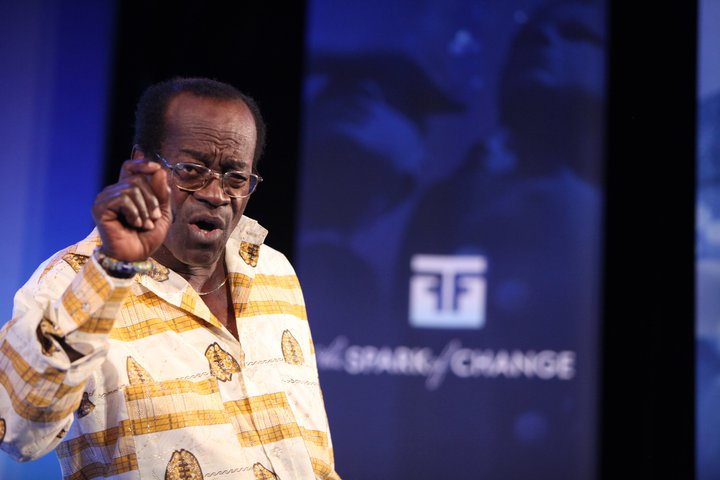
George Ayittey in TED: Dead Aid

Culled from TED Blog

Economist George Ayittey gave a blistering talk at TEDGlobal 2007, laying out his case that not only has Western aid not helped in most African countries — it’s actually hurting.

We asked Ayittey for his thoughts on the new book Dead Aid, which has lately been burning up the talk shows and opinion columns with a message similar to Ayittey’s. Author Dambisa Moyo says that aid is killing the very countries it’s supposed to help. She singles out for criticism the celebrity crusades to “save Africa,” and the skewing view they present of African life.

(You can also download the unedited notes for this interview, including reading list, sources and more.)

Dambisa Moyo’s new book is drawing new attention to the question of aid in Africa, and her thesis is quite like yours, but aimed at a mass-market audience (as she said on Charlie Rose). Do you think it is risky to sensationalize the issue?

I don’t think Dambisa is sensationalizing the issue strong enough. Americans were justifiably outraged when AIG, which received billions in U.S. taxpayer money in bailouts, paid out hefty bonuses to its executives. So where is the outrage when African leaders, who receive U.S. taxpayers’ money in foreign aid, build palaces for themselves while their people wallow in abject poverty?

More important, the presumption that Africans don’t know what is good for them and that Americans or other foreigners know what is best for Africans is extremely offensive. If you want to help American farmers, you ask them what sort of help they need and whether such assistance is working. Why don’t Americans ask Africans what type of aid they need and whether the aid Americans have provided is working? So what is wrong with an African, Dambisa, telling Americans that the foreign aid they are providing isn’t working and it is “Dead Aid”?

It’s clear that Moyo’s thesis draws from your work. How would you respond to those who assert that her views and yours are idealistic and ideological?

Our critics have not been paying attention to the literature on foreign aid. Our views are neither idealistic nor ideological but rather factual. There are three types of foreign aid: humanitarian relief aid, given to victims of natural disasters such as earthquakes, cyclones and floods; military aid; and economic development assistance. We have no qualms with humanitarian aid, and I am sure our critics would agree that military aid to tyrannical regimes in Africa is the least desirable. Much confusion, however, surrounds the third, also known as official development assistance or ODA. Contrary to popular misconceptions, ODA is not “free.” It is essentially a “soft loan,” or loan granted on extremely generous or “concessionary” terms.

The consensus that emerged decades ago was that foreign aid had not been effective in reversing Africa’s economic decline. Dambisa and I are simply restating a fact. And it is not just Africa. That foreign aid has failed to accelerate economic development in the Third World generally was also accepted. In 1999, the United Nations declared that 70 countries — aid recipients all — are now poorer than they were in 1980. An incredible 43 were worse off than in 1970. “Chaos, slaughter, poverty and ruin stalked Third World states, irrespective of how much foreign assistance they received,” wrote the Washington Post, on Nov. 25, 1999. Except for Haiti, all of the 13 foreign aid failures cited — Somalia, Sierra Leone, Liberia, Angola, Chad, Burundi, Rwanda, Uganda, Zaire, Mozambique, Ethiopia and Sudan — were in Sub-Saharan Africa. The African countries that received the most aid — Somalia, Liberia and Zaire — slid into virtual anarchy.

Is there a fundamental place where you diverge from Moyo?

Though we are both on point regarding the failure of aid programs in Africa, we diverge in two respects.

First, Dambisa wants all aid to Africa stopped in five years, which won’t happen. Over the decades, various African civic groups and persons, including myself, have called for a cutoff of aid to Africa. In a report drafted during a five-day forum hosted by UNESCO in Paris in 1995, more than 500 African political and civic leaders urged donor nations to cut off funds to African dictatorships and called for free elections in such nations within two years. If the West could impose sanctions against Libya and South Africa, then Africans could also call for sanctions against their own illegal regimes.

Second, I believe that the foreign aid resources Africa desperately needs to launch into self-sustaining growth and prosperity can be found in Africa itself, not in China as Dambisa believes.

Moyo’s work speaks to that deep urge among Westerners to “do something” — even something that may be deeply unproductive. What’s a more productive way to “do something”?

I think Westerners should resist that urge to “do something,” because the worst type of help one can receive is that which doesn’t solve your problem but compounds it. If Westerners want to help, they must carefully scrutinize and reform current aid policies to make them more effective. Both the Clinton and Bush administrations tried to but failed. Business as usual is no longer an option, which is what both Dambisa and I are against.

Foreign aid should be tied not on promises of African leaders but to the establishment of a few critical institutions:

+ An independent central bank: to assure monetary and economic stability, as well as stanch capital flight out of Africa. If possible, governors of central banks in a region, say West Africa, may be rotated to achieve such independence. The importance of this institution resides in the fact that the ruling bandits not only plunder the central bank but also use its facilities to transfer the loot abroad.

+ An independent judiciary — essential for the rule of law. Supreme Court judges may also be rotated within a region.

+ A free and independent media to ensure free flow of information. The first step is solving a social problem is to expose it, which is the business of news practitioners. The state-controlled or state-owned media would not expose corruption, repression, human rights violations and other crimes against humanity. In fact, it is far easier to plunder and repress people when they are kept in the dark. The media needs to be taken out of the hands of government.

+ An independent Electoral Commission to avoid situations where African despots write electoral rules, appoint a fawning coterie of sycophants as electoral commissioners, throw opposition leaders in jail and hold coconut elections to return themselves to power.

+ An efficient and professional civil service, which will deliver essential social services to the people on the basis of need and not on the basis of ethnicity or political affiliation.

+ The establishment of a neutral and professional armed and security forces.

The establishment of these institutions would empower Africans to instigate change from within. For example, the two great antidotes against corruption are an independent media and an independent judiciary. But only 8 African countries have a free media in 2003, according Freedom House. These institutions cannot be established by the leaders or the ruling elites (conflict of interest); they must be established by civil society. Each professional body has a “code of ethics,” which should be re-written by the members themselves to eschew politics and uphold professionalism. Start with the “military code,” and then the “bar code,” the “civil service code” and so on. These reforms, in turn, will help establish in Africa an environment conductive to investment and economic activity. But the leadership is not interested. Period.

Effective foreign aid programs are those that are “institution-based.” Give Africa the above 6 critical institutions and the people will do the rest of the job.

Africa is poor because it is not free.

George Ayittey responded to emailed questions from TEDAfrica Director Emeka Okafor and TED.com editor Emily McManus. Download the unedited notes from this interview, an 11-page PDF with reading lists, noted sources, and much more. TED intern Mischa Nachtigal prepared this edited blog post.

Read more

Aristotle: Politics

Aristotle was an ancient Greek philosopherand scientist born in the city of StagiraChalkidice, on the northern periphery of Classical Greece. His father, Nicomachus, died when Aristotle was a child, whereafter Proxenus of Atarneus became his guardian.[3] At seventeen or eighteen years of age, he joined Plato’sAcademy in Athens[4] and remained there until the age of thirty-seven (c. 347 BC). His writings cover many subjects – including physicsbiologyzoologymetaphysicslogic, ethics, aestheticspoetry, theater, music, rhetoriclinguistics, politics and government – and constitute the first comprehensive system of Western philosophy. Shortly after Plato died, Aristotle left Athens and, at the request of Philip II of Macedon, tutored Alexander the Great beginning in 343 BC.

Our purpose is to consider what form of political community is best of all for those who are most able to realize their ideal of life. We must therefore examine not only this but other constitutions, both such as actually exist in well-governed states, and any theoretical forms which are held in esteem; that what is good and useful may be brought to light. And let no one suppose that in seeking for something beyond them we are anxious to make a sophistical display at any cost; we only undertake this inquiry because all the constitutions with which we are acquainted are faulty.

We will begin with the natural beginning of the subject. Three alternatives are conceivable: The members of a state must either have (1) all things or (2) nothing in common, or (3) some things in common and some not. That they should have nothing in common is clearly impossible, for the constitution is a community, and must at any rate have a common place- one city will be in one place, and the citizens are those who share in that one city. But should a well ordered state have all things, as far as may be, in common, or some only and not others? For the citizens might conceivably have wives and children and property in common, as Socrates proposes in the Republic of Plato. Which is better, our present condition, or the proposed new order of society.

Part V
Next let us consider what should be our arrangements about property: should the citizens of the perfect state have their possessions in common or not? This question may be discussed separately from the enactments about women and children. Even supposing that the women and children belong to individuals, according to the custom which is at present universal, may there not be an advantage in having and using possessions in common?

Three cases are possible: (1) the soil may be appropriated, but the produce may be thrown for consumption into the common stock; and this is the practice of some nations. Or (2), the soil may be common, and may be cultivated in common, but the produce divided among individuals for their private use; this is a form of common property which is said to exist among certain barbarians. Or (3), the soil and the produce may be alike common.
When the husbandmen are not the owners, the case will be different and easier to deal with; but when they till the ground for themselves the question of ownership will give a world of trouble.

If they do not share equally enjoyments and toils, those who labor much and get little will necessarily complain of those who labor little and receive or consume much. But indeed there is always a difficulty in men living together and having all human relations in common, but especially in their having common property. The partnerships of fellow-travelers are an example to the point; for they generally fall out over everyday matters and quarrel about any trifle which turns up.

These are only some of the disadvantages which attend the community of property; the present arrangement, if improved as it might be by good customs and laws, would be far better, and would have the advantages of both systems. Property should be in a certain sense common, but, as a general rule, private; for, when everyone has a distinct interest, men will not complain of one another, and they will make more progress, because every one will be attending to his own business.”

How immeasurably greater is the pleasure, when a man feels a thing to be his own; for surely the love of self is a feeling implanted by nature and not given in vain, although selfishness is rightly censured; this, however, is not the mere love of self, but the love of self in excess, like the miser’s love of money; for all, or almost all, men love money and other such objects in a measure. And further, there is the greatest pleasure in doing a kindness or service to friends or guests or companions, which can only be rendered when a man has private property. These advantages are lost by excessive unification of the state. ………. No one, when men have all things in common, will any longer set an example of liberality, or do any liberal action; for liberality consists in the use which is made of property.

Read more

James Madison: The Federalist No. 10 (1787)

James Madison was an American statesman and Founding Father who served as the fourth President of the United States from 1809 to 1817. He is hailed as the “Father of the Constitution” for his pivotal role in drafting and promoting the United States Constitution and the Bill of Rights.

To the People of the State of New York:

AMONG the numerous advantages promised by a well constructed Union, none deserves to be more accurately developed than its tendency to break and control the violence of faction. The friend of popular governments never finds himself so much alarmed for their character and fate, as when he contemplates their propensity to this dangerous vice. He will not fail, therefore, to set a due value on any plan which, without violating the principles to which he is attached, provides a proper cure for it.

The instability, injustice, and confusion introduced into the public councils, have, in truth, been the mortal diseases under which popular governments have everywhere perished; as they continue to be the favorite and fruitful topics from which the adversaries to liberty derive their most specious declamations.

The valuable improvements made by the American constitutions on the popular models, both ancient and modern, cannot certainly be too much admired; but it would be an unwarrantable partiality, to contend that they have as effectually obviated the danger on this side, as was wished and expected. Complaints are everywhere heard from our most considerate and virtuous citizens, equally the friends of public and private faith, and of public and personal liberty, that our governments are too unstable, that the public good is disregarded in the conflicts of rival parties, and that measures are too often decided, not according to the rules of justice and the rights of the minor party, but by the superior force of an interested and overbearing majority.

However anxiously we may wish that these complaints had no foundation, the evidence, of known facts will not permit us to deny that they are in some degree true. It will be found, indeed, on a candid review of our situation, that some of the distresses under which we labor have been erroneously charged on the operation of our governments; but it will be found, at the same time, that other causes will not alone account for many of our heaviest misfortunes; and, particularly, for that prevailing and increasing distrust of public engagements, and alarm for private rights, which are echoed from one end of the continent to the other. These must be chiefly, if not wholly, effects of the unsteadiness and injustice with which a factious spirit has tainted our public administrations.

By a faction, I understand a number of citizens, whether amounting to a majority or a minority of the whole, who are united and actuated by some common impulse of passion, or of interest, adversed to the rights of other citizens, or to the permanent and aggregate interests of the community. There are two methods of curing the mischiefs of faction: the one, by removing its causes; the other, by controlling its effects.

There are again two methods of removing the causes of faction: the one, by destroying the liberty which is essential to its existence; the other, by giving to every citizen the same opinions, the same passions, and the same interests. It could never be more truly said than of the first remedy, that it was worse than the disease. Liberty is to faction what air is to fire, an aliment without which it instantly expires. But it could not be less folly to abolish liberty, which is essential to political life, because it nourishes faction, than it would be to wish the annihilation of air, which is essential to animal life, because it imparts to fire its destructive agency.

The second expedient is as impracticable as the first would be unwise. As long as the reason of man continues fallible, and he is at liberty to exercise it, different opinions will be formed. As long as the connection subsists between his reason and his self-love, his opinions and his passions will have a reciprocal influence on each other; and the former will be objects to which the latter will attach themselves.

The diversity in the faculties of men, from which the rights of property originate, is not less an insuperable obstacle to a uniformity of interests. The protection of these faculties is the first object of government. From the protection of different and unequal faculties of acquiring property, the possession of different degrees and kinds of property immediately results; and from the influence of these on the sentiments and views of the respective proprietors, ensues a division of the society into different interests and parties.

Read more

Voltaire Philosophical Letters: On Commerce

Voltaire (real name François-Marie Arouet) (1694 – 1778) was a Frenchphilosopher and writer of the Age of Enlightenment. His intelligence, wit and style made him one of France’s greatest writers and philosophers, despite the controversy he attracted.

He was an outspoken supporter of social reform (including the des, freedom of religion and free trade), despite the strict censorship lawsand harsh penalties of the period, and made use of his satirical works to criticize Catholic dogma and the French institutions of his day. Along with John LockeThomas Hobbes and Jean-Jacques Rousseau, his works and ideas influenced important thinkers of both the American and French Revolutions.

Commerce, which has brought wealth to the citizenry of England, has helped to make them free, and freedom has developed commerce in its turn. By means of it the nation has grown great; it is commerce that little by little has strengthened the naval forces that make the English the masters of the seas. At present they have nearly two hundred warships.%3have nearly two hundred warships.

 Posterity may learn with some surprise that a little island with nothing of its own but a bit of lead, tin, fuller’s earth, and coarse wool, became, by means of its commerce, powerful enough by 1723 to send three fleets at one time to three different ends of the earth – one to guard Gibraltar, conquered and kept by its arms; another to Portobello to dispossess the King of Spain of the treasures of the Indies; and the third to the Baltic Sea to prevent the Northern Powers from fighting.   

When Louis XIV was shaking Italy, and his armies, already in possession of Savoy and Piedmont, were ready to capture Turin, it was up to Prince Eugene to march from the depths of Germany to aid the duke of Savoy. He had no money at all, a thing without which towns are neither taken nor defended. He appealed to some English merchants. In half an hour he had a loan of fifty million; whereupon he delivered Turin, beat the French, and wrote this little note to those who had loaned him that sum: “Gentlemen, I have received your money, and I flatter myself that I have employed it to your satisfaction.”  

All this makes an English merchant justly proud, and allows him boldly to compare himself, not without some reason, to a Roman citizen; moreover, the younger brother of a peer of the realm does not scorn to enter into trade. Lord Townshend, Minister of State, has a brother who is content to be a merchant in the City. When Lord Oxford was governing England, his younger brother was a factor at Aleppo; he did not want to return home, and died there. 

This custom, which unfortunately is beginning to go out of fashion, appears monstrous to Germans infatuated with their quarterings. They are unable to imagine how the son of a peer of England could be only a rich and powerful bourgeois, whereas Germany is all Prince: there have been at one time as many as thirty Highnesses of the same name, with nothing to show for it but their pride and a coat of arms.   

In France anybody who wants to can be a marquis; and whoever arrives in Paris from the remotest part of some province with money to spend and an ac or an ille at the end of his name, may indulge in such phrases as “a man of my sort,” “a man of my rank and quality,” and with sovereign eye look down upon a wholesaler. The merchant himself so often hears his profession spoken of disdainfully that he is fool enough to blush.

Yet I don’t know which is the more useful to a state, a wellpowdered lord who knows precisely what time the king gets up in the morning and what time he goes to bed, and who gives himself airs of grandeur while playing the role of slave in a minister’s antechamber, or a great merchant who enriches his country, send order from his office to Surat and to Cairo, and contributes to the wellbeing of the world.  

Read more

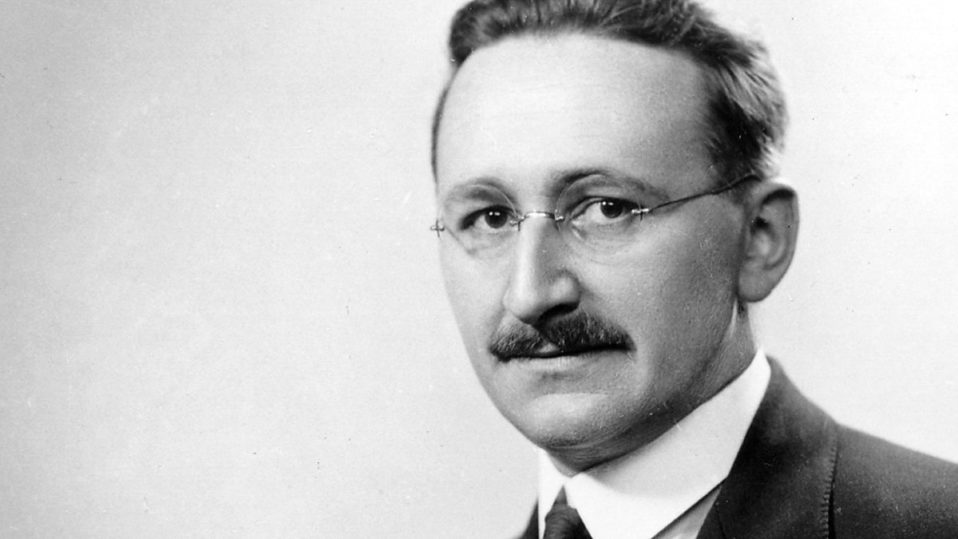
Friedrich Hayek: The Use of Knowledge in Society (II)

It will at once be evident that on this point the position will be different with respect to different kinds of knowledge; and the answer to our question will therefore largely turn on the relative importance of the different kinds of knowledge; those more likely to be at the disposal of particular individuals and those which we should with greater confidence expect to find in the possession of an authority made up of suitably chosen experts.

 If it is today so widely assumed that the latter will be in a better position, this is because one kind of knowledge, namely, scientific knowledge, occupies now so prominent a place in public imagination that we tend to forget that it is not the only kind that is relevant. It may be admitted that, as far as scientific knowledge is concerned, a body of suitably chosen experts may be in the best position to command all the best knowledge available—though this is of course merely shifting the difficulty to the problem of selecting the experts. What I wish to point out is that, even assuming that this problem can be readily solved, it is only a small part of the wider problem.

Today it is almost heresy to suggest that scientific knowledge is not the sum of all knowledge. But a little reflection will show that there is beyond question a body of very important but unorganized knowledge which cannot possibly be called scientific in the sense of knowledge of general rules: the knowledge of the particular circumstances of time and place. It is with respect to this that practically every individual has some advantage over all others because he possesses unique information of which beneficial use might be made, but of which use can be made only if the decisions depending on it are left to him or are made with his active cooperation.

We need to remember only how much we have to learn in any occupation after we have completed our theoretical training, how big a part of our working life we spend learning particular jobs, and how valuable an asset in all walks of life is knowledge of people, of local conditions, and of special circumstances. To know of and put to use a machine not fully employed, or somebody’s skill which could be better utilized, or to be aware of a surplus stock which can be drawn upon during an interruption of supplies, is socially quite as useful as the knowledge of better alternative techniques.

And the shipper who earns his living from using otherwise empty or half-filled journeys of tramp-steamers, or the estate agent whose whole knowledge is almost exclusively one of temporary opportunities, or the arbitrageur who gains from local differences of commodity prices, are all performing eminently useful functions based on special knowledge of circumstances of the fleeting moment not known to others.

It is a curious fact that this sort of knowledge should today be generally regarded with a kind of contempt and that anyone who by such knowledge gains an advantage over somebody better equipped with theoretical or technical knowledge is thought to have acted almost disreputably. To gain an advantage from better knowledge of facilities of communication or transport is sometimes regarded as almost dishonest, although it is quite as important that society make use of the best opportunities in this respect as in using the latest scientific discoveries.

This prejudice has in a considerable measure affected the attitude toward commerce in general compared with that toward production. Even economists who regard themselves as definitely immune to the crude materialist fallacies of the past constantly commit the same mistake where activities directed toward the acquisition of such practical knowledge are concerned—apparently because in their scheme of things all such knowledge is supposed to be “given.” The common idea now seems to be that all such knowledge should as a matter of course be readily at the command of everybody, and the reproach of irrationality leveled against the existing economic order is frequently based on the fact that it is not so available. This view disregards the fact that the method by which such knowledge can be made as widely available as possible is precisely the problem to which we have to find an answer.

If it is fashionable today to minimize the importance of the knowledge of the particular circumstances of time and place, this is closely connected with the smaller importance which is now attached to change as such. Indeed, there are few points on which the assumptions made (usually only implicitly) by the “planners” differ from those of their opponents as much as with regard to the significance and frequency of changes which will make substantial alterations of production plans necessary. Of course, if detailed economic plans could be laid down for fairly long periods in advance and then closely adhered to, so that no further economic decisions of importance would be required, the task of drawing up a comprehensive plan governing all economic activity would be much less formidable.

It is, perhaps, worth stressing that economic problems arise always and only in consequence of change. So long as things continue as before, or at least as they were expected to, there arise no new problems requiring a decision, no need to form a new plan. The belief that changes, or at least day-to-day adjustments, have become less important in modern times implies the contention that economic problems also have become less important. This belief in the decreasing importance of change is, for that reason, usually held by the same people who argue that the importance of economic considerations has been driven into the background by the growing importance of technological knowledge.

Is it true that, with the elaborate apparatus of modern production, economic decisions are required only at long intervals, as when a new factory is to be erected or a new process to be introduced? Is it true that, once a plant has been built, the rest is all more or less mechanical, determined by the character of the plant, and leaving little to be changed in adapting to the ever-changing circumstances of the moment?

The fairly widespread belief in the affirmative is not, as far as I can ascertain, borne out by the practical experience of the businessman. In a competitive industry at any rate—and such an industry alone can serve as a test—the task of keeping cost from rising requires constant struggle, absorbing a great part of the energy of the manager. How easy it is for an inefficient manager to dissipate the differentials on which profitability rests, and that it is possible, with the same technical facilities, to produce with a great variety of costs, are among the commonplaces of business experience which do not seem to be equally familiar in the study of the economist. The very strength of the desire, constantly voiced by producers and engineers, to be allowed to proceed untrammeled by considerations of money costs, is eloquent testimony to the extent to which these factors enter into their daily work.

One reason why economists are increasingly apt to forget about the constant small changes which make up the whole economic picture is probably their growing preoccupation with statistical aggregates, which show a very much greater stability than the movements of the detail. The comparative stability of the aggregates cannot, however, be accounted for—as the statisticians occasionally seem to be inclined to do—by the “law of large numbers” or the mutual compensation of random changes. The number of elements with which we have to deal is not large enough for such accidental forces to produce stability.

The continuous flow of goods and services is maintained by constant deliberate adjustments, by new dispositions made every day in the light of circumstances not known the day before, by B stepping in at once when A fails to deliver. Even the large and highly mechanized plant keeps going largely because of an environment upon which it can draw for all sorts of unexpected needs; tiles for its roof, stationery for its forms, and all the thousand and one kinds of equipment in which it cannot be self-contained and which the plans for the operation of the plant require to be readily available in the market.

This is, perhaps, also the point where I should briefly mention the fact that the sort of knowledge with which I have been concerned is knowledge of the kind which by its nature cannot enter into statistics and therefore cannot be conveyed to any central authority in statistical form. The statistics which such a central authority would have to use would have to be arrived at precisely by abstracting from minor differences between the things, by lumping together, as resources of one kind, items which differ as regards location, quality, and other particulars, in a way which may be very significant for the specific decision. It follows from this that central planning based on statistical information by its nature cannot take direct account of these circumstances of time and place and that the central planner will have to find some way or other in which the decisions depending on them can be left to the “man on the spot.”

Read more

John Locke (1824): Two Treatises of Government (1)

John Locke (1632-1704) was an English philosopher who is considered to be one of the first philosophers of the Enlightenment and the father of classical liberalism. In his major work Two Treatises of Government Locke rejects the idea of the divine right of kings, supports the idea of natural rights (especially of property), and argues for a limited constitutional government which would protect individual rights.

Though the earth, and all inferiour creatures, be common to all men, yet every man has a property in his own person: this nobody has any right to but himself. The labour of his body, and the work of his hands, we may say, are properly his. Whatsoever then he removes out of the state that nature hath provided, and left it in, he hath mixed his labour with, and joined to it something that is his own, and thereby makes it his property. It being by him removed from the common state nature hath placed it in, it hath by this labour something annexed to it, that excludes the common right of other men. For this labour being the unquestionable property of the labourer, no man but he can have a right to what that is once joined to, at least where there is enough, and as good, left in common for others.

He that is nourished by the acorns he picked up under an oak, or the apples he gathered from the trees in the wood, has certainly appropriated them to himself. Nobody can deny but the nourishment is his. I ask then, when did they begin to be his? when he digested? or when he eat? or when he boiled? or when he brought them home? or when he picked them up? and it is plain, if the first gathering made them not his, nothing else could. That labour put a distinction between them and common: that added something to them more than nature, the common mother of all, had done; and so they became his private right. And will any one say he had no right to those acorns or apples he thus appropriated, because he had not the consent of all mankind to make them his? was it a robbery thus to assume to himself what belonged to all in common? If such a consent as that was necessary, man had starved, notwithstanding the plenty God had given him.

We see in  commons, which remain so by compact, that it is the taking any part of what is common, and removing it out of the state nature leaves it in, which begins the property; without which the common is of no use. And the taking of this or that part does not depend on the express consent of all the commoners. Thus the grass my horse has bit; the turfs my servant has cut; and the ore I have digged in any place, where I have a right to them in common with others; become my property, without the assignation or consent of any body. The labour that was mine, removing them out of that common state they were in, hath fixed my property in them.

But the chief matter of property being now not the fruits of the earth, and the beasts that subsist on it, but the earth itself; as that which takes in, and carries with it all the rest; I think it is plain, that property in that too is acquired as the former. As much land as a man tills, plants, improves, cultivates, and can use the product of, so much is his property. He by his labour does, as it were, enclose it from the common. Nor will it invalidate his right, to say every body else has an equal title to it, and therefore he cannot appropriate, he cannot enclose, without the consent of all his fellow commoners, all mankind. God, when he gave the world in common to all mankind, commanded man also to labour, and the penury of his condition required it of him. God and his reason commanded him to subdue the earth, i. e. improve it for the benefit of life, and therein lay out something upon it that was his own, his labour. He that, in obedience to this command of God, subdued, tilled, and sowed any part of it, thereby annexed to it something that was his property, which another had no title to, nor could without injury take from him.

Read more

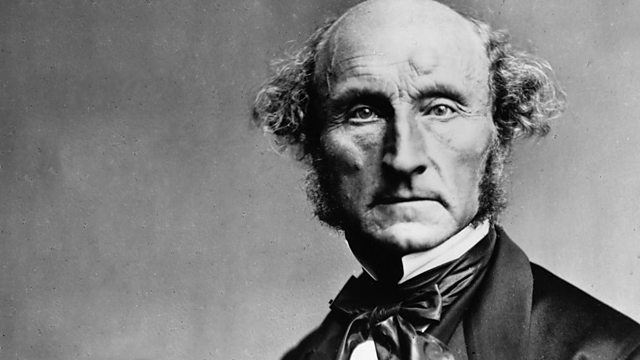
John Stuart Mill: On Liberty (1869)

John Stuart Mill (1806-1873) was the precocious child of the Philosophical Radical and Benthamite James Mill. Taught Greek, Latin, and political economy at an early age, He spent his youth in the company of the Philosophic Radicals, Benthamites and utilitarians who gathered around his father James. J.S. Mill went on to become a journalist, Member of Parliament, and philosopher and is regarded as one of the most significant English classical liberals of the 19th century.

The object of this Essay is to assert one very simple principle, as entitled to govern absolutely the dealings of society with the individual in the way of compulsion and control, whether the means used be physical force in the form of legal penalties, or the moral coercion of public opinion. That principle is, that the sole end for which mankind are warranted, individually or collectively, in interfering with the liberty of action of any of their number, is self-protection. That the only purpose for which power can be rightfully exercised over any member of a civilized community, against his will, is to prevent harm to others.

His own good, either physical or moral, is not a sufficient warrant. He cannot rightfully be compelled to do or forbear because it will be better for him to do so, because it will make him happier, because, in the opinions of others, to do so would be wise, or even right These are good reasons for remonstrating with him, or reasoning with him, or persuading him or entreating him, but not for compelling him, or visiting him with any evil, in case he do other wise.

To justify that, the conduct from which it is desired to deter him must be calculated to produce evil to some one else. The only part of the conduct of any one, for which he is amenable to society, is that which concerns others. In the part which merely concerns himself, his independence is, of right, absolute. Over himself, over his own body and mind, the individual is sovereign… The objections to government interference, when it is not such as to involve infringement of liberty, may be of three kinds.

The first is, when the thing to be done is likely to be better done by individuals than by the government. Speaking generally, there is no one so fit to conduct any business, or to determine how or by whom it shall be conducted, as those who are personally interested in it. This principle condemns the interferences, once so common, of the legislature, or the officers of government, with the ordinary processes of industry. But this part of the subject has been sufficiently enlarged upon by political economists, and is not particularly related to the principles of this Essay.
The second objection is more nearly allied to our subject. In many cases, though individuals may not do the particular thing so well, on the average, as the officers of government, it is nevertheless desirable that it should be done by them, rather than by the government, as a means to their own mental education — a mode of strengthening their active faculties, exercising their judgment, and giving them a familiar knowledge of the subjects with which they are thus left to deal.

This is a principal, though not the sole, recommendation of jury trial (incases not political); of free and popular local and municipal institutions; of the conduct of industrial and philanthropic enterprises by voluntary associations. These are not questions of liberty, and are connected with that subject only by remote tendencies; but they are questions of development. It belongs to a different occasion from the present to dwell on these things as parts of national education; as being, in truth, the peculiar training of a citizen, the practical part of the political education of a free people, taking them out of the narrow circle of personal and family selfishness, and accustoming them to the comprehension of joint interests, the management of joint concerns — habituating them to act from public or semi-public motives, and guide their conduct by aims which unite instead of isolating them from one another.

Without these habitsvand powers, a free constitution can neither be worked nor preserved, as is exemplified by the too often transitory nature of political freedom in countries where it does not rest upon a sufficient basis of local liberties. The management of purely local business by the localities, and of the great enterprises of industry by the union of those who voluntarily supply the pecuniary means, is further recommended by all the advantages which have been set forth in this Essay as belonging to individuality of development, and diversity of modes of action. Government operations tend to be everywhere alike. With individuals and voluntary associations, on the contrary, there are varied experiments, and endless diversity of experience. What the State can usefully do, is to make itself a central depository, and active circulator and diffuser, of the experience resulting from many trials. Its business is to enable each experimentalist to benefit by the experiments of others, instead of tolerating no experiments but its own. 

The third, and most cogent reason for restricting the interference of government, is the great evil of adding unnecessarily to its power. Every function superadded to those already exercised by the government, causes its influence over hopes and fears to be more widely diffused, and converts, more and more, the active and ambitious part of the public into hangers-on of the government, or of some party which aims at becoming the government. If the roads, the railways, the banks, the insurance offices, the great joint-stock companies, the universities, and the public charities, were all of them branches of the government; if, in addition, the municipal corporations and local boards, with all that now devolves on them, became departments of the central administration; if the employés of all these different enterprises were appointed and paid by the government, and looked to the government for every rise in life; not all the freedom of the press and popular constitution of the legislature would make this or any other country free otherwise than in name.

Read more