Uncategorized

Скачать клиент вавада


Скачать клиент вавада для комфортной игры


Скачать клиент вавада

Откройте для себя невероятный мир азартных игр с клиентом Вавада! Приложение обеспечивает стабильную работу и высокую скорость загрузки, что позволяет вам наслаждаться любимыми играми без задержек и зависаний.

Скачав клиент Вавада, вы получите доступ ко множеству эксклюзивных игр, бонусов и акций, которые недоступны в веб-версии.

Не упустите шанс испытать все преимущества, которые предлагает профессиональный игровой клиент! Установите Вавада и погрузитесь в захватывающий игровой процесс, где бы вы ни находились.

Как выбрать правильную версию клиента вавада для вашего устройства

При выборе клиентской версии вавада важно учитывать особенности вашего устройства. Прежде всего, определите операционную систему: Windows, Mac, iOS или Android. Для пользователей Windows доступна версия с полным функционалом, которая обеспечивает максимальную производительность. Пользователи Mac могут скачать специальную оптимизированную версию, обеспечивающую стабильную работу на этом оборудовании.

Если вы играете на мобильном устройстве, проверьте совместимость приложения с вашей версией операционной системы. Вавада предлагает версии для обеих популярных платформ – iOS и Android. Убедитесь, что ваш телефон обновлен до последней версии ПО для беспроблемной установки.

Также обратите внимание на минимальные системные требования клиента. Для комфортной игры стоит выбирать версию, которая обеспечивает плавность и стабильность работы. Запускайте игру только на устройствах, которые соответствуют этим требованиям.

Наконец, ознакомьтесь с отзывами пользователей о различных версиях клиента. Это поможет вам сделать осознанный выбор и избежать возможных проблем. Помните, что только качественный клиент обеспечит вам лучший игровой опыт на казино vavada.

Пошаговая инструкция по установке клиента вавада на ПК и мобильные устройства

Чтобы установить клиент вавада на ваш ПК, следуйте следующим шагам:

1. Перейдите на официальный сайт вавада. Найдите раздел загрузок.

2. Выберите версию клиента для операционной системы вашего ПК: Windows или macOS.

3. Нажмите кнопку «Скачать». Файл автоматически начнет загружаться на ваше устройство.

4. После завершения загрузки откройте папку с загруженным файлом и дважды щелкните по нему для начала установки.

5. Следуйте инструкциям установщика. При необходимости согласитесь с условиями соглашения и выберите папку для установки.

6. Дождитесь завершения установки. После этого запустите клиент вавада, зайдите в систему и начните играть.

Теперь перейдем к установке клиента вавада на мобильные устройства:

1. Откройте магазин приложений на вашем мобильном устройстве (App Store для iOS или Google Play для Android).

2. В строке поиска введите «вавада» и найдите нужное приложение.

3. Нажмите кнопку «Скачать» или «Установить». Дождитесь завершения загрузки и установки приложения.

4. После установки откройте приложение и выполните вход, используя свой логин и пароль.

5. Теперь вы можете наслаждаться комфортной игрой прямо на своем мобильном устройстве.

Настройки клиента вавада для оптимизации игрового процесса и удобства

Чтобы добиться максимального комфорта и эффективности в игровом процессе, клиент вавада предлагает множество настроек, которые помогут адаптировать интерфейс и функциональность под личные предпочтения пользователя.

1. Настройка графики. В разделе настроек графики можно выбрать оптимальное разрешение и уровень детализации. Уменьшение количества эффектов и теней может значительно повысить производительность, особенно на менее мощных устройствах.

2. Регулировка звука. Убедитесь, что уровни звука настроены по вашему усмотрению. Вы можете изменить громкость музыки, эффектов и озвучки. Это позволит вам сосредоточиться на игре, не отвлекаясь на лишние звуковые эффекты.

3. Удобства управления. Настройте клавиатурные комбинации и управление мышью. Важно, чтобы используемые вами кнопки были комфортны и интуитивно понятны. Вы также можете сохранить несколько пресетов для разных игровых стилей.

4. Оповещения и уведомления. Установите параметры уведомлений, чтобы получать только важную информацию, и избегать лишних отвлечений во время процесса игры. Настройте уведомления о событиях в игре, которые вам действительно интересны.

5. Интеграция с социальными сетями. Настройте интеграцию клиента с вашими аккаунтами в социальных сетях. Это позволит легко делиться успехами с друзьями и получать обновления о событиях в игре.

6. Уменьшение задержки. В разделе сетевых настроек проверьте стабильность подключения и выберите сервер, обеспечивающий минимальную задержку. Более быстрое и стабильное соединение повысит вашу реакцию и эффективность в игре.

Эти простые настройки помогут сделать вашу игру более комфортной и эффективной. Оптимизация всех аспектов использования клиента вавада обеспечит максимальное удовольствие от игрового процесса.


Read more

Як працює Космолот ліцензія: сплата ліцензійних зборів та податків

Ліцензування українських казино стало фундаментальною зміною, яка вплинула на фінансові відносини з державою. Легалізація, що відбулася в Україні, перетворила діяльність компанії з тіньової на прозору, вимагаючи не лише дотримання регуляторних вимог, але й значної сплати податків та ліцензійних зборів. Хоч для компаній ліцензія супроводжується великим фінансовим навантаженням, яке є основою функціонування легального гемблінг-бізнесу. Як приклад, Космолот ліцензія також зобов’язує бренд сплачувати значні податки. Також варто зазначити, що за останні роки великий бізнес охочіше виконує свої податкові зобов’язання.

Ліцензійний збір та податкове навантаження

Ліцензійний збір є першим, і найбільш значним одноразовим фінансовим зобов’язанням. Цей платіж, розмір якого чітко визначений Законом України “Про державне регулювання діяльності щодо організації та проведення азартних ігор”, є платою за право ведення бізнесу на легальних засадах. Для ліцензії на провадження діяльності онлайн-казино, сума збору є фіксованою і повинна бути сплачена до моменту фактичної видачі документа. 

На відміну від ліцензійного збору, податкові зобов’язання є регулярними та залежать безпосередньо від операційної діяльності та фінансових результатів. Основне навантаження – це податок на прибуток та податок на дохід. Ліцензійний статус вимагає ведення детальної звітності

Космолот, як податковий агент, зобов’язаний утримувати та перераховувати до бюджету податок на доходи фізичних осіб та військовий збір з суми виплаченого виграшу. 

Переваги для держави та суспільства

Виведення азартних ігор з тіні перетворило галузь на важливого економічного гравця. Немає жодної сторони яка б була не задоволена цими змінами. Далі розглянемо більш детально конкретні переваги.

  • Наповнення бюджету України. Головний плюс — це ліцензійні збори (багатомільйонні платежі) та регулярні податки. Ці кошти спрямовуються в тому числі на соціальні та оборонні потреби країни.
  • Економічна прозорість. Космолот ліцензія зобов’язує компанію вести білу фінансову звітність та використовувати лише сертифіковане обладнання. 
  • Створення робочих місць. Легальні оператори інвестують у розвиток IT-інфраструктури, та наймають гарних айті-фахівців, маркетологів, та інших спеціалістів. 
  • Принцип відповідальної гри: Оператор зобов’язаний виконувати вимоги щодо відповідальної гри. Це включає інструменти самообмеження та заборону гри осіб що не досяг 21 року.

Сукупність вище описаних фактів доводить, що ліцензовані азартні ігри – це не лише спосіб відпочити, а й великий шматок економіки. За роки роботи, був розроблений ефективний державний контроль за фінансовими потоками. Впроваджені всі необхідні механізми для упередження ігрової залежності.

Read more

Royal xmas


Создайте волшебные моменты с Royal Xmas играя


Создайте волшебные моменты с Royal xmas играя

Погрузитесь в атмосферу праздника с нашим новым продуктом – Royal Xmas. Это уникальная игра, которая подарит радость и вдохновение вам и вашей семье. Наполните праздничные вечера смехом и развлечениями, участвуя в захватывающих заданиях и конкурсах, которые объединят всех участников.

С Royal Xmas каждый сможет стать частью волшебных традиций: создавайте собственные истории, делитесь впечатлениями и наслаждайтесь мгновениями, которые останутся в памяти навсегда. Не упустите шанс превратить обычные дни в незабываемые праздники!

Как выбрать идеальную игровую сцену для праздника

При выборе игровой сцены для праздничного мероприятия важно учитывать несколько ключевых факторов, чтобы максимально разнообразить досуг участников. Во-первых, определите тематику праздника. Сцена должна соответствовать общей концепции, будь то Новый год, день рождения или корпоратив. Убедитесь, что элементы оформления гармонично вписываются в выбранный стиль.

Во-вторых, учитывайте возрастную категорию участников. Для детей подойдут яркие и красочные сценические декорации с персонажами из мультфильмов. Для взрослой аудитории можно использовать более сдержанные и элегантные оформления, которые создадут атмосферу уюта и праздника.

Третий момент – пространство. Оцените площадку, где будет проходить мероприятие. Убедитесь, что игровая сцена имеет достаточно места для маневров участников и зрителей. Важно, чтобы все присутствующие могли видеть происходящее и ощущали себя комфортно. Если праздник планируется на открытом воздухе, учтите условия погоды и возможные препятствия, такие как деревья или здания.

Также не забывайте о репетиции. Попробуйте заранее протестировать все элементы игры на сцене, чтобы выявить возможные проблемы и убедиться в правильности работы оборудования. Это поможет создать бесподобный опыт для участников и избежать неожиданностей во время праздника.

Не пренебрегайте дополнительными эффектами, такими как музыка, освещение и специальные эффекты. Они могут кардинально изменить восприятие игровой сцены. Хорошо подобранное музыкальное сопровождение создаст необходимую атмосферу, а атмосфера уюта и волшебства привлечет участников к активным действиям.

Следуя этим рекомендациям, вы сможете создать идеальную игровую сцену для праздника, которая оставит незабываемые впечатления и будет способствовать созданию волшебных моментов. Не бойтесь экспериментировать и показывать свою креативность!

Топ-5 уникальных игровых механик для незабываемых впечатлений

1. Интерактивные квесты: Погружение в увлекательные приключения с уникальными задачами и сюжетами, которые адаптируются к действиям игрока. Эти квесты позволяют вам стать частью истории и влиять на её развитие, создавая неповторимые моменты и эмоции.

2. Коллаборативные игры: Возможность объединиться с друзьями или другими игроками для достижения общей цели. Работайте вместе, чтобы решить головоломки, выполнить миссии и поделиться успешными моментами. Это укрепляет связи и делает игровой процесс более социализированным.

3. Уникальные персонажи: Множество харизматичных и проработанных персонажей, каждый из которых имеет свои особенности и способности. Игроки могут подбирать персонажей по своему стилю игры, что добавляет глубину и делает каждое игровое взаимодействие захватывающим.

4. Разнообразие миров: Путешествие в разные, уникальные миры с особыми условиями и визуальным стилем. Каждый мир предлагает новые испытания, локации и сокровища, обеспечивая игрокам возможность открывать что-то новое при каждом входе в игру.

5. Мобильный опыт: С Royal Xmas вы можете наслаждаться игрой в любом месте и в любое время благодаря удобной royal xmas мобильной версии. Это позволяет сохранять ваши достижения и продолжать приключение, где бы вы ни находились, превращая каждое мгновение в магическое.

Советы по организации совместных игр для друзей и семьи

Определите подходящее время для игр. Убедитесь, что все участники могут собраться в удобное время, чтобы избежать конфликтов и сделать встречу более приятной.

Выберите игры, соответствующие интересам всех участников. Обсудите, какие настольные или карточные игры нравятся каждому, чтобы учесть предпочтения и создать комфортную атмосферу.

Подготовьте игровое пространство. Освободите стол и кресла для удобства участников, обеспечьте достаточное освещение и комфортную температуру в помещении.

Заранее заготовьте закуски и напитки. Угощения сделают вечер более уютным. Разнообразьте меню, чтобы каждому было приятно попробовать что-то новое.

Установите правила игры заранее. Объясните правила всем участникам, чтобы избежать недоразумений в процессе и сделать игру более интересной.

Используйте музыку для создания атмосферы. Подходящий музыкальный фон поможет расслабиться и улучшить настроение, создавая непринужденную обстановку.

Обеспечьте призы для победителей. Забавные награды поднимут азарт и добавят соревновательный дух в ваши вечера.

Не забывайте об эмоциях. Главное – это общение и хорошее времяпрепровождение, поэтому старайтесь поддерживать позитивный настрой независимо от результатов игр.

Записывайте незабываемые моменты. Фотографируйте особые моменты во время игр, чтобы сохранить воспоминания и поделиться ими с участниками позже.

И не забывайте о том, чтобы веселиться! Игры созданы для радости, поэтому позволяйте себе отдыхать и наслаждаться обществом друг друга.


Read more

Михаил Зборовский: будущее Cosmobet и всей индустрии к 2030 году

Онлайн-казино как явление стремительно меняется под влиянием технологий, регулирования и запросов игроков. Михаил Зборовский, бенефициар Cosmobet, считает, что в ближайшие годы онлайн-жизнь будет только расти и развиваться.

Чего конкретно стоит ожидать от индустрии?

Изменения сегодня – меняют будущее завтрашнего дня. Давайте разберемся.

  • Полноценное внедрение криптомонет: Существует множество альтернатив фиатным деньгам. Однако многие это игнорируют. В мире онлайн-досуга должны быть и виртуальные деньги.
  • Развитие виртуальной реальности: К 2030 году цифровые казино станут реальностью, позволяя игрокам перемещаться по цифровым игорным залам и взаимодействовать с другими пользователями.

Сравнение гемблинга сегодня и в 2030 году

Технический прогресс удивляет нас каждый день, то, что было невозможным несколько лет назад, уже стало реальностью. Индустрия азартных развлечений не должна стоять в стороне от прогресса. Только систематические инвестиции и привлечение новых умов приведут нас к чему-то новому.

Фактор 2025 год 2030 год
Безопасность Защита данных, 2FA Полный контроль через AI, биометрическая аутентификация
Платежи Карты, электронные кошельки Криптовалюты, мгновенные блокчейн-транзакции
Игровой опыт Онлайн-казино с живыми дилерами Полноценные VR/AR-игровые залы

Пытаясь предсказать что-то, мы создаём это уже сегодня. Не стоит полагаться, что кто-то сделает работу за нас. Множество операторов будут ориентироваться на прорывные решения и адаптироваться под них. Соответственно, только “первопроходцы” новых технологий смогут устоять в ужесточённой конкуренции.

Read more

Михаил Зборовский: грядущие изменения в индустрии развлечений

Современные технологии стремительно меняют сферу развлечений, делая ее более интерактивной, персонализированной и безопасной. Михаил Зборовский считает, в ближайшие годы нас ждут глобальные изменения в индустрии развлечений, и ключевую роль в этом сыграют искусственный интеллект.

Технологии, что определят будущее индустрии развлечений

Гемблинг – одна из самых быстрорастущих отраслей, в ближайшие 5-10 лет нас ждут следующие изменения:

  • Рост мобильного гемблинга. Более 70% ставок уже совершаются через смартфоны, и эта доля продолжит расти.
  • Интеграция AI в онлайн-казино. Системы будут автоматически анализировать поведение игроков и предотвращать мошенничество.
  • Создание метавселенных для гемблинга. Пользователи смогут взаимодействовать в виртуальной среде, участвовать в турнирах и соревнованиях.
  • Развитие ответственного гемблинга. Технологии помогут предупреждать игровую зависимость и защищать пользователей.

Будущее – уже наступило

Индустрия развлечений – это слияние технологий и максимальная персонализация. Визионер Михаил Зборовский утверждает: 

– “Уже в ближайшие годы нас ждет более безопасный, инновационный и захватывающий формат развлечений, который изменит привычный мир гемблинга, видеоигр и онлайн-казино.”

Read more

A Libertarian Thought on Individualism and African Morality

By: Ibrahim B Anoba

The individual in African philosophy mostly existed as a reflection of his community. He was seen as a product of his tribe less than he was an independent being. His birth and death were to satisfy the wishes of the gods on earth. Like many tribes in Africa, several cultures according to history put the individual as a unique creation with the purpose of happiness and self-realization.

In traditional Africa, it was best that the individual remained a social being. This view of man as a societal element primarily applied to his identification as a member of a united community in pursuant of collective prosperity with regards for his individual happiness. However, the expansion of groups during territorial wars and migration, increased community populations while conflict of interests among groups and individuals led to the gradual disassociation from the usual collective interest.

Hence, the idea of the individual as a communal element decreased as societies became bigger. During the hunting and gathering when community populations were very small, it was easy to commit everyone to a unified goal even as few members harbored personal interests. However, as people integrated and population augmented, the individual began to isolate itself because of the geometric increase in interests of new members against the collective. In some cases, people left their villages in pursuant of personal goals. Even, members of ruling families deserted their clans due to conflict of interest with their kin only to establish new territories later, and the conflict of interest continued to repeat itself prompting the definite decrease of collectivism.

Although, some African societies like the Xhosa and the Zulu emphasized the ideals of mutuality and community before the individual, there still existed self-interest. Classical liberals argued for a system that observes the society in light of its distinct members, for a society has no existence beyond the individuals that comprises it, while it is in itself a composition of different interests (Butler 2013). And the socio-economic consciousness of the society is the summary of individual consciousness. Friedrich Hayek puts it clear when he explained that the “associations within civil society exists for specific end while the civil society has no purpose; it is the undersigned, spontaneous emerging result of all those purposive associations” (Hayek 1988).

Despite this similarity in purpose, contentions still exist between the two folds on grounds of economic and social morality among Africans. On the economic fold, classical liberals outrightly argued for a free market economy chiefly run by individual choices and price, and this was a position common in most economies in traditional Africa. Markets were open and less regulated. In centralized communities such as the Buganda (Uganda), Hausa/Fulani (Nigeria) Akan (Ghana) and the Zulu (South Africa), there were large and open markets such that it attracted participation from communities hundreds of miles away. Trade ensued among communities in their specialized industries with limited or no restrictions, and one can safely deduce elements of David Ricardo‟s Comparative Advantage Theory – a cardinal in classical liberalism – existed in these communities even before it was theoretically developed in Europe.

One similar end to both African humanism and classical liberalism is in their emphasis on peace, progress and respect for human dignity through moral justifications. Though, the interpretation of these morals and their justifications is what differs. In traditional Africa, morality was whatever standard the community agreed to guide general conduct. To classical liberals, it is the respect for individual interests and choices, and both existed as the holding force for societal consciousness. In the former, values inherited through generations like equity and justice ensured a fair use of power and obedience to law to avoid conflicts among members and communities. Similarly, in the later, writers like Ludwig von Mises, Adam Smith and Jean-Baptiste Say stressed the anti-imperialist and anti-warfare stance of classical liberalism.

They saw economic liberty of communities in a fair market system as a way to avoid wars and foster peace. In other words, traditional Africans percept morality as only attainable through inherited values, while classical liberals saw it in form of the peaceful decisions of individuals. Another misconception is the purported rejection of the principle of cooperation by classical liberals, which is in fact emphasized in their advocacy. The critics argued that market competition will eventually lead to unfair distribution of wealth and that African states were not ready for such experiment.

Conversely, classical liberals saw cooperation as important as competition is to the economy. American libertarian writer David Boaz explained that both “cooperation and competition are essential elements of the simple system of natural liberty, and most humans cooperate with one another than they do competing” (Boaz 2015).

In reality, cooperation is bound to ensue in a free-market economy because individuals cannot provide all their needs themselves and they must interact with others that can provide them in a mutually fair exchange. Then, the cycle goes round to build a system dependent on fair cooperation. Education, transportation, technology, entertainment and especially food are variables too complex in contemporary societies for an individual to produce. That an individual needs these to survive makes cooperation inevitable. Besides, cooperation gets people their desires the way they please because, production and consumption capacities vary among individuals and it remains best when people determine these themselves.

It is much safer than to have people equally providing the general need irrespective of their interests or sharing them equally regardless of their needs. Such scenario has invoked destructive economic bubbles in many African states.

The first generation writers on African philosophy falsely interpreted goodwill and solidarity to be state welfarism and collectivism. Even present writers usually claim capitalism has bitterly failed in Africa due to its emphasis on „self-interest‟. An average African still see the placement of self-interest above the collective as antithetical to African morality and it will ultimately monopolize dividends of the economy to a privileged few, whereas, it is the exact opposite.

In a society where people serve the interest of others at the detriment of theirs, such society rests on an economic thread because there are always a group that would not believe in serving others due to ambition or greed. This group will get exceedingly rich while others are busy working in their favour, and those that remained devoted the common-good will eventually get exploited and poor. On the long run, the poor group will likely react to such imbalance with a potential of instigating an economic disaster.

This scenario would not occur in a lawful and competitive system where everyone was self-interested because, value and profit is a win-win of a free market economy. To be self-interested is not to be greedy or exploitative; it is fairly pursuing one‟s desires for a betterment of life. Moreover, the individual best answer the question of his self-interest. Equally, many African academics remain wrong in their notion that contemporary African states practice capitalist systems copied from Western economies (Akpan 2004; Obot 2004; Abiodun 2015).

The first lapse is that the so-called African capitalist economies are in fact social-welfarist states with policies that negate the free market economy of true capitalism. Their economic systems are acutely crony. A cabal of wealthy men dominates key industries with state legislations protecting them. Such legislations usually include the imposition of high tariffs on industrial supplies to hold back emerging firms in specific industries. They also raise taxes on small businesses with many of their cronies often guilty of tax evasion.
They enact stringent policies to limit the registration of new firms and restrict foreign investment in these industries, all in the quest of protecting the interest of the wealthy few. In return, the cabal either heavily finances their political quests or act as their economic joker. These acts are common in the energy, petroleum, transportation and mining sectors of majority modern African states and outrightly negate anything true capitalism stands for.

Unbiased rankings and reports on economic policies of these African states continues to reveal series of economic patterns correlative to crony capitalism. In a free market economy on the other hand, policies that favours one group at the detriment of others would rarely exist, because true capitalism means giving everyone equal opportunity at individual pace without chauvinism or protectionism. Every individual would have equal access to market; tax rates on small businesses are relatively low and entrepreneurs can access foreign markets for exchange of materials and finished products. It is a complete opposite of a government controlled socialist system or a crony capitalist arrangement. Countries like of Coted’Ivore, Mauritius and Mozambique are presently experiencing massive economic growth due to commendable efforts towards a free market economy.

On social morality, a peculiar quality of the African life is the zeal to preserve culture and traditions even when in conflict with individual interest. As noted earlier, there was no unified lifestyle in traditional Africa except the common exhumation of culture and ancestral practices. In some communities, the ruling elites determined what was socially morally and what was not. In others, individuals had liberty to lead their desired life insofar it respects the liberty of others.

However, as generations, evolved, foreign influence penetrated the rigid cultures and newly inherited lifestyles influenced social moral standards. For example, practices like monarchy; forbidden of estate; genital mutilation; facial and body markings; execution of homosexuals and twins among others used to be culturally moral and formed the nucleus of social existence. But the effects of cultural interactions as communities expanded with time persistently redefined socially moral behaviors.

This is reflective in irregular changes in value and culture of modern African societies. Positions such as predetermined behavioural responsibility and blind adherence to authority ranked high decades ago, but revolts against authoritarianism, tyranny or subjective cultures in recent years corroborates this declination. Sorry enough, many traditionalists still see classical liberal principles as rather anarchist even as some African communities flourished under anarchy. Or adversative to traditional African principles: a sort of threat to Africa‟s historical identity.

Unlike the total anarchy assumption, classical liberals proposed an impartial system of justice in the custody of the state, but in trust, with some monopoly of force (if needed) to guarantee relative balance (Butler 2015). This was the exact structure in most of traditional Africa. Leaders and governing councils were guardians of values and preserved the justice system through impartial adherence to laws while public revolt was an option against tyranny.

Like many other race in human history, traditional Africans despised tyranny. The central authority only existed as representative of the gods on earth, to guide the living in the right conducts only. And as Otto Lehto explained, “in addition to being a doctrine of maximizing free and voluntary human cooperation, classical liberalism is a doctrine of legal limits to coercive actions” (Lehto 2015).
In African tradition, the individual was as important as life itself, and the respect for his dignity, a virtue. The only difference was that they saw the realization of individual prosperity as more realistic when embedded in the prosperity of his community. Even Kenneth Kaunda, a staunch African humanist agreed when he said:

“I am deeply concerned that this high valuation of Man and respect for human dignity, which is a legacy of our [African] tradition should not be lost in the new Africa. However “modern” and “advanced” in a Western sense the new nations of Africa may become, we are fiercely determined that this humanism will not be obscured. African society has always been Man-centred. We intend that it will remain so.” (Eze 1997, 42).

His submission serves well an historical correction for contemporaries.

REFERENCES
1. Akpan, N. 2015. “Structure of Self-Organized Traditional Financial Institutions in Nigeria: The Case of Etibe”. In, Nigerians and their Cultural Heritage, edited by Akpan U. Akpan and Abiodun J. Oluwabamide, 148-154. Lagos: Lisjohnson Resources. (Akpan 2015)
2. Boaz, David. 1997. Libertarianism: A Primer. Detroit: Free Press.(Boaz 1997)
3. Butler, Eamonn. 2015. Classical Liberalism – A Primer. London: Institute of Economic Affairs & London Publishing Partnership Ltd.. (Butler 2015)
4. Eze, C. E. 1997. Postcolonial African Philosophy. A Critical Reader. Massachusetts: Blackwell Publishers. (Eze 1997, 42)
5. Hayek, Friedrich. 1988. The Fatal Conceit: The Errors of Socialism. Chicago: University Of Chicago Press. (Hayek 1988)
6. Lehto, Otto. 2015. “The Three Principles of Classical Liberalism (From John Locke To John Thomas.” PhD diss., University of Helsinki. (Lehto 2015)
7. Obot, J.U.. 2004. “Nigeria: The Land, its Resources and the People.” In, The Nigerian Nation: Nigerian Peoples and Cultures, edited by M.B. Abasittai, I.I. Ukpong and G.J. Even own. Uyo: University of Uyo Press. (Obot 2004)
Published in Africanliberty.org MAY 21, 2017: http://www.africanliberty.org/a-libertarian-thought-on-individualism-and-african-morality-by-ibrahim-anoba/


Read more

ILAPI AJEOT 2018: Driving Media Power for Entrenching a Free Society

With African nations grappling with the effects of bad policies and oppressive leadership, the African Journalists for Economic Opportunity Training (AJEOT) in Ghana, an initiative of Institute for Liberty and Policy Innovation (ILAPI) Ghana in partnership with Language of Liberty Institute (LLI), the Atlas Network and Network for a Free Society (NFS)  could not have come at a better time, considering the critical roles played by journalists in shaping the society.

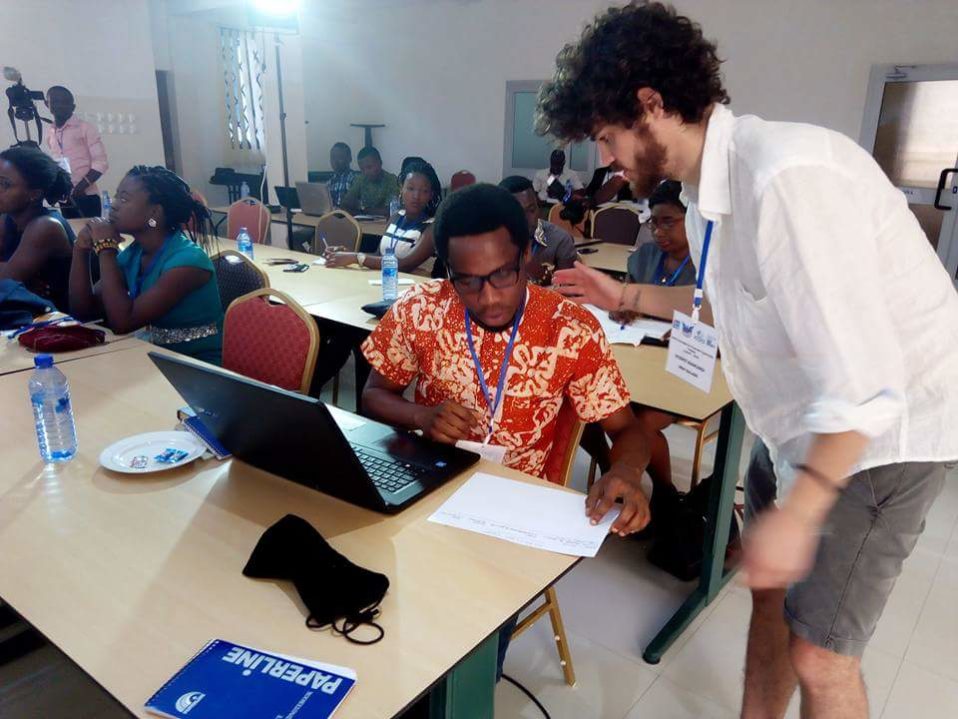
As a leading voice in Africa, promoting the libertarian philosophy, African Liberty Organization for Development (ALOD), lead by Adedayo Thomas, participated in the second edition of the 3 days residential immersion program which ran from 22nd – 25th June, 2018 at the Summit Lodge, Koforidua, Eastern Region, Ghana. ALOD represented by the duo of Wale Ajetumobi (CampusLife Editor, The Nations Newspapers) and Dayo Pelumi (Operations Manager).

According to ILAPI, AJEOT is a two day intensive residential certification training for journalists and prolific writers to learn the tools for advocacy and economic principles of classical liberalism to help shape public policy discourse, and question the status quo for a free and prosperous society.

As journalists are known to be the 4th arm of government with the voice for the voiceless in our democratic society, it is imperative to understand policies and how they are formulated for implementation to achieve its intents. Market competition and efficient function of the government to provide security from violence have taken millions of people from poverty.

Economic freedom is a determinant for human development and the respect for individual rights is the essential precondition for a prosperous world. This could only be made possible when government is limited to its primary function and policies are formulated to enhance economic competition.

How can we help create a sustainable and prosperous society so all men can have life, liberty and pursue of happiness? How does government put a greater debt burden on future generations? Why would government give something for nothing to virtually everyone at no cost or little cost? Why has government anti-poverty programs
still keep people poorer? This and many other questions and how economics has the influence on those questions.

The participants, having been welcomed by Peter Bismark of ILAPI, had a session with Ajetunmobi Ridwan who spoke on Introduction to Classical Liberalism while Vicente Camara of the International Federation of Liberal Youth (Switzerland) facilitated a session on Geopolitics Dr.Tom Palmer of Atlas Network joined the participants in a Skype presentation on Identifying Tools for Economic Journalism. 

Ebenezer Nii-Tackie of Conservation Policy Research Centre (CPRC) Ghana had a presentation on Understanding the Liberal Framework within the Realms of Public Policy Formulation. Abdul-Rajman Sarpong of ILAPI presented on MediaPreneurship; joining via Skype also was Dr. Brian Baugus of Regent University who had an interaction on the Two Ideologies in One Country this was followed by a lecture by Bright Nkyi of ILAPI on Government Inflation and GDPHow Real is it?; while Belinder Odek of Kenya and curator of Young Africans for Opportunities spoke on Internet Freedom emphasizing the importance of Net Neutrality.

The day was concluded with a panel on Shared Language, which had Vicente Camara, Evans Badu (VP ILAPI) and Ebenezer Nii-Tackie. At dinner, the facilitators and participants also celebrated the birthday of the President of ILAPI, Peter Bismark On the following day, Ebenezer Nii-Tackie of the Conservation Policy Research Centre
(CPRC) Ghana opened the day’s conversations with the continuation of his lecture on Understanding the Liberal Framework within the Realms of Public Policy Formulation. Prof Steve Davies of IEA UK joined via Skype to deliver a lecture on How to use Basic Economics to Understand the World and Explain it while Evans Kissi, a PhD fellow of the University of Kassel, Germany facilitated a class on Agriculture Economics – Disconnection between Resource Management and Economic Prosperity. Franklin Cudjoe, the CEO of Imani Center for Policy & Education, a think tank dedicated to the promotion of a free society, delivered a thought-provoking class on strategically on Identifying Policy Gaps and Choosing the Right Headline Right Content for Effective Analyses and Reportage. He also admonished participants to get acquainted with the CD: Ideas for a Free Society which contains lots of resources. 

Isaac Annan Valley, the Monetary Economist at the Institute for Liberty and Policy Innovation (ILAPI) in Ghana, facilitated a class on The Banking Economy while Evans Badu Boampong, Vice President ILAPI concluded the lectures with Media Censorship in Africa. While espousing the importance of the media to promoting societal sanity, he called on journalists to think outside the box towards owning media outlets in order to wrestle the grip of self-serving politicians on media ownership, which would organically phase out censorship and incite sanity in the system.

The Dinner & Award Night was loaded with exciting events for the participants, and commenced with a panel shared by young libertarians making their marks in the society. The panel comprised of the leadership of Centre for Better Society Advocacy and Research Africa (CEBSAR-AFRICA), an anti-corruption organization working towards a
corruption-free society in Africa; Ominira TV, online media outlet using the power of the media to promote libertarianism; and the Young Africans For Opportunities (YAFO), an organization seeking to break barriers to economic opportunities while empowering entrepreneurs, young professionals and students, through public policy advocacy and research.

Two participants at AJEOT 2017 were awarded medals for their outstanding performances and demonstration of courage over the past 1 year as journalists, having covered threatening stories promoting a free society. Two participants also had the stage to pitch their blogging business plans for funding: Rainbow Radio and Kull FM,
with Rashid Obodai of Rainbow Radio carting away the grand prize, which comprises of free news website design and funding support by ILAPI’s Blockchain Systems Management Department and associates.

This was followed by group presentations based on assignments earlier shared among the groups comprising HAYEK, MISES, WATER WILLIAMS and BASTIAT; with HAYEK Group coming top ahead of other groups. The group received a bouquet of high value books and literature, courtesy ILAPI and Partners.

One of the representatives of ALOD, Dayo Pelumi, was not just part of the winning HAYEK Group, he also received the award for Best Participant jointly with Rashid Obodai of Rainbow FM Ghana.

AJEOT is a residential certification course for journalists and writers in Africa and beyond with university professors and heads of think tanks across the globe as the facilitators. Graduates were tasked to exhibit professionalism in their quest to enhance and help integrate liberty and its economic principles into journalism and public policies
for prosperous society. The Blockchain revolution will not be left out!


Read more

Thief Hunting Thief in Nigeria’s War on Internet Fraud │ Africa’s Bloody Hands in Jerusalem

Thief Hunting Thief in Nigeria’s War on Internet Fraud

A (US) government report on internet crime reveals that 61 percent of the traced criminals resided in the United States, followed by the United Kingdom at 16 percent. Nigeria-based criminals were next at 6 percent.  (Eric Rosenberg, Hearst Newspapers, 2006)

The above comment was made about 12 years ago when internet fraud was just taking root in the Nigerian social vibes. Today, it is one of the country’s biggest export of bad image and ironically, a huge driver of foreign cash flow into the Nigerian economy.

While the entertainment and hospitality industries owe a great deal of their recent growth to the embarrassing surge in internet fraud, international outcry to stop this nefarious act originating from Nigeria is soaring. Only this time, the government is serious and out with force from Lagos to Abuja indiscriminately arresting young men leading luxurious lifestyle with less regard to their innocence or otherwise.

However, internet fraud is merely the country’s primary problem, besides, the conventional way to fight a surge, is to find the root cause, which in this is case is the Nigerian government – the very individuals leading the assault on cyber criminals. 

The government is more guilty of stealing than any internet fraudster one can ever imagine. If “Yahoo Boys” (colloquial for internet fraudsters) should be arrested for defrauding since the beginning of the millennium, the Nigerian government should be charged for defrauding, mismanagement and misappropriation since 1960.

A fair approach will be to start by auditing the federal and state governments. Every administration since the days of military dictatorship should give account of all revenue generated and spent. Past and present public office holders should declare their assets and tax history. If the government would not do this or eventually come out unstained, then the fight against fraud must start in the state houses of assembly, office of state governors, and eventually the Presidential Villa. 

There is no morality in prosecuting one thief and ignoring the other; everybody should be subjected to the same litmus test. 

Fraud is theft, administrative fraud is bigger theft. If the Nigerian government is doing nothing meaningful to build good environment for job creation, security and improvement in the standard of living of its own people, then this course of battle is an absolute moral sham.

Eventually, internet fraud must be condemned and alienated, but before then, let the Nigerian government clean its own closet before finding skeletons elsewhere.


Africa’s Bloody Hands in Jerusalem

Surely, the African nations in attendance (US embassy opening in Jerusalem) know that they cannot endorse one crime and condemn the other – all in the same breath. – Azad Essa (Middle-Eastern Journalist)

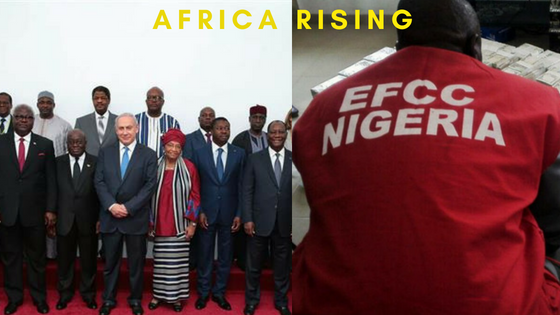
One of the many reasons an average individual is not often interested in international relations is mostly because of the inhumane trade of morality and innocent lives for power among actors in the international system. This is somewhat evident in light of the recent events in Gaza and the West Bank where more than 50 people have died and hundreds injured. More evidently, in the shameful support of some African countries for Israel’s assault on Palestinians by attending the opening ceremony  in Jerusalem. 

The question here is not whether Jerusalem is the eternal capital of Israel or not – which of course is not Africa’s question to answer – the problem is why are African leaders leaving all the problems engulfing their countries behind, and diving into a territory that does not warrant their participation?

How does choosing sides between two warring factions (Israel and Palestine) reduce Africa’s foreign debt? Alternatively, will heaven fall if they join other countries in stressing a diplomatic solution to the dispute over Jerusalem? How does this put food on the tables of millions of poor African families? We have only deep our hands into the blood and chaos in the Middle-East while leaving our own backyard unkept.

Jerusalem is not Africa’s problem to solve, fighting poverty and insecurity on the other hand is a good way to start.

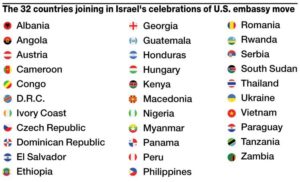
The governments of Angola, Cameroon, Congo Republic, the Democratic Republic of Congo, Ivory Coast, Ethiopia, Kenya, Nigeria, Rwanda, South Sudan, Tanzania and Zambia should be ashamed of themselves. All of whom with millions of people languishing in poverty and insecurity of all categories.  

Albeit, out of these twelve countries, Rwanda, Cameroon and South Sudan had earlier abstained in the December 2017 vote on the same issue while the remaining nine voted against the US for moving the embassy from Tel Aviv to Jerusalem. So, why the sudden change in policy if not to swing the way of power and money?

One thing is however certain, it would be interesting to see how the participatory African countries would deal with a consequential isolation in the United Nations and other international treaties as only 33 out of 192 UN member-states (excluding Israel) attended the ceremony last week.

Whenever Africa is recognized as the next frontier of the global economy, they actually mean millions of small and enormous events working to create an anticipated new beginning. That is why there has never been an urgent need to understand the continent in light of its distinct features like now. Here is the platform you will find unfiltered and frank opinions on Africa with African Political Economy Pundit & ALOD Executive Director, Ibrahim B Anoba.

Read more

2017 ALOD Summer Camp Abuja

Overview

The summer camp was an intellectually exerting exercise and the participants expectedly, were mentally prepared having been selected on merit . The speakers had a highly interactive and engaging audience.  The  principles of liberty and freedom created a whole gamut of debates and reactions from participants who after the classes confessed to having their thoughts and ideas about society and governments re- formed.

Formal feedback expected via mails are expected to form the bases for evaluation by the ALOD. The creation of a closed group Whatsapp platform by the participants is an expression of their desire to remain connected to ALOD and the ideas of libertarianism and economic freedom(entrepreneur).

The group presentation was  a fusion of libertarian thoughts vis-a-vis economic freedom (Entrepreneur) and drama representation of the ideas  participants were exposed to within the 3 – day program.

The participants at the 2017 African Liberty Organisation for Development (ALOD )Summer camp were drawn from the best 30 out of the 75 undergraduate entrants from across 37 universities in Nigeria who participated in this year Adam Smith essay competition titled “Free Market and Equal Opportunities”

The best  30 essay  entrants  were awarded scholarship to participate in the summer camp.  Besides,  the cash prizes to the best 10 essay entrants,  the scholarship covers tuition,  course materials,  accommodation,  feeding and certification

Feedback 

“Immediately I stepped out of the NYSC Orientation Camp situated at Kubwa, Abuja, I just realized that I stepped out of one world to a different world. I smiled to myself, saying “wow” so it just takes something as a pinch of salt to change a concept, view, perspective, ideology, people, nations, names, places, you can go on and on, the list is endless, just to mention but a few.

Four days earlier, I was in a different world in my thought about my views on Capitalism, Government policies, International/Foreign Aid, Charity and Philanthropic giving, the list is endless, I had no idea that within the next 72 hours, a radical change in my thinking ideology was going to change positively. . .”  

Lewis Aondoyila Tanguhwar

“ Well, what should I say when I discovered during the camp that even in universities nobody really teaches students what is needed to be financially independent simply because everyone of them has crucified capitalism and capitalists. I called my friend and told in three days the summer camp lasted, I learnt one-third of the entire knowledge I acquired in four years in university. 

It was an enriching opportunity to me. I felt honoured to meet with Director General, National Directorate of Employment, Prof. Garba Mohammed, Alh. Adedayo Thomas, Mr. Moses Okorejior, Lilian Kawira from Kenya, Brain box, etc. I cannot forget the wonderful cooks that fed me from my arrival, even before I could drop my bag till my departure, though I don’t know their names.

 In fact, it an intellectual revival program which its impact is indelible. I got a lot of wonderful, enriching and entrepreneurial-life-transforming books and financial prize. My lecturers taught me how to get a good certificate through good grades but ALOD taught me how to be free from the shackles of poverty.

Concerning the organization of the summer camp, I can only say that the ALOD needs more sponsors to achieve more and better results. Once again, I appreciate all the organizers of ALOD Summer Camp. Thanks to you all.”

 – Sunday Eloms Njoku. 


The essay winners were presented with cash prizes after they were made to defend their winning essays through a  5 – minute verbal replication of the works.


Read more

Oyesoji Aremu: Nigeria At 57 And The Failure Of Her Educational System

by Oyesoji Aremu
By all intents, assumptions and human estimation, age 57  is said to be very advanced. An individual at 57 would, therefore, be said to be approaching the Senior Citizens Class with full responsibilities amidst further expectations to savour the joy of toiling at a very advanced age when frailties set in. Failure for a 57-year-old man, therefore, could by society standards, be seen to be a technical and permanent failure in life except a miracle happens.
 
Nigerians are religious no doubt. That could make many among us to say: ‘it is not yet Uhuru for the country’. I share the same sentiment albeit with a defining view and perception. After all, the Bible says: ‘the prayers of the righteous, avail much’.
Thus, at age 57, whatever might be the shortcomings of the country could be said to still be remediable not minding her advanced age.
 
The index of measuring the country’s achievements in this intervention as Nigeria celebrates 57 years of an uninterrupted independence, is education. Education by all known theories and precepts is the only yardstick through which other indices of advancement of a country rest. Failure in this sector, is therefore, failure in other known sectors like economy, health, technology and telecommunications, politics, the list is inexhaustible. No wonder, our beloved country at 57 is perpetually ‘lamed’ and permanently ‘dwarfed’ in development. If properly harnessed, human and natural resources that are available in Nigeria could be utilised to put her education in a good stead; and same use to bring fortune to the country. Ask what brings fortune to the United Kingdom. It is her education industry.  Unfortunately, these resources have not been effectively used to meet the increasing needs of the country in terms of human capital development and others through qualitative and accessible education for all.
 
For Nigeria and with specific reference to the education industry, it is a story dotted in failure and permanently on the altar of policy somersault. For emphasis, the sector is the most neglected in the country. Forget about the cacophony of noise from the North to the South, West to the East; and across geopolitical zones in terms of education governance, it is all about heaps of lies and mortgage of the future of this country.
 
Show me a country with a robust and well-funded education industry, I will point to you a country like Finland, South Africa, Ghana; just to mention three of the numerous countries that have become the envy of others in all-round and complete development, and education haven to thousands of Nigerian youths. Our loss in terms of capital flights to education tourism to Europe, America, Asia, and countries like South Africa and Ghana in Africa are better imagined than stating the obvious of our commonwealth of failure in education.
Putting the nation’s achievements in education on a scale of ten, and comparing her with her contemporaries who had independence about the same period, I will conservatively grade her 3.
 
Mainly, the education industry has three major sub-sectors: early childhood/primary, secondary and tertiary. Thus, the totality of the quality of education sector remains abysmally low and unimpressive even to those on the lower rung of Social Status Ladder. From the primary to secondary and tertiary sub-sectors, it has been a tale of woes in academic performance to the history of decadence in facilities and unmotivated personnel. An objective appraisal of the three sub-sectors shows that all is not well.
 
Unfortunately, the primary and secondary sub-sectors have totally collapsed and no longer enjoying serious patronage on the part of the government at all levels. *Those who are left to salvage from the knowledge crumbs in public primary and secondary schools are wards of those I earlier referred to belong to the lower rung of the Social Status Ladder*. The running of the two sub-sectors is now in the hand of the private sector who, latch at the poor policy of the government to take control of primary and secondary education due to the neglect of the government. One must thank the private sector in that it is through it, whatever remains of the glory of education in primary and secondary sub-sectors is envied amidst what many could afford.
 
One may wonder then if the neglect of these sub-sectors has any bearing with the constitutional provision which put education on the concurrent list? That provision did not make any intervention for the private sector. It is the jackals in government that look elsewhere and allow the private sectors to hijack primary and secondary education in Nigeria. The same scenario is playing out in the tertiary sub-sector of education industry with continuous deregulation of university education. At independence, Nigeria had only three universities and four polytechnics. The number of secondary schools was also known because of their qualities and fame. Then, schools were actively supervised by ministries of education. While one welcomes the increase in the number of higher institutions (especially universities), what remains disturbing is the alarming rate of their proliferation without a corresponding funding of the existing ones; and thereby, raises questions of quality assurance. The increasing number of candidates every year (they are about 1.7 million this year) seeking admission to higher institutions especially universities, makes it imperative to have more universities but not on the altar of sacrificing quality.
 
In other climes, the government encourages open access to education by licensing public universities to run in a dual mode. Examples abound in South Africa, India, China, and UK.
I must stress it that government cannot be the sole funders of education. However, my take is that the regulatory bodies have been compromised and thereby throwing the education sector in the hands of businessmen and women whose primary motive is to make profit, forgetting that education is a social sector.
 
Arguably, the fault is not theirs. Rather, governments at all levels should take the blame for compromising the future of the children of this country. Successive administrations with perhaps exception of the ones in the first republic have committed a grievous infraction against education in Nigeria. None of the primary and secondary schools established prior to the first republic which produced crop of many political leaders, captains of industries, celebrated academics, and a host of other notable Nigerians can be said to be a good reference now. Many of these schools except for those which have been handed over to missionaries are caricatured, dilapidated and no longer fancied. For emphasis, the country has not fared well in the provision of qualitative education to its citizenry.
 
The sector also continues to witness industrial unrest, especially at the tertiary level. This is happening due to poor incentives for teaching and non-teaching personnel. This is one of the reasons why we do not get their best.
 
Often, the country witnesses poor academic performances as evident in secondary schools annual results by WAEC and NECO.
At 57, Nigeria should make her education to be prosperous and triumph over all known limitations. This feat cannot be achieved overnight. It would require a serious commitment through adequate funding and appropriate policies. It may not be out of place if the country should declare a state of emergency in the sector. Governments at the national and state levels would have to accept the obvious and apologize for their failure. Anything short of these would mean that our governments are not remorseful and introspective.
 
The expected triumph and prosperity of education is a serious business. If Nigeria wants to be at par with countries that celebrate prosperity in education, there must be a total overhauling of the sector. This can start now. The last line of the second stanza of the University of Ibadan Anthem reads: ‘For a mind that knows is a mind that’s free’. At 57, can we say Nigeria knows? As we reflect on this, I wish you all happy independence.
 
Republished from AfricanLiberty.org
Prof. Aremu is of the Institute for Peace and Strategic Studies and Director, Distance Learning Centre, University of Ibadan.
Read more