

Blog

The Dos and Don’ts of Talking Liberty

by: Jeffrey Tucker

Nearly everyone knows there is something wrong with the world as it is. The liberty-minded person believes that he or she knows a major part of what is wrong. There is not enough flexibility and adaptability in the structures of government that presume to manage the social order. State systems have made life rigid and regimented–replete with regulations, taxes, mandates, and prohibitions–with the cost that too many people are excluded, demoralized, and impoverished. For moral and practical reasons, this situation must end.

The vast majority of the human family continues to live under the illusion that giving government more power will magically cure society’s ills.

In other words, freedom is the answer.We recall the moment when we discovered this. The light flicked on. The shades came off and the world looked different from before. Our lives changed. How can we help others arrive at this point?

The short summary of what we believe: the astonishing rise of government power over the course of the last one hundred years has truncated freedoms, human rights, and prosperity along with all the fruits of the human spirit. Government is the main enemy, but government hides under cover of social contract, social justice, democracy, religion, security, and a host of other changing veils.

All of this is clear to those steeped in the tradition of liberty-minded thought as it has gradually emerged over the centuries. But it is obviously not clear to the vast majority of the human family, who continue to live under the illusion that giving government more power will magically cure society’s ills by infusing us with a greater reality of fairness, justice, morality — or whatever they claim.

How best to correct this error? How best to share this knowledge? How best to bring others along to the same understanding?

Here are ten rules–five don’ts and five dos. And I know: every libertarian reader of this article is immediately saying “Don’t tell me what to do!”

1. Don’t Be Belligerent

Righteous anger at the state of the world is a feature of the libertarian mind. It was probably the reason for the initial interest in the ideology. When a person makes the link between war, mass killing, lies, and government power, the result is overwhelming. It seems unimaginable that others do not see this.

One burns with a passion for justice. One feels an intense desire to do something to fix the problem. Another example might be economics related. When a person discovers that the Fed is the reason for inflation, the business cycle, and the skyrocketing debt, the effect is shock and anger and the desire to make history right.

This is all completely understandable. The problem is to remember that others do not share in this anger because they have not been made aware of the cause and effect here. They do not share your understanding. All the dogmatism, belligerence, expressions of anger, and raised voices are not going to convince anyone of the case for liberty. Instead, quite the opposite, they just inspire others to fear your temper and tone.

The goal is to win hearts and minds.

A raised tone of voice, an increased volume, and a more insistent edge are not the same as a convincing argument. These approaches can seem to work only by causing others to back down in fear, but that is not the goal of persuasion. The goal is to win hearts and minds.An aggressive voice is not going to persuade people of the case for peace. An unwillingness to listen to others is not going to convince people of the case for exchange and cooperation. An absence of interest in another’s point of view is not going to bolster your credibility as an advocate of free speech and human rights. A posture of intolerance is not a good witness for the diversity and human flourishing we would see in a free society. The case for liberty needs to be made in a manner that practices what we preach.

The better approach is to speak with reason and with the intention of actually bringing a person along through making sense. That doesn’t mean being unprincipled. In fact, a reasoned approach enables you to speak about radical content with even more authority.  

As Ludwig von Mises wrote in Liberalism (1927):

rhetorical bombast, music and song resound, banners wave, flowers and colors serve as symbols, and the leaders seek to attach their followers to their own person. Liberalism has nothing to do with all this. It has no party flower and no party color, no party song and no party idols, no symbols and no slogans. It has the substance and the arguments. These must lead it to victory.

2. Don’t Presume Hatred of Liberty

Many libertarians start with conversations, online or offline, with the presumption that the interlocutor is against liberty. That is not usually the case. The problem is usually of a different sort. It is that the person does not see the relationship between the law that he or she supports and the imposition on human liberty. A person who says “every person has a right to a decent education” may not actually mean “people should be robbed to support bad schools” or “all children should be forced into a prison-like building for 12 years.”

The person may not actually be against human liberty, only unable to see the relationship between certain principles and certain policies.

In the end, we must choose between liberty and power. There is nothing in between.

The job of the liberty-minded rhetorician is to illustrate the connection, and to show how impositions on liberty lead to bad results. For example, in the case of public school, people who think kids ought to be forced into school until they are 16 or 18 don’t imagine that juvenile detention is a good solution, or that kids ought to be prohibited from having viable work experience, or that parents can’t be good teachers at home. But that is the implication of the policies they support. What’s missing here is the logical relationship between the policy he or she supports and the inevitable downsides of a system of coercion and compulsion.

Almost all non-libertarians underestimate the implications of putting the state in charge of anything. They speak of how “society” should do something, how “we as a people should” do something, how “the community” needs to be committed to something. The reason for this evasive language is to mask, even from themselves, the gritty reality that in each case they are actually arguing for the state to have more power.

More state power means the use of more confiscatory power, more fines, more jails, and more violence. Indeed, in the end, violence is the only tool the state has, so every push for more intervention amounts to a call for a more violent society. This is even the case for gun-control laws: they mean using guns against people when their own peaceful choices conflict with the political priorities of the state.

The advocates of intervention don’t usually begin with a hatred of liberty. They are just unwilling or unprepared to recognize the relationship between their own outlook and the uses of the state as a tool of power. In the end, we must choose between liberty and power. There is nothing in between.

3. Don’t Presume Different Goals

Non-libertarians have a gigantic language apparatus they employ to push against the idea of liberty. They speak of the need for “social justice,” “equality,” “sustainability,” “solidarity,” “community,” “progress,” and a hundred other wonderful-sounding things that are really just covers for increasing government power.

It is very easy to presume that these people have completely different social goals than those of liberty advocates. That is usually not the case. More often than not–there are exceptions–the people who speak this way do not have different goals. There are some people who actually do favor poverty and human suffering, but that is not very common. Most people share the goal of prosperity, peace, a clean environment, and widespread wealth–whatever words or phrases they use.

A basic economic education is lacking in some of the world’s smartest people.

There is no point in getting hung up on words. Words are arbitrary sounds designed to facilitate conversation. Their meaning changes over time. Especially in our times, different sectors of society use different vocabulary to describe the same thing. If you can change your vocabulary and introduce someone to a cause, it is worth the effort. There is no reason to get hung up on word choices.4. Don’t Presume Ignorance

Many opponents of the free society and free markets are among the most educated people on the planet. You need only look at the faculty at top-level universities to see that, despite all their brilliance and reading and education, many fail to understand even the basics of economic forces like supply and demand. They are not ignorant. A basic economic education is lacking in some of the world’s smartest people, and a failure to integrate economic lessons into a larger worldview is the most common error among the academic elite.

What is often lacking is not education but the precise knowledge that turns out to be extremely important in forming a worldview. As Thomas Sowell has written, many of the world’s smartest people are guilty of unconstrained visions of what is possible. They see pockets of wealth alongside poverty and easily jump to the conclusion that spreading out the wealth would create fairness. That unconstrained vision of society is possible in a world without scarcity, and the world of ideas is indeed a world without scarcity. Intellectuals deal mainly in the world of ideas, which is why they are so tempted by the dream of a world of unlimited possibilities.

Where they get tripped up is in theorizing about the physical world, the world in which resources and time constrain possibilities. Here there can be no such thing as socialism, no such thing as creating wealth by taking it away from others. Here is where we must have private property, freely floating prices, exchange, contract, trade among all peoples, capital accumulation, and safety in ownership. All of these are essentials. Peter Boettke has written that almost all errors in economics come down to the failure to understand scarcity. True enough!

If the market teaches us anything, it is that we are all ignorant of the vast majority of human knowledge. 

Non-intellectuals, in my experience, are more open to the ideas of liberty. They only need an appeal to daily experience. How many people really know that laundry has been totally destroyed by state regulation, that our clothes are dirtier thanks to government intervention? How many people understand how regulations have so seriously cartelized the business sector and reduced our options and made it so difficult for people to go into business? That there is a relationship between a large US military presence in the world and a welfare state that controls the civilian population at home, that the welfare-warfare state is one entity? That the Federal Reserve is the main reason behind the runup in federal debt and a main reason for all the corruption that people loathe?There is no reason to attempt to convince anyone of the full case for liberty in one exchange. It is a mistake to presume someone else knows nothing and we know all things, because it is absolutely untrue. We have so much to learn even from those who do not share our worldview. But if you presume another person’s ignorance, you will not gain that knowledge or understanding.

If the market teaches us anything, it is that we are all ignorant of the vast majority of human knowledge. The goal is not necessarily to convince everyone you meet of the case for liberty. Rather, take the opportunity, when presented, to learn from people who know more about subjects that you don’t.

I recall sitting next to a man in the airplane who specialized in making bags for potato chips. It was an absolutely fascinating conversation to learn all about the history, technology, and marketing of these bags. It is a rare opportunity to discover a sector of life that is mostly closed to us. Sometimes it is just good to be selfish in conversation, extracting as much information as possible as a way of making our own worldview more hands-on and realistic.

5. Don’t Regard Anyone as an Enemy

In democracy, government specializes in dividing people into warring tribes and devolves all meaningful conversation into sectarian squabbles. This is what elections are all about. Each politician finds his or her demographic and attempts to whip them up into a frenzy against others. It’s always the same: men vs. women, blacks vs. whites, natives vs. immigrants, rich vs. poor, able vs. disabled, religious vs. secular, and so on without limit. What is the effect of this constant prattle? It causes us to think of each other as enemies. If you really believe that it is super- critical to the future of civilization that Joe and not Tom is elected, you naturally believe that anyone who supports Tom is the enemy.

And you know based on demographics — or you have a pretty good idea — who is supporting whom. This creates the tendency for all of us to divide up the population around us into friends and foes. This is a major cause of social tension in a democratic society. Democracy purports to bring us all together to govern ourselves. Actually it only ends in dividing us into feuding clans, out to steal or keep from being stolen from. One person’s liberty comes at the expense of another. One person’s vision is only realized so long as others’ visions are not.

Remember that the enemy is the state, not your fellow human beings.

It is no wonder that society continues to have troubles with racism, sexism, nativism, and classism. That we can’t live together except by crushing each other is a major illusion of democracy. It is an artificial reality, one created by the state itself. So long as we buy into it, we are going along with a corrupt imposition. We are giving in.The best way to fight back is to not be manipulated into this situation. We should seek to make friends, not entrench enemies. Every human being is a friend of liberty somewhere deep inside his or her heart. It is just a matter of finding that spot and tapping into it. There is no religion, no race, no income group that cannot benefit on net from liberty. For that reason, there is no person who should not be on Team Liberty. That’s why it is best to approach the art of persuasion, and life itself, with the assumption that we are surrounded by friends. In this way, we avoid the trap that the state sets for us. Remember that the enemy is the state, not your fellow human beings.

6. Do Inspire 

Libertarians are very good at making sense. There is a tendency to argue only from first principles, rely on axioms, push the point using hard dogmas that might be perfectly valid but do not hit the sweet spot to change minds. I’ve heard countless arguments over political points in which the libertarian wins the point on logic but loses in the area of common sense. This is why so many people find libertarianism to be somewhat scary, a form of fanaticism that would take away the comfort and stability of life itself.

Consider the point about privatizing streets. Liberty-minded thinkers favor this, but most people can’t imagine it. You can assert the point again and again and conjure up images of every street having a toll. Or you can simply point out that hundreds of large corporations today use private streets in their own factory grounds, streets that are built by private interests and are nonetheless available to everyone.

In addition, there is no necessary reason to believe that privatized streets would not be as open access as a search engine like Google or a video chat program like Skype or Snapchat. Producers have every interest in including users, not excluding them.

Insofar as it is possible, it is best to use examples of the private provision of goods and services that really exist in our world. One of the best cases is the whole of the Internet, which is the greatest experiment in anarchism that exists today. Trust relationships between merchants and consumers, user ratings, protections against identity theft, and consumer protection have all formed without recourse to government bureaucracies. Yet people continue to believe that government agencies are essential to our lives when they experience the beauties of anarchy every day.

See the anarchy all around us.

Actually, government contributes very little to the lives of average people. People realize this once they think about it. Our lives are great when we make them so, not because a bureaucrat has somehow intervened to improve our lot. The myth that government is somehow supporting or sustaining civilization is an embedded part of our civic culture, but it is a myth easily refuted by daily experience. Monitoring what we do day-to-day, we discover that it is actually private enterprise that we depend on for all the comforts and excitement of life.This is an inspiring realization. The notion that government is necessary is a very negative commentary on the capacity of people to manage their own affairs. Once you see the anarchy all around us, you realize that humanity is bursting with creativity, energy, the desire to get along, the impulse to fix problems, and the passion to value others and be valued ourselves.

Government has only one power in the end, and that is the power to stall and thwart this constructive process with force. If by doing so it prohibits peaceful behavior, it normally diminishes the quality of life for all of us. Liberty is an inspiring message. We should always avail ourselves to this to make our case.

7. Do Look for Love of Liberty

This is something of an art. When you are talking with someone about the subject of liberty, he or she will often say a long series of things that are just wrong from your point of view. One approach you can use is to sit patiently and listen as long as possible, refraining from commentary. At some point, the person will say something that makes sense–a rightist might speak of the need for gun rights or a leftist might talk about civil liberties–and this is the time to speak up.

Look for points of agreement. 

If you can find a point of agreement on some point about human liberty, you have the basis for a real conversation. The point is not to look for error–there’s never a problem in finding those–but to look for points of agreement. As you pursue these lines, you will bump into a point of disagreement, but instead of arguing–which is often just pointless–you have the basis for a serious discussion of the merit of a free society.The secret here is to do this not as a strategy but as a sincere attempt to praise the good in another’s way of thinking.

There are very few people alive in the world today who do not believe in liberty in some part of their lives. Find that point and you can disarm a critic and have the basis for at least getting a hearing for your point of view.

8. Do Have Confidence in Your Beliefs

One thing that Internet culture has taught us: the weaker the argument, the stronger the rhetoric that backs it. Often times, insults, ad hominems, put-downs, and smears are just covers for a lack of confidence in a position. If you know a subject very well, there is no reason to resort to this way of thinking and arguing. You can respect another’s point of view and still make your points.

The case for liberty does not need loud, boisterous, belligerent arguments. If you have confidence in your beliefs, you can welcome any comers and face down any objection. If you find yourself getting flustered and angry in the course of a discussion, you might ask if the real problem is not the other person but rather your own lack of knowledge. It might be time to hit the books.

Nothing persuades others like a calm and cool demeanor in the face of vigorous criticism. But the best way to achieve that is to become a genuine expert with a deep and impenetrable conviction in what you believe.

9. Do Speak the Language of Your Interlocutor

Earlier I wrote about the tendency of different political tribes to use completely different language. It is sometimes good to completely mix this up. Why not call yourself a progressive, for example? After all, nothing is for progress as much as human liberty. Indeed it is the only real source of progress. Why not call yourself a liberal? In the 18th century, liberalism meant a belief in human rights, commerce, peace, and no government intervention. It’s true that we have mostly lost that term, but it still pertains historically, and there is nothing wrong with reclaiming it.

 A world of liberty is a world without rulers lording it over the human population with swords, bullets, and tanks. 

It is a waste of time to argue about terminology. Discussions that go places focus on concepts and ideas, not terminology. It is best, then, to adopt the language of others if that is possible.Consider the term “sustainability,” for example. It is mostly used as an attack on economic development and commercial freedom. But there is an element of free-market thought that is perfectly compatible with the idea of sustainability. Loose credit creates unsustainable bubbles. In fact, it is the main source of creating unsustainable institutions. This is true of many, if not most, government programs. Subsidies and protectionism create unsustainable results. This kind of language is just as much ours as theirs.

Probably as much as 95 percent of political argument today centers on debates about who should be ruling us, and the terms under which this rule takes place. Neither amounts to much because both miss the point. A world of liberty is a world without rulers lording it over the human population with swords, bullets, and tanks. It is a world without rulers that we seek, so it makes no sense to get distracted by arguments over which rulers should be in charge.

10. Do Suggest Great Literature

A major reason to know the literature well is to have ready references that fit with the outlook of another person. An engineering major will need to read different books from a literature major. A literature major might be persuaded by Russell Roberts’s wonderful novel The Invisible Heart. An engineering major might enjoy Nassim Taleb’s Antifragile. As great and essential as the old treatises are — Mises’s Human Action or Hayek’s Constitution of Liberty — they are not the only way to discover the ideas of liberty.

The lessons of human liberty are applicable to every aspect of life.

Beginners who need an economics education can always benefit from Hazlitt’s Economics in One Lesson, but it is not the only book. Faustino Balvé’s Essentials of Economics is also great.The literature of liberty is, at this point, very well developed. We have commentary on popular culture, philosophy, history, law, economics, foreign relations and war, as well as the history of art and even computer code. The lessons of human liberty are applicable to every aspect of life.

Never leave a conversation without making an excellent suggestion of a book to provide a follow-up. It could also be an article online. Speaking from a personal point of view, I will often be reading a book of any sort–fiction or nonfiction or history or something–and be unable to suppress talking to others about it. The enthusiasm you show for what you are currently learning can be infectious to those around you.

The future of freedom and liberty depends on our ability to convey the immeasurable benefit of freedom.

Liberty is a gigantic subject. “Conversion” doesn’t happen in a day — it is a process. There is no reason to strive for instant victories. To absorb the full truth about liberty takes time for it to be meaningful and penetrating. Moreover, there is no reason to seek victory over the full picture; achieving small victories is all that is necessary.It is a reflection of the confidence you have in your worldview that you don’t need to seek “conversions” so much as marginal steps toward enlightenment.

Conclusion

We were born free, but at one point or another we all became, in some form or another, supporters of the state. You were once one of those people who needed convincing. Imagine that you are speaking to yourself, before you saw the light. How would you want to be convinced? Be understanding and compassionate, but also patient and persistent. The future of freedom and liberty depends on our ability to convey the immeasurable benefit of freedom.

Read more

Shadreck Chirikure: Oral Sources for Documenting Precolonial African Trade and Exchange

Republished from Oxford Research Encyclopedia

If one of the limitations of documentary sources on precolonial African trade is that they mostly provide the view of the observers (and not the observed), then the main advantage of oral sources is that they avail the much-needed perspective from the observed groups. Many African societies had oral literacy that was sustained through traditions handed on to the future. The griots, who were official court historians and custodians of royal narratives in West Africa (from roughly mid-1st millennium ce to the 19th century) and imbongis (storytellers and praise singers) among the historical Zulus of South Africa, are well-known promoters of oral literacy. However, such official traditions were biased in favor of court activities and not mundane, day-to-day events. Oral sources include traditions, myths, and legends that were transmitted by word of mouth from one generation to another. Often, these traditions were repeatedly recited and performed to the point that, within limitations, they reflected some commonly held positions.

In the area around the modern Cameroon/Nigeria border (Sukur region), oral traditions dating to from the 16th century onward pointed to the existence of intensive iron production that annually produced 60,000 hoes to meet the demand of the empire of Bornu. Ironically, this trade sustained slave raids in the producer area, creating a very complicated historical dynamic in which producers of iron were shackled and manacled using their own creation. In central Africa, most of what we know about trade and exchange relationships involving the Luba (c. 1585–1889) and Lunda (c. 1665–1887 ce) comes from oral traditions. One of the most important pillars of local and outward trade in these communities was copper whose ingots were often stylistically group specific. For example, the Yeke, Sanga, and Luba made distinctive types of ingots whose names and trade patterns are still firmly etched in local memories.

In southern Zambezia, much is known about communities that populated the region defined by the Indian Ocean to the east, the Kalahari Desert to the west, the Zambezi River to the north, and the Soutpansberg range of mountains to the south. Beach makes the point that in this region, speakers of dialects of a language now known as Shona had a well-developed oral literacy. Using insights from oral sources gathered from the region, Mudenge studied trade within the Torwa-Changamire (c. 1400–1900 ce) and Mutapa (c. 1400–1900 ce) states and highlighted that cattle raising and by implication cattle trade was an important branch of the economy that superseded gold trade. This cattle-centric localized trade system frustrated the Portuguese, who were interested mostly in gold. Thus, while traders at the Indian Ocean coast placed so much value on gold, local traditions make it explicit that this was not the view of local people.

As a source of information for precolonial trade, oral sources are affected by several limitations. Firstly, they are easily forgotten. Secondly, they suffer from chronological telescoping. Thirdly, they can easily be changed to suit prevailing contexts. Fourthly, most oral traditions tend to favor the dominant, although careful historical work may produce oral traditions associated with the common people. Fifthly, nowadays, the utility of oral traditions is diminished by the feedback that often takes place between the oral and the written. What was oral is now written and what is written is now in people’s minds creating a complicated web that is difficult to disentangle. However, whatever their limitations, oral sources are a formidable source of historical information pertaining to trade.

Read more

The History of Freedom in Antiquity

by Lord Acton

Republished from Acton.org

An Address Delivered to the Members of the Bridgnorth Institute 
February 26, 1877

Liberty, next to religion has been the motive of good deeds and the common pretext of crime, from the sowing of the seed at Athens, 2,460 years ago, until the ripened harvest was gathered by men of our race. It is the delicate fruit of a mature civilization; and scarcely a century has passed since nations, that knew the meaning of the term, resolved to be free. In every age its progress has been beset by its natural enemies, by ignorance and superstition, by lust of conquest and by love of ease, by the strong man’s craving for power, and the poor man’s craving for food. During long intervals it has been utterly arrested, when nations were being rescued from barbarism and from the grasp of strangers, and when the perpetual struggle for existence, depriving men of all interest and understanding in politics, has made them eager to sell their birthright for a pottage, and ignorant of the treasure they resigned. At all times sincere friends of freedom have been rare, and its triumphs have been due to minorities, that have prevailed by associating themselves with auxiliaries whose objects often differed from their own; and this association, which is always dangerous, has been sometimes disastrous, by giving to opponents just ground of opposition, and by kindling dispute over the spoils in the hour of success. No obstacle has been so constant, or so difficult to overcome as uncertainty and confusion touching the nature of true liberty. If hostile interests have wrought much injury, false ideas have wrought still more; and its advance is recorded in the increase of knowledge as much as in the improvement of laws. The history of institutions is often a history of deception and illusions; for their virtue depends on the ideas that produce and on the spirit that preserves them; and the form may remain unaltered when the substance has passed away.

A few familiar examples from modern politics will explain why it is that the burden of my argument will lie outside the domain of legislation. It is often said that our constitution attained its formal perfection in 1679, when the Habeas Corpus Act was passed. Yet Charles II succeeded, only two years later, in making himself independent of Parliament. In 1789, while the States General assembled at Versailles, the Spanish Cortes, older than Magna Charta and more venerable than our House of Commons, were summoned after an interval of generations; but they immediately prayed the King to abstain from consulting them, and to make his reforms of his own wisdom and authority. According to the common opinion, indirect elections are a safeguard of conservatism. But all the assemblies of the French Revolution issued from indirect election. A restricted suffrage is another reputed security for monarchy. But the parliament of Charles X, which was returned by 90,000 electors, resisted and overthrew the throne; whilst the parliament of Louis Philippe, chosen by a constituency of 250,000, obsequiously promoted the reactionary policy of his ministers, and, in the fatal division which, by rejecting reform, laid the monarchy in the dust, Guizot’s majority was obtained by the votes of 129 public functionaries. An unpaid legislature is, for obvious reasons, more independent than most of the continental legislatures which receive pay. But it would be unreasonable in America to send a member as far as from here to Constantinople to live for twelve months at his own expense in the dearest of capital cities. Legally and to outward seeming the American President is the successor of Washington, and still enjoys powers devised and limited by the Convention of Philadelphia. In reality the new President differs from the Magistrate imagined by the Fathers of the Republic as widely as Monarchy from Democracy; for he is expected to make 70,000 changes in the public service: fifty years ago John Quincy Adams dismissed only two men. The purchase of judicial appointments is manifestly indefensible; yet in the old French monarchy that monstrous practice created the only corporation able to resist the King. Official corruption, which would ruin a commonwealth, serves in Russia as a salutary relief from the pressure of absolutism. There are conditions in which it is scarcely a hyperbole to say that slavery itself is a stage on the road to freedom. Therefore we are not so much concerned this evening with the dead letter of edicts and of statutes as with the living thoughts of men. A century ago it was perfectly well known that whoever had one audience of a Master in Chancery was made to pay for three, but no man heeded the enormity until it suggested to a young lawyer the idea that it might be well to question and examine with rigorous suspicion every part of a system in which such things were done. The day on which that gleam lighted up the clear hard intellect of Jeremy Bentham is memorable in the political calendar beyond the entire administration of many statesmen. It would be easy to point out a paragraph in St. Augustine, or a sentence of Grotius that outweighs in influence the acts of fifty parliaments; and our cause owes more to Cicero and Seneca, to Vinet and Tocqueville than to the laws of Lycurgus or the Five Codes of France.

By liberty I mean the assurance that every man shall be protected in doing what he believes his duty, against the influence of authority and majorities, custom and opinion. The state is competent to assign duties and draw the line between good and evil only in its own immediate sphere. Beyond the limit of things necessary for its wellbeing, it can only give indirect help to fight the battle of life, by promoting the influences which avail against temptation,—Religion, Education, and the distribution of Wealth. In ancient times the state absorbed authorities not its own, and intruded on the domain of personal freedom. In the middle ages it possessed too little authority, and suffered others to intrude. Modern states fall habitually into both excesses. The most certain test by which we judge whether a country is really free is the amount of security enjoyed by minorities. Liberty, by this definition, is the essential condition and guardian of Religion; and it is in the history of the chosen People, accordingly, that the first illustrations of my subject are obtained. The government of the Israelites was a Federation, held together by no political authority, but by the unity of race and faith, and founded, not on physical force, but on a voluntary covenant. The principle of self-government was carried out not only in each tribe, but in every group of at least 120 families; and there was neither privilege of rank, nor inequality before the law. Monarchy was so alien to the primitive spirit of the community that it was resisted by Samuel in that momentous protestation and warning which all the kingdoms of Asia and many of the kingdoms of Europe have unceasingly confirmed. The throne was erected on a compact; and the King was deprived of the right of legislation among a people that recognized no lawgiver but God, whose highest aim in politics was to restore the original purity of the constitution, and to make its government conform to the ideal type that was hallowed by the sanctions of heaven. The inspired men who rose up in unfailing succession to prophesy against the usurper and the tyrant, constantly proclaimed that the laws, which were divine, were paramount over sinful rulers, and appealed from the established authorities, from the king, the priests, and the princes of the people, to the healing forces that slept in the uncorrupted conscience of the masses. Thus the example of the Hebrew nation laid down the parallel lines on which all freedom has been won—the doctrine of national tradition, and the doctrine of the higher law; the principle that a constitution grows from a root, by process of development and not of essential change; and the principle that all political authorities must be tested and reformed according to a code which was not made by man. The operation of these two principles, in unison or in antagonism, occupies the whole of the space we are going over together.

The conflict between Liberty under divine authority and the absolutism of human authorities ended disastrously. In the year 622 a supreme effort was made at Jerusalem to reform and to preserve the state. The High Priest produced from the temple of Jehova the Book of the deserted and forgotten Law, and both king and people bound themselves by solemn oaths to observe it. But that early example of limited Monarchy and of the supremacy of law neither lasted nor spread; and the forces by which Freedom has conquered must be sought elsewhere. In the very year 586, in which the flood of Asiatic despotism closed over the city which had been and was destined again to be the sanctuary of Freedom in the East, a new home was prepared for it in the West, where, guarded by the sea, and the mountains, and by valiant hearts, that stately plant was reared under whose shade we dwell, and which is extending its invincible arms so slowly and yet so surely over the civilized world.

According to a famous saying of the most famous authoress of the continent, Liberty is ancient; and it is Despotism that is new. It has been the pride of recent historians to vindicate the truth of that maxim. The heroic age of Greece confirms it, and it is still more conspicuously true of Teutonic Europe. Wherever we can trace the earlier life of the Aryan nations we discover germs which favouring circumstances and assiduous culture might have developed into free societies. They exhibit some sense of common interest in common concerns, little reverence for external authority, and an imperfect sense of the function and supremacy of the state. Where the division of property and of labour is incomplete, there is little division of classes and of power. Until societies are tried by the complex problems of civilization they may escape despotism, as societies that are undisturbed by religious diversity avoid persecution. In general, the forms of the patriarchal age failed to resist the growth of absolute states when the difficulties and temptations of advancing life began to tell; and with one sovereign exception, which is not within my scope to-day, it is scarcely possible to trace their survival in the institutions of later times. Six hundred years before the Birth of Christ absolutism held unbounded sway. Throughout the East it was propped by the unchanging influence of priests and armies. In the West, where there were no sacred books requiring trained interpreters, the priesthood acquired no preponderance, and when the kings were overthrown their powers passed to aristocracies of birth. What followed, during many generations, was the cruel domination of class over class, the oppression of the poor by the rich, and of the ignorant by the wise. The spirit of that domination found passionate utterance in the verses of the aristocratic poet Theognis, a man of genius and refinement, who avows that he longed to drink the blood of his political adversaries. From these oppressors the people of many cities sought deliverance in the less intolerable tyranny of revolutionary usurpers. The remedy gave new shape and new energy to the evil. The tyrants were often men of surprising capacity and merit, like some of those who, in the fourteenth century, made themselves lords of Italian cities; but rights secured by equal laws and by sharing power existed nowhere.

From this universal degradation the world was rescued by the most gifted of the nations. Athens, which like other cities was distracted and oppressed by a privileged class, avoided violence and appointed Solon to revise its laws. It was the happiest choice that history records. Solon was not only the wisest man to be found in Athens, but the most profound political genius of antiquity; and the easy, bloodless, and pacific revolution by which he accomplished the deliverance of his country was the first step in a career which our age glories in pursuing, and instituted a power which has done more than anything, except revealed religion, for the regeneration of society. The upper class had possessed the right of making and administering the laws, and he left them in possession, only transferring to wealth what had been the privilege of birth. To the rich, who alone had the means of sustaining the burden of public service in taxation and war, Solon gave a share of power proportioned to the demands made on their resources. The poorest classes were exempt from direct taxes, but were excluded from office. Solon gave them a voice in electing magistrates from the classes above them, and the right of calling them to account. This concession, apparently so slender, was the beginning of a mighty change. It introduced the idea that a man ought to have a voice in selecting those to whose rectitude and wisdom he is compelled to trust his fortune, his family, and his life. And this idea completely inverted the notion of human authority, for it inaugurated the reign of moral influence where all political power had depended on physical force. Government by consent superseded government by compulsion, and the pyramid which had stood on a point was made to stand upon its base. By making every citizen the guardian of his own interest, Solon admitted the element of Democracy into the State. The greatest glory of a ruler, he said, is to create a popular government. Believing that no man can be entirely trusted, he subjected all who exercised power to the vigilant control of those for whom they acted.

Continue reading at Acton.org

Read more

Could the PEBEC be a Game Changer for Entrepreneurship in Nigeria?

By Stephen Oyedemi

In 2016, when the PEBEC – Presidential Enabling Business Environment Council was launched, there was little hope as to whether its ambitious mission will be achieved anytime soon. However, last week in an interview after opening the Tony Elumelu Entrepreneurship Forum in Lagos, Nigeria, the vice president claimed that the initiative had achieved 70 per cent success in its 60-day national action plan and has started the second 60-day national action plan. This initiative places a lot of emphasis on improving the ease of doing business in Nigeria by focusing on 8 reform areas which are: starting a business, construction permit, getting electricity, registering property, getting credit, paying taxes, trading across borders, and entry & exit of people.

PEBEC was set up in July 2016 by the current administration in an effort to remove bureaucratic constraints to doing business in Nigeria and make the country a progressively easier place to start and grow a business. This is justified by the fact that Nigeria currently ranks poorly in the World Bank ease of doing business ranking, holding the 169th position out of the 190 ranked countries in 2017; a one step up from the 2016 ranking where Nigeria took the 170th position.

Also, in the recently published Fraser Institute’s Economic Freedom of the World (EFW) 2017 report (which is for the year 2015), Nigeria ranks 114th out of the 159 countries with available data. However, the country was ranked 116th in the 2016 report, representing a 2 step improvement over a year. The EFW index provides a comprehensive measure of the consistency of a country’s institutions and policies with economic freedom.

These poor ranking of Nigeria clearly suggests that several things are not being done rightly in Nigeria when it comes to business and entrepreneurship. Small and Medium Enterprises (SMEs) have been described by many experts as the engine of economic growth and prosperity and that much emphasis in needed in this aspect. However, small businesses are faced with many challenges among which are access to capital, poor infrastructure, government bottlenecks, security, and so on. Difficulty in registering businesses, getting permits, etc.,  frustrate entrepreneurs and slows the rate at which new businesses are created.

Interestingly, the PEBEC intends to tackle these challenges through the national action plans and the executive orders released earlier this year. In July, 2017, the vice president signed 3 executive orders aimed at removing all bureaucratic  bottlenecks that had stifled growth of businesses in Nigeria. While this is laudable, many of these bottlenecks still persist and the need remains for the federal government to double its efforts in order to make meaningful progress in easing the doing of business and entrepreneurship in the country.

BudgIT Fiscal Sustainability Index 2017

For Nigeria to improve its future positions in the Fraser institute’s EFW and World Bank ease of doing business rankings, there is also need for individual state governments to take decisive steps towards improving the ease of doing business in their respective states. According to BudgIT – a civic organization working to make Nigeria’s budget and public finance accessible in creative and appealing ways – in its recently published State of states 2017 report, “Significant investment is needed to improve the overall economic performance at state level…” Improvements in the ease of doing business in the states will lead to greater investments, increase in economic activities and eventually better lives for Nigerians. However, most states do not have clear economic blueprints to drive development and investments at the state level.

For the PEBEC to be a game changer for Nigeria, both the federal and state governments should endeavour to create the enabling environment for enterprise to flourish by coming up with workable blueprints with clear deadlines.

*Stephen Oyedemi is a member of SFL Africa Executive Board and Director of Activism for West Africa. He is a post-graduate student at the University of Ibadan and can be followed on twitter @SKOyedemi.

Read more

Economic Intelligence: A springboard for the development and promotion of tourism in Cameroon

It’s proven that tourism is an emergent market.  Nonetheless, for some countries, conquering and maintaining important market shares is problematic. Innovation is a determining factor in ensuring competitiveness and productivity and, to the end, client satisfaction or loyalty.  This brief, aims to contribute to understanding the necessity of elaborating and implementing stricto sensu, a tourism intelligence public policy as springboard for the development of tourism.

INTRODUCTION

The restructuring and reconfiguration of the world’s functioning has given economic information a strategic importance to nation-states. Economists who study the dynamics of territories have that.  Nowadays, it is pertinent to consider territories or States to be the result of the interactive process of creation and not as a point of departure[1].

The context of economic intelligence[2] is simultaneously that of globalisation, inequalities and the development of an information society in an economy of international competition which demands competitiveness both at the level of nation-states and enterprises[3]. This questions the validity of organisational approaches to long-term planning, suggesting the need for organisations to make contingency plans and adopt processes which incorporate flexibility and adaptability[4]. Hence, it is imperative to redefining policies, strategies and, to some extent, models of development in order to stabilise the sector in a competitive environment.

Opening to international markets is simultaneously, promising and threatening for the tourism sector which, the majority of the countries agree, has much to offer to their social and economic development. Consequently, pertinent information can reasonably be considered as one of the most important factors to boost performance.

EXPERIENCES FROM OTHER REGIONS

The practice of economic intelligence has little or nothing to do with the size of the industry, it is amoeboid. Investigations of the Chambers of Commerce and Industry in France show that: SE and SME are often more effective than big groups on the matter, because they are imaginative, nimble, flexible, innovating and intuitive. Also, 15 to 20 % of the French companies of less than 200 people practise economic intelligence; more than one-third practices surveillance or monitoring (technological, legal, commercial, competitive); and half of the SE and SME are already showing interest with these practices[1].

  1. The experience of “Réseau de veille en tourisme de Montréal”[2]

Initiated by the tourism chair of the Science of Management College at the University of Quebec in Montreal, the “Réseau de veille en Tourisme” (RVT) literally translated “the Tourism surveillance network” officially saw the light on the 30th of January 2004.

The RVT is a specialised body with main objectives: the continuous dissemination of targeted up-to-date and analysed information; and know-how developed both with (in/out) Canada; sensitizing the milieu on the value of strategic information in decision making; and the importance of surveillance even within their companies. Occasionally, collaborators and recognised international experts in diverse sectors of activities of tourism comment on these analyses. They bring in a prospective vision while underscoring future implications for the entire tourism industry. The fruit of their labour is published in a bi-monthly electronic bulletin (le globe-veilleur) which is distributed to over 12,500 subscribers.

Click here for Full Article

***

Bakori Marbian Nkawa is a Contributor at the Nkafu Policy Institute, a Cameroonian think tank at the Denis & Lenora Foretia Foundation. He can be reached at: info@foretiafoundation.org

Read more

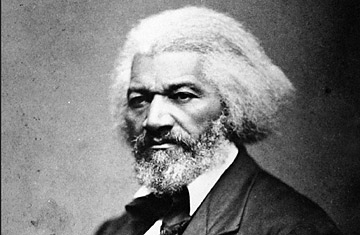
5 Facts about Frederick Douglass

By Joe Carter

February 14 is the chosen birthday of Frederick Douglass (1818-1895), one of America’s greatest champions of individual liberty. Here are five facts you should know about this writer, orator, statesman, and abolitionist:

1. Douglas was born into slavery in Maryland circa 1818. (Like many slaves, he never knew his actual date of birth and so chose February 14 as his birthday.) He was given the name Frederick Augustus Washington Bailey but decided to change it when he became a free man. Although he was set on keeping his first name “Frederick”, he asked his friend Nathan Johnson to help him choose a last name. Johnson had been reading Sir Walter Scott’s narrative poem, Lady of the Lake, and recommended the name of a main character: Douglass.

2. In his youth, Douglass taught himself to read, aided by scraps of reading material he found and with the help of some white children he came into contact with in his neighborhood. Soon after, while hired out to a Maryland farmer, he surreptitiously taught other slaves to read the New Testament at a weekly Sunday school. It was during these meeting that he plotted his first escape attempt, for reading and writing sparked a desire for freedom. “Once you learn to read,” he would later write, “you will be forever free.” In 1845 he wrote about his life of bondage in Narrative of the Life of Frederick Douglass, an American Slave. The book became an instant bestseller and the preeminent example of the literary genre known as slave narrative.

3. After escaping to the North, Douglass settled in New Bedford, Massachusetts where he became a preacher in an African Methodist Episcopal Zion church. Honed in the pulpit, his oratorical skills would make him one of the most sought after abolitionist speakers of his day. Douglass was associated with a school of the antislavery movement that believed slavery should be ended through moral persuasion, and he attempted to use his writings and speaking events to educate slaveholders and Southerners about the evils of slavery.

4. Douglass spent nearly two years traveling in Great Britain speaking for the abolitionist cause. He was even encouraged to settle in England because his fame made it risky for him to return to the U.S., where federal law gave his slavemaster the right to seize Douglass. Two of his English friends, however, raised $710.96 to buy his freedom. At the age of 28, Douglass finally became a free man.

5. Even before the Civil War brought an end to the American slavery, Douglass became active in the women’s suffrage movement. He became so famous within the women’s rights movement that in 1872 he was nominated for Vice President of the United States at the Equal Rights Party convention. Although he declined the nomination and refused to campaign, he became the first African American to be listed on a presidential election ballot. In 1888, he also received one vote from the Kentucky Delegation at the Republican Convention in Chicago, making him the first African American nominated to be a U.S. presidential candidate for a major political party (he had also received a single vote to be a U.S. presidential candidate during the National Liberty Party Convention in 1848).

JOE CARTER Joe Carter is a Senior Editor at the Acton Institute. Joe also serves as an editor at the The Gospel Coalition, a communications specialist for the Ethics and Religious Liberty Commission of the Southern Baptist Convention, and as an adjunct professor of journalism at Patrick Henry College. He is the editor of the NIV Lifehacks Bible and co-author of How to Argue like Jesus: Learning Persuasion from History’s Greatest Communicator (Crossway).

Read more

Why We Need to Bring Back the Gold-Backed Currency

By  Jacques Jonker

When people are confronted with the daunting question of “What is money?”, they usually stare at you like you’ve just asked them to explain the equation for special relativity.

Money is anything with inherent value that is used to measure the value people attach to products and services. It acts as a medium of exchange in order to facilitate trade. What started out as people trading physical goods for one another, developed into an immensely complicated modern economic system as more specialised products and services arose. People realised they needed a universal medium of exchange, and this led to the revolutionary invention of money.

There exists an interdependent relationship between money and goods & services: the value of money is measured in the number of goods and services it can purchase (purchasing power) and the value of goods and services is in turn measured in what amount of monies is needed to purchase it (prices). It is a very delicate balancing act which can only be achieved by the invisible hand of the market, which is why the market must be free.

As far as inherent worth goes, gold seemed a pretty solid option to use as money. Here’s why:

The amount of gold relative to the number of people is relatively miniscule; the demand outweighs the supply by far. Gold thus has a lot of value attached to it. Seeing as the global population keeps increasing, the demand for gold also keeps increasing. Hence the rise in the value of gold; it keeps getting relatively scarcer. It thus makes complete sense to use it as a medium of exchange seeing as it keeps its value.

As nations rose and fell and economies grew ever more complicated, governments the world over decided that the best way to maintain gold as the primary means of exchange, but also make it more “flexible” in order to adapt to modern specialised markets, was to have it represented by paper money and coins. Currency was thus invented.

Currency is different from money in that it has no inherent value. It merely represents the real money: gold. Currency is also easily divisible into much smaller units. Currency was essentially a middle man that nudged its way in between gold and domestic products and services. The balancing act became even more delicate. The gold standard was created.

The gold standard is a fool-proof system at worst. The value of the gold is measured in terms of the currency used. The gold backs up the currency and gives it value and consequently purchasing power; another fine balancing act that can only be achieved by the market’s invisible hand. This act determines the purchasing power of the specific currency.

As explained earlier, in the long run the value of gold keeps rising as the level of demand grows at a faster rate relative to the level of supply of gold. The paper currency representing the gold will thus not lose its purchasing power. When the US finally decided that the whole “live within your means” thing wasn’t working for them, Nixon abolished the gold standard in 1971 and replaced it with a fiat currency.

The word fiat’ is a Latin term meaning “let it be done”. A fiat currency is a system of currency that is backed not by anything of value but by a central government’s arbitrary authority. The US Federal Reserve, for example, is allowed to print US dollars non-stop as long as its financial overlords give it the green light. The only difference between a $1 bill and 1 Monopoly bill is that the government sanctions the former as a viable means of exchange. Yet, it has no inherent worth.

Currencies’ worth is now determined by market forces within the money market, the place where currencies compete for domination. The quantity of currency within an economy can now be adjusted by a central government in order to influence the exchange rate, internal interest rates, and thus the value the currency holds. Reserve banks can also influence exchange rates by actively competing in the money market, also known as ‘dirty floating’. It is no mystery why governments keep on printing worthless paper money: massive expansionary fiscal and monetary policies demand it.

Economists such as Michael Maloney keep warning governments and central banks that they’re creating an unsustainable global financial bubble that is going to implode. There is no foundation on which modern economies are based. Money exists no more.

What we now have is an artificial form of “money” with no inherent worth. It is simply not sustainable. The gold standard keeps the economy in a state of natural unison. It is a system that balances itself out. It is a system that works. It is a system that is endowed with foolproofness by its very nature.

Republished from RationalStandard.com

Read more

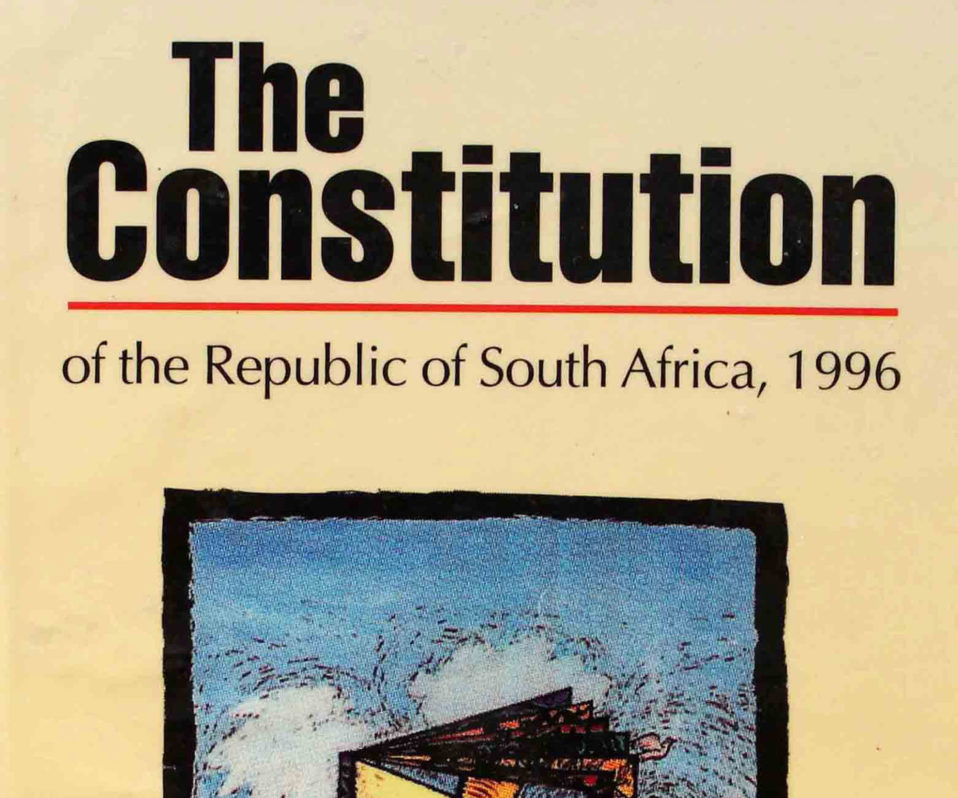
The Nature of Government and the Fatal Flaw in South Africa’s Constitution

By Martin Van Staden

What needs to happen before South Africans realize that the institution of government is not a friend, a servant, or a protector, but a rival that only does good insofar as it is restrained? Our continued trust in government enables its continued expansion and its tendency toward corruption.

The Problem

My recent article on the Western Cape provincial government’s decision to implement an authoritarian alcohol policy sparked quite a bit of controversy which I expected, and preempted in the article itself. Despite South Africans’ daily lived experience telling – shouting at – them that government only undermines them, the institution still enjoys widespread trust, not only in the Western Cape under the Democratic Alliance (DA), but nationally.

This is a particularly grave problem in South Africa due to what I consider to be a fundamental error in our constitution. But, moreover, it is a problem because those who trust government are invariably unaware of the nature of government.

On 24 April 2016, the former liberal and former DA leader Tony Leon wrote a valuable opinion piece in the Sunday Times, titled “Nkandla excesses exposes the glaring gap in founding law”. This article came only weeks after President Jacob Zuma confidently toldAfrican National Congress (ANC) supporters that the Rule of Law can be changed with a majority in Parliament. Those who who are a little more legally aware would know that the Rule of Law is not a rule of the law, but a doctrine which, as Judge Tholakele Madala and legal scholar Professor Friedrich von Hayek both said, permeates all law.

(The subeditor who chose Leon’s article title was incorrect in describing the Constitution as our “founding law”, as there has been complete legal continuity in South African constitutional law since 1910. The founding law of South Africa as we know it is the South Africa Act of 1909, passed by the Parliament of the United Kingdom. The Constitution is, instead, our supreme law.)

The article summarizes South Africa’s problem: We enacted a constitution for a moral saint – thought to be Nelson Mandela – and not for a real human being. As libertarians in South Africa and abroad had been warning for decades (centuries, if one counts early classical liberal thinkers), the nature of government means that those who are inevitably attracted to government are people who seek power. This is an absolute rule. There is no reality in which the institution of government does not attract this type of human being. This problem cannot be eliminated. It can, however, be tempered and suppressed, and for that to happen, certain institutions need to be entrenched in political society.

Indeed, if is often said – but rarely heeded – that when a constitution is being drawn up, the drafters must imagine that their very worst political enemy will be in government under the framework they devise. As Leon Louw has said in the past, at constitutional negotiations (like the one that brought Apartheid to an end) the party which will govern after the Constitution is adopted should be chosen at random (say, by a draw). On that basis, the drafting of the Constitution should commence. Thus, between the National Party and the ANC, each of the parties should have participated in the constitutional drafting on the assumption that it is the other which will govern. In this way, the best constitution would have been made: One which limits and decentralizes government.

It must be emphasized that when contemplating a political solution to a problem or devising a new political framework, the answer will always lie with institutions, and never with individuals – not “uniter” Nelson Mandela, not “outsider” Donald Trump, not “capitalist crusader” Herman Mashaba. These institutions must be both customary and legal, meaning that not only should there be strong legal restraints on government, but it must become unthinkable for those in government to do certain things.

The Nature of a Constitution

One of these (legal) institutions is a constitution.

A constitution, properly understood, is a special type of law that, unlike other laws, addresses itself to the government (not the people) of a society, and lays out what that government may, and crucially, what it may not do. The core message of constitutionalism is everything which is not allowed is forbidden. Constitutions are one of those things a society cannot afford to get wrong, because they are not transient, and it should always be assumed that governments will try to interpret them in a manner that benefits them.

The Constitution of South Africa, unfortunately, reads like a constitution meant to be transient. The Preamble and the Bill of Rights are filled with references to Apartheid, which will render it an awkward read for someone in the year 2117. This fundamental error undermines the constitutional (rigid, fixed) nature of a constitution by, essentially, giving South Africa a weird temporal status: We will always be stuck just after Apartheid. Time stands still legally.

In the Preamble we “recognise the injustices of our past” and set out to “heal the divisions of the past”. In the property rights provision, government is empowered to secure tenure which has been rendered “insecure as a result of past racially discriminatory laws”, and people who were dispossessed “after 19 June 1913 as a result of past racially discriminatory laws” may seek restitution or other redress for such dispossession. (As an ardent proponent of restitution, I believe this could have been framed far more appropriately, without using words like “past” or specific dates. Besides, the rei vindicatio action exists in our law anyway, allowing true owners to get possession of their property back.) Similarly, government is empowered to take measures to realize the right to education “taking into account the need to redress the results of past racially discriminatory laws”.

Examples like this abound.

The United States’ Declaration of Independence was a transient document, filled with references to the oppression of the British Empire. It was not a constitution, but a legal instrument which served one purpose and did so within a short space of time. Decisive executive action was naturally required for the Twelve Colonies to separate from the Empire. The war was fought and won. The U.S. Constitution was not meant as “a contract or a statute”, writes Professor Stephen Macedo in The New Right v. The Constitution, “but a majestic charter for government, intended to govern for ages to come and to apply to both unforeseen and unforeseeable circumstances.”

South Africa’s constitution, also presumably meant for the ages, has bound us up (theoretically) in perpetuity with the legacy of Apartheid and the requisite decisive executive action that goes with solving it. Our war against the legacy of Apartheid was made legally permanent and with it, an excessively powerful executive government was made similarly legally permanent. As a consequence, South Africa’s courts have time and time again reaffirmed the principle that because of the legacy of Apartheid, government must have extraordinary powers to deal with it. While the judges themselves might not realize it, this has directly enabled the kind of corruption we see today.

The Rule of Law

Another important legal institution that needs to be entrenched in any society that seeks to be free, is the Rule of Law.

To simplify, the Rule of Law means that society is governed by proper law, and not by the whims of man. The whims of man often take the form of law, but lack the legitimate character of law. (Indeed, do not confuse rule by law with the Rule of Law.) Proper law are rules informed by reason, evidence, and the time-tested principles of law, like rigidity, predictability, certainty, and proportionality. Libertarians would add to this and say that proper law are those rules which have a basis in the social contract: That government exists only to protect people and their property, and that in return people have sacrificed their natural ability to be violent in pursuit of their goals.

The Rule of Law is formally entrenched in South African law per section 1(c) of the Constitution, which states that South Africa is founded on the supremacy of the Constitution and the Rule of Law. But while the supremacy of the Constitution has seen relatively broad recognition, the co-equal supremacy of the Rule of Law has been afforded lip-service. From Herman Mashaba dropping “the rule of law must be upheld!” in every new Facebook post to Jacob Zuma ostensibly calling for the Rule of Law to be respected (but thinking it can somehow be ‘changed’ in Parliament), everyone knows about the Rule of Law, but very few people think of it as something consequential.

Research done by the Free Market Foundation appears to indicate that virtually all legislation passed by Parliament violates at least one tenet of the Rule of Law. For instance, essentially all laws which empower executive officials to make decisions, like create regulations or ‘determinations’, does so without any guiding criteria (save perhaps for the cop-out “public interest” criterion), meaning that it is the whim of man rather than the Rule of Law which governs in that particular respect. From mining licenses, to private school licenses, to healthcare regulations, officials have all the discretion in the world, and, in effect, create law which we must abide by. This latter function is supposed to be the domain of Parliament, not officials.

This, obviously, enables corruption.

If a regulator has the power to revoke or not renew a license without having to adhere to any strict criteria, it follows that companies will not want to sour their relationship with the regulator. It follows that bribes become a very likely occurrence. Arbitrariness and corruption are two sides of the same coin.

The courts, too, have tended to ignore the Rule of Law under the guise of ‘deference’. They endorse a minimalist notion of the Rule of Law whereby Parliament or the executive must simply act in accordance with the provisions of existing legislation, regardless of whether the legislation itself violates the Rule of Law. Where the courts have admitted that legislation violates the Rule of Law, like the Currency and Exchanges Act, they have refused to declare them unconstitutional, because, for some reason or another, the courts are unwilling to put two and two together, and understand that the Constitution provides for the co-equal supremacy of both the Constitution and the Rule of Law. It must, thus, follow that anything inconsistent with the Rule of Law is unlawful.

In South Africa, the apparent mixture of transience and permanence in our constitution, coupled with the fact that the Rule of Law has not been respected for centuries, has an oppressive and corrupt government as a consequence.

Jacob Zuma has simply reaped the rewards of an errant system of government. He did not create it. He sought power, which was handed to him on the silver platter known as South African constitutional jurisprudence.

Be Conscious of the Nature of Government

This situation is, however, not hopeless.

We must be careful not to think that ridding ourselves of Zuma is the key to return to liberal constitutional democracy; it is not.

Instead, the first step to moving in the direction of accountable and constrained governance is consciousness.

All it takes to turn the tide, is for South Africans to realize the true nature of government. Everything else will fall into place as a natural consequence of that realization, and nobody will be worse for wear. It is not a zero-sum game. This realization comes at the expense of nothing and nobody, save perhaps for corrupt politicians and their cronies.

Force, compulsion, coercion, and violence are the essence of government. These characteristics are inseparable from that institution, and rightly so – government, as a concept, came about because of the need for a forceful institution to protect individual rights. But just like one does not appoint a mercenary to run a nursery for babies, one should not appoint government to do anything other than protect persons and property from violence or fraud. This is what government is supposed to be limited to, and why force is a crucial ingredient to its nature. But government has not been kept to its proper role, and we have been reaping the fruit of this grave mistake for centuries. This is why acknowledging and appreciating the nature of the institution of government is key to solving all the problems which have resulted from this mistake.

When, or if, South Africans start this process of acknowledgment and appreciation, things like the Western Cape alcohol policy will become impossible. The Western Cape government would not be able to pass such a policy if it did not have broad appeal, which it clearly and ignorantly does have. Similarly, the entire notion of tenderpreneurship would immediately fall away. The over-reliance on government education and healthcare will end at once as communities, now disgusted by the very idea of government involvement in those things as a means of social control, band together and establish community-run private schools and clinics.

Legal and political scholars have been trying to evade the nature of government for centuries. They often acknowledge the general principle that government is a violent institution which must be constrained to only its social contract duty to protect person and property, “but”, they say, this or that circumstance necessitates a greater role for government.

In South Africa today, the “but” is the legacy of Apartheid. During Apartheid, the “but” was the possibility of black domination over the white minority. During the prior century, the “but” was the proximity between the British and the Boers. During the early Cape settlement, the “but” was the isolated location of the colony. There is always a “but” which has the effect of defeating the general principle.

It is, and has always been, high time to stop with the “but”. The “but” has only ever created more problems and more cause for more even more “buts”. This will continue unless people draw a line in the sand. This might sometimes mean forgoing the possibility of revenge or advancing certain group interests, but it is absolutely necessary to kick-start a free and prosperous society.

Conclusion

For as long as South Africans continue to envision the solution to our problems to be found in government, will we continue down this endless cycle.

This applies not only to the Democratic Alliance as well, but especially to the Democratic Alliance, because the DA now finds itself in many people’s political blindspots. One never truly appreciates the nature of government if particular organizations or individuals are caught in their blindspots. Nobody is exempt from the nature of government as a forceful institution which can inherently overpower any non-governmental actor for any reason. Whether it is me, Herman Mashaba, Pravin Gordhan, Donald Trump, Barack Obama, or Jacob Zuma in charge of government, the nature of government never changes.

Trust in yourselves, first and foremost, and in your families and communities. Never trust government, especially if it says it seeks to help, and especially if it is ‘your guy’ who is in power.


Read more

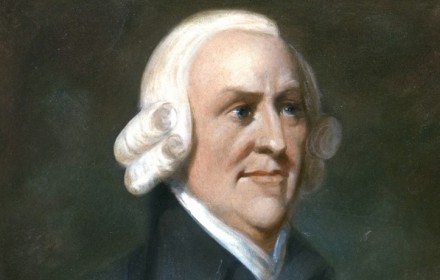
Adam Smith’s Concept of Justice

by Dr. Vernon Smith

One of the best-known quotations from Adam Smith’s The Wealth of Nations (1776) defines natural liberty: “Every man, as long as he does not violate the laws of justice, is left perfectly free to pursue his own interest his own way, and to bring both his industry and capital into competition with those of any other man.”

Smith inserted the condition “so long as he does not violate the laws of justice” ahead of the directive because it was central to his conception of liberty. What everyone remembers is “free to pursue his own interest,” with the last often turned into “self-interest.” But Smith’s conception of human sociality and economy—I like the word “humanomics”—was far deeper than modern utilitarianism.

Justice is the infinite set of permissible actions remaining after specifying the finite limited set of prohibited actions and corresponding penalties.

What did Smith mean by justice, and why is it so important for understanding his message? The carefully articulated answer was in his first book: The Theory of Moral Sentiments (1759, pp. 78-91).Justice for Smith was the negative of his proposition on injustice, which stated that improperly motivated (that is, intentionally) hurtful actions alone deserve punishment because they are the objects of a widely shared sense of resentment.

Rules that punished in proportion to resentment emerged naturally in pre-civil society as a means of defense only against real positive evil and to secure innocence and safeguard justice.

Hence, justice is a residual. Justice is the infinite set of permissible actions remaining after specifying the finite limited set of prohibited actions and corresponding penalties.

Imagine a large playing field in which people explore, discover, and innovate, but with well-defined foul boundaries that people are not to breach without penalty; these boundaries will change, based on consent, with experience, culture, and technology.

Smith saw society as seeking human socio-economic betterment through the control of actions that our common experience leads us to judge as hurtful rather than through collective actions designed to achieve future conjectured benefits. The latter is uncertain and fraught with unintended consequences; moreover, history is littered with examples of grandiose failures. The former relies on natural impulses for individuals and assemblies to pursue betterment, risking only their own resources; this framework led him to oppose slavery, colonialism, empire, mercantilism, and taxation without representation at a time when such views were unpopular.

His policy views derive from his belief that every person’s socio-economic achievements should depend as much as possible on merit and as little as possible on privilege.

Reprinted from the Independent Institute

Read more

Will technology enable workers or replace them?

As the next generation of robots arrives in the workplace, will they enable workers or replace them? According to MIT’s Daron Acemoglu, one of the most frequently cited economists in the world, this distinction is the difference between technology that raises workers’ wages versus tech that reduces overall employment and stifles wage growth.

Daron Acemoglu is a professor of economics at MIT, a frequent contributor to Foreign Policy Magazine, and co-author of the book Why Nations Fail: The Origins of Power, Prosperity, and Poverty. He joined me to discuss his recent research and what technological innovation means for the future of work.

Some of your recent work has looked at how the increasing use of machines will affect workers, and your conclusions aren’t too optimistic. In particularly your paper “Robots and jobs: Evidence from US labor markets” shows how robots have a negative effect on both employment and wages in some communities. This finding has been treated with some alarm and I see people using it as evidence we’re headed toward a jobless future, the robots are going to gobble up all the jobs, etc. And one reason I think there is this alarm from your paper — aside from the fact that we’ve seen the rise of new technologies at exactly the same time that we have a weak recovery after a recession — is that the standard Econ 101 perspective might be different than your finding from the paper.

So first I want to give a review of what that standard perspective is. I got a report from a consulting firm that was very optimistic about our future with robots, AI, and jobs. Here is the happy ending the consulting firm gave me:

New automated technologies will boost productivity considerably over time. This will generate extra income, initially for the owners of intellectual and financial capital behind these new technologies, but eventually feeding into the wider economy as this income is spent or invested in other areas. This additional demand will generate more jobs and increase incomes especially in sectors that are less automatable. So, the historical evidence suggests that automation will eventually lead to broader, similar overall rates of employment, and higher average real incomes across the country, though there might be a different skew to the income distribution.

So that is a fairly happy ending despite all the concerns of the rise of the robots. To what extent do you agree with this happy ending scenario?

I think that’s something we don’t know about. I think there is a lot of comfort in thinking that there is an inexorable link between productivity, wages, and employment, and everything is going to be fine; but, there are so many unknowns. I would interpret my research here, and it really goes perhaps even against my own priors, as concerning but not alarmist.

Alarmism would be: We’re losing jobs so quickly that within the next generation’s lifetime, we have some major problems if we don’t do something about it. That’s not the case. The rate of job loss from automation or this particular branch of automation, robotization, is relatively small over the last 20 years or so, perhaps less than half a percentage point of the population, (the working age population). So, we’re not talking about huge numbers.

I think what the result signifies is important to put in a broader context, and that was your question. The way that Econ 101 thinks about productivity, employment, and wages, is that whatever increases the productivity is going to translate into wages relatively quickly. And we used to chastise Keynes, one of the greats of economics, for predicting in 1929, before the Great Depression in a speech that he gave, that rapid technological changes would reduce demand for labor and lead to technological unemployment, or much shorter working days or working weeks for people. And that hasn’t come true obviously in the intervening 90 years.

But, the conceptual point that new technologies could reduce the demand for labor, rather than increase the demand for labor, is a possibility and it’s not a crazy idea. There are many conceptual reasons why that could be the case, and I think what makes it more likely is precisely new technologies that automate — meaning replace tasks that were previously performed by labor. And it’s not a crazy thing because there are other examples in which this happens. Almost one hundred years from the beginning of the British Industrial Revolution to the middle of the 19th century did see an unprecedented rate of arrival of new technologies that totally transformed how production, especially textiles but also in other industries, took place. But we didn’t see pretty much any change in wages, and that led to what is sometimes called the living standards paradox.

I think that is another example in which many technologies that replace workers in important tasks in the economy do not necessarily translate into higher wages and higher labor demand immediately. And I think the important point here is a concern but not alarmist, because I think how we deal with these technologies, and whether we can turn them into things that essentially lift all boats very much depends on our institutional and educational responses to them.

The British economy, in the middle of the 19th century, started a breakneck pace of institutional transformation, things that we had not seen before. You know, a welfare state of sorts, taxation, unions, and it also started investing in skills at a very high rate by historical standards. I think those were not unimportant in turning this wave of technologies into something that increased wages for the average working man of Britain. So, that’s why this is the right time for having this conversation about what these new technologies are doing, what we expect them to do, and how we can work toward making them work for us.

I have mentioned technology, you have mentioned technology, but one of the points that you make in your work is that not all technology is the same. And in fact, you differentiate between what you like to call “enabling technology” versus “replacing technology.” Can you talk about the race between those two things, and how that race is changing?

Absolutely, I think that is exactly the crux of the matter. Enabling technologies are essentially what we focus on in basic economic analysis. Those are the things that make the workers more productive in tasks and functions that they are already performing, and perhaps even also expand those tasks. They tend to increase wages and labor demand because they are making workers more productive. When you look at the details, it’s more complex because when you make workers more productive, sometimes you need fewer of them in some activities, and they can get reallocated to other activities. But at its root, this type of technology is directly making workers more productive; but this is very different from replacing technologies.

What would be an example of an enabling technology?

An example of an enabling technology that I like to give — but I think every technology has some grey areas — is the computer assistive design machines, or new spreadsheets. Those take some very specific types of workers. For computer assistive design machines, it would be design workers, and this type of technology increases their productivity. Now they can design things much more precisely, they don’t have to waste time doing repetitive tasks, and it boosts their potential capabilities. Spreadsheets, the same thing. If you are a mid-level or supervisory worker, or essentially a non-routine clerical worker, spreadsheets, early on in the 1980’s, really expanded your capabilities quite a bit.

In contrast, replacing technology directly displace workers from the tasks they were previously performing. A good example would be ATMs; ATMs took away a whole range of tasks that bank tellers were performing, so now we don’t need the bank tellers for those tasks. Now it doesn’t mean that ATMs don’t have the capability or the potential for raising wages, they could do it through the optimistic scenario that you outlined in the beginning of our conversation. Now ATMs make the business of bank transactions much more productive, and as those become more productive, we want to consume lots of other things. We want to perhaps now consume advice from bankers about financial planning, and we also might want to consume more coffee and more cars, and things like that, because the banking sector has become more productive. And that increases labor demand in other activities, and that might be sufficient to offset the negative effects of displacement, or even surpass them.

What I hear about most of all, and what you also focus on in the paper, is robotics and artificial intelligence. Are those — and again technologies in some ways can be enabling and maybe also replacing — but are those technologies fundamentally replacing technologies that are going to result in job loss and probably stagnating wages for some people?

I think the odds are in the favor of these technologies being more on the replacing side. If you look at robotics, what that technology does is it automates and increases the ability of machines to do relatively more complex tasks than manufacturing workers were performing before. AI is very much geared toward applying machine learning to big data, to unstructured data, in order to replicate human judgment and human decision-making in a variety of things. And according to the experts, we are getting to the point where we can use AI to perform tasks that were previously done by accountants, financial planners, paralegals, definitely customer service, and the clerical occupations.

As these technologies advance and spread, if I was just going to look at the big economic numbers that get released every quarter, I might see GDP go up, I might see productivity go up, but that wouldn’t necessarily translate into incomes going up or good paying jobs being created then.

Exactly, I mean, obviously these technologies have a great potential for increasing productivity. Automation is about performing a variety of tasks and functions much more cheaply, and that will translate into greater GDP, greater riches for the nation. But it will not raise labor demand and it might harm a great many workers. Now, the puzzle, of course, is that over the last 15 years, or perhaps slightly longer, productivity numbers have been doing badly.

Right, I’ve been writing a lot about this productivity paradox, in which we certainly read about these great new innovations, whether it’s AI or robots — now everyone has a computer in their pockets, Silicon Valley is going crazy with startups — so it seems like there’s all this innovation and technological progress. But when you look at our productivity numbers, it looks like total stagnation; they’re flat-lining, and they actually started to weaken before the Great Recession. So, how do you think about that productivity paradox and how do we solve it?

I think this is one of these questions that is so puzzling that nobody has the answer to it. But I think it is important to get some facts on the table; back to like you said, this is not about the Great Recession, this is not about a cyclical phenomenon, this is something that we’ve been living with. Into the 2000s and perhaps even in the late 1990s, there was a pickup in productivity in the 1990s but even then, we’re not in the age of very rapid productivity as in the 1950s or the 60s.

Now, the second thing is, people point out the mismeasurement of productivity. I think that’s definitely something to be taken into account and we need a much better measurement. But it’s not as if the Bureau of Labor Statistics and the Bureau of Economic Analysis are idle. They are doing a great job in terms of trying to measure productivity as well as we can. And I think the evidence is, we’ve always mismeasured productivity to some degree and there isn’t a compelling reason to think that it’s gotten much much worse, that it explains all of this slowdown.

So, I think the big issue is that new technologies are coming, but it takes time for us to use them in the most productive way, and that’s for two reasons. One is, we need to adapt a whole host of supporting institutions in order for the productivity of these new technologies to be realized. If our organizations don’t work well with these new technologies, if the workers don’t have the right skills for these new technologies, that’s going to hold back the gains that we can make from them.

But the second one is that, in fact, the technologies are not sufficiently pervasive — yet. If you imagine our cars, the amount of new technology, high-tech gadget that are in our cars, it’s just mind-boggling. But you cannot drive our cars any faster than our grandparents did. Why? Because if you want to drive much faster, you need non-congested roads, much better tires, and there are going to be a whole host of other institutional limits for our ability to drive much faster. So, at this point, we can pack better and better software into the cars — perhaps our air conditioning can get better, perhaps our stereo system can get better — but the thing that we really want from our cars, which is get us faster from A to B, that’s not changing.

Now, the next wave can start transforming that, now you can have many more innovations together with the organizational adjustments, institutional adjustments, and we can go to driverless cars. And that can suddenly change the equation because even if the cars cannot go faster, the cost of doing that sort of driving is going to go down a lot. And that’s going to start changing. So, what that suggests is that there is a cumulative aspect to all of these innovations. And it may well be that we are still in the middle of this cumulative aspect.

I have seen numbers saying that you have productivity inequality, where you a smaller number of leading-edge firms which seem to be very productive and very innovative, and then everyone else is getting left behind. Could it be that we are innovative and we are productive but it’s limited to superstar firms, and either there’s not enough competition so other companies aren’t taking up these innovations, or they’re hard to figure out, and these other companies just figured it out sooner? Is the future already here, just not evenly distributed?

I think that’s very important. I think the business of innovation is probably becoming more unequal and the phenomenon of superstar firms, as you’ve mentioned, is a real one. The US economy has become much more concentrated than any time for which we have data to measure concentration. There’s a recent OECD study which shows that if you look at the top firms in various sectors, and this is tracked over several OECD economies, their growth rate seems to be very similar to what it was in the 1980s and the 1990s. But if you look at the next tier of firms, the follower firms so to speak, they have slowed down.

So that again highlights the inequality in the technology treadmill or the inequality in the innovation capabilities of different firms. And that may have institutional reasons, but I think that it might also be a consequence of the nature of these new technologies. Once Google starts dominating all information, it’s very difficult for another search engine or for another company who wants to use another similar innovation for AI or for customer service to catch up with it, because Google has this superb war chest in the form of terabytes and terabytes and terabytes of data that nobody else can access.

Just to  jump back for a second to this idea that you have two different kinds of technological progress, replacing and enabling, it reminds me very much of some work done by Clayton Christensen over at Harvard, in which he talks about the different kinds of innovation. You have efficiency innovations, which is sort of classic; it’s a new technology, it replaces workers, overall it just reduces the cost of making existing products. Then he has what he likes to call sustaining innovations, which replace old products with new, such as a Toyota Prius replacing a Camry or something. And then he has what he calls empowering innovations, which are brand new products and services creating new jobs. He gives the example of Ford Model T or the Sony transistor radio. Could it be that the technological progress we’re making is just more of the sustaining or efficiency kind of innovation, and we’re just not generating enough of this enabling or what he calls empowering kind of innovation?

I think that’s exactly right. I think we are not creating the types of technologies that are going to use our available labor force. And I’m not sure the process versus product is exactly the right division. But obviously, many process innovations, exactly as you have suggested, would be of the replacing kind; but there are also process innovations like computer-assisted design or spreadsheets that increase our productivity, but do so in a way that enables existing workers to become more productive.

But it is also the case that many of the important products that we have created over the last several decades, over the last two decades in particular, have not added much to the bottom line employment figure. Think of Apple’s iPods and iPads and iPhones; they are amazing innovations and consumers have absolutely rewarded the company by purchasing billions of them. But, look at the number of employees working in the United States for producing these products — it’s very very small. So, there we have an intersection of new technologies that have a very heavy design component and the division of labor can be very finely broken down, and the labor-intensive parts of those products can be manufactured abroad. So, there is a sort of a parallel process to automation that’s increasing efficiency but it’s not really adding to the bottom line employment figure.

Is that a problem that can be fixed by policy? Can we rejigger things to create or change the balance? Move the needle more toward enabling and empowering kinds of innovation and technological change? It seems like we need more of that, but does that just fall like manna from heaven?

I think very much policy can play a role, but not an obvious one. Because I think there’s a lot of evidence that shows the exact composition of innovation and therefore the exact types of technologies that firms develop are responsive to policies and to financial profit incentives. The problem is, it is difficult for us to describe or recognize exactly enabling technologies when they are in the incubation period; so you cannot say we’re going to subsidize the enabling technologies. It was much easier for us to recognize green technologies, but even there, our track record of giving subsidies to green technologies is a mixed one. These sorts of fine incentives are very easy to game.

But I think there are other problems in the labor market and the innovation market that we can start thinking about. We implicitly subsidize production with machines relative to production with labor. If you buy a machine, you don’t have to pay payroll taxes, you can debt finance it, and that’s going to get a subsidy from the government. And the capital income that is generated is going to be taxed at a lower rate. If you hire a worker, you have to pay payroll taxes, they are going to be taxed at a much higher rate, you have to put up with lots of other costs coming from regulations, and other things you have to do when you’re employing workers. So that creates a very non-level playing field, so we’re essentially subsidizing firms implicitly for using machines rather than labor. So I think it’s probably a good idea to start thinking about how we can even that playing field a little bit. So I am definitely not suggesting a robot tax so that we can raise revenues.

That was my next question about Bill Gates and the robot tax.

I can comment on that, but I think what I’m suggesting is, let’s not subsidize robots and other machines implicitly while making it much harder for firms to higher labor.

I have heard people suggest though, when they look at those productivity numbers they say, “Well, gee, that to me looks like companies aren’t using enough machines, so maybe we need to dramatically raise the minimum wage, make workers more expensive, and then companies will, say, use more kiosks and they’ll become more productive and down the road, we’ll have higher growth and higher productivity.” So there’s also that flipside argument that I hear.

Well there is some of that going on, you know, certainly if you look at countries where wages are higher and workers are scarcer, you see more automation. So the US, actually, is a laggard in automation. South Korea, Japan, and Germany are far ahead of the United States in the use of robots and perhaps more worryingly, if you think that robots are part of the future, we don’t have any of the major robot producers in the world; they are all in Japan and Germany, so we are lagging behind there.

But I think taxing employment and workers further would definitely be at the very very very bottom of my list of good ideas. Because I think the problem we are going to be facing in the next several decades is how can we encourage people to be part of the labor force. And I think the United States does very well on that, relative to other countries, partly because of the earned income tax credit. So I think certainly the minimum wage has a role in making sure that some workers are not paid very very low wages, especially if you take workers who don’t have any other option so they might be subject to monopsony power. But I think jacking up the minimum wage so that you force firms to sort of automate more — I think that probably is going to be very distortionary.

And we did mention the robot tax, which is interesting because when Bill Gates mentioned it, he mentioned it both as a source of revenue to help with retraining, but he also specifically mentioned it was a way of slowing down progress and giving workers more time to adjust. I mean it makes a difference for truckers — which you always hear about now when you hear about automated vehicles — it matters whether we go to level 5, full automation in the trucking industry over 10 years versus over 25 years. So do you have any sympathy to slowing down the pace of automation to give workers more time to adjust?

Well what I would say is three-fold. First of all, I believe that if we are indeed, as I just have tried to articulate, subsidizing capital, then that’s distortionary, and that’s a bad idea. We should be having a level playing field. I think we need to go much deeper into this and look exactly at various different types of technologies and see if some of these numerically controlled machines or other automation technologies, as well as robots, are being introduced precisely because labor is being artificially made more expensive. And if that’s the case, there is an obvious thing for us to do.

Second, I totally agree with you; the issue is one of adjustment of labor. So if labor is suddenly caught unaware about what’s going on, and is thrown out of work because of automation, the costs of that are very high. Detroit is the case in point. But, we know self-driving cars and self-driving trucks are coming, so it’s not as if it is going to hit anybody as a big surprise. It’s just that US society does not have the institutions to prepare either the workers currently in this occupation, or even worse, the youth that will be graduating from high school or college in the next few years. We’re just not providing them with the human capital and training opportunities and vision to prepare for them so that they can work with the machines rather than try to do what the machines are doing.

So slowing down the progress, I think, yes and no. If the problem is we are totally unaware and this is hitting us as a surprise, there might be some adjustment process that might help us. But I think, at the end of the day, these technological changes are also our future; we want to have rapid technological change because that’s where the productivity gains are coming, and that’s where productivity gains are going to come from. So we don’t want to slow down the technological progress, we want to turn the technological progress and our skills so that they can work with each other.

We’re already going long, and we did not even get a chance, unfortunately, to get to Why Nations Fail, which I think probably has a lot to say to us these days in the United States. So I just want to end as I always do. I go online and I ask the Twitter-verse for questions, so here’s that question: “The thing that every middle-class parent wants to know is, dear God, what should my child major in when they go to college, given our technological progress and automation?” So what should the kids be majoring in and studying to deal with this future? Do they all have to be computer science majors?

I think that’s a great question and you know what the funny thing is? That parents are asking this question, but policymakers aren’t. Who in the current administration is worrying about such things, for example? Nobody. I think we don’t know the answer to that. We know certain things: We know that flexibility is a great asset in the current labor market and will become a bigger asset, and a more valuable asset in the decades to come. That we want students who can adapt to different circumstances, who can reconfigure themselves to use and deploy different types of skills, and that’s very important, and that’s not something that our high schools or even our colleges do a good job in. But if you go in greater detail, do we need workers who have numeracy skills? Do we need workers who have better software skills? Do we need workers who are better at teamwork?

I don’t think we know these things. Obviously, there is going to be a small elite group of workers, perhaps 2 or 3% of the US labor force, who are going to work in computer programming, designing these AI, big data machine learning programs, or designing new products, and those workers need to have all the computer science and all the technical expertise they can get. As well as the vision; I mean, it’s not just about knowing how to program. Steve Jobs didn’t become Steve Jobs because he was the best programmer. He had a vision, he had a way of conceptualizing the product that other people could not, so that’s actually a broad skill.

But let’s take somebody who’s going to work in the financial industry. Do they need to know much better programming so that they can seamlessly program the AI machines? Possibly, but probably not. Probably the AI technology is going to be developed enough that people who use it don’t actually need to reprogram it. But they may need to have a broader set of skills so that they can act as the conduit between these programs and the customers. They may need to have much better teamwork and soft skills in the new labor market. We just don’t know that because we have not been studying it.

So in some sense, this is reemphasizing what I was trying to say earlier on. The changes that are going to come in the next 20 years shouldn’t surprise anybody, but we are totally unprepared for them.

Read more