
Blog

Волна FM Слушать Онлайн Бесплатно Прямой Эфир в Высоком Качестве

В случае отсутствия подобного оповещения абоненту Волна мобайл следует настраивать девайс вручную. Управление номером выполняется через специальное мобильное приложение для Android и iOS. В приложении можно контролировать расходы на связь, постоянно быть в курсе крымских новостей, пополнять счет и контролировать остатки пакетов. Компьютерная техника должна быть своя, но мобильный оператор обеспечивает безлимитный интернет, монитор, МФУ, рабочее место. Мобильная связь охватывает всю территорию Республики Крым и Севастополь.

  • Оплатить услуги связи «Волна» можно несколькими удобными способами, используя свой уникальный номер лицевого счета.
  • Где есть ответы на самые распространенные вопросы, связь с оператором.
  • Учитывая свойства субстанции, в которой распространяется излучение, а также сложный в общем случае спектр сигнала, вводится понятие фазовой и групповой скорости волны, то есть скорость «центра тяжести» волнового пакета.
  • Максимально приближаются к монохроматическому излучение лазера, мазера, радиоантенны.

Горячая линия Волна Мобайл: как позвонить оператору?

Условием монохроматичности является удалённость области рассмотрения от переднего фронта волны, а также характер излучения источника. Если источник некогерентный, излучение состоит из наложения большого числа отрезков волн. Для описания когерентности сигнала вводится понятие время когерентности и длина когерентности13. Для сложных процессов с дисперсией и нелинейностью, данная зависимость применима для каждой частоты спектра, в который может быть разложен любой волновой процесс.

Важным частным случаем волн являются линейные волны, для которых справедлив принцип суперпозиции. Многообразие волновых процессов приводит к тому, что никаких абсолютных общих свойств волн выделить не удаётся1. Одним из часто встречающихся признаков волн считается близкодействие, проявляющееся во взаимосвязи возмущений в соседних точках среды или поля, однако в общем случаеуточнить может отсутствовать и оно1. На сервисе собраны лучшие предложения провайдера с домашним интернетом, мобильной связью и телевидением.

Тарифные планы домашний интернет

Кроме услуг голосовой связи, оператор обеспечивает мобильную передачу данных. Диаграммы вынужденных колебаний в конечной однородной упругой линии с незакрепленными концами при воздействии внешней силы на внутренние элементы линии. Бегущие волны, как правило, способны удаляться на значительные расстояния от места своего возникновения (по этой причине волны иногда называют «колебанием, оторвавшимся от излучателя»источник не указан 5134 дня).

Функционал личного кабинета

Введите адрес в форму ниже, чтобы узнать, какие доступны в вашем доме. В статье найдёте номера горячей линии провайдера и другие способы задать свой вопрос. При подключении вы получаете не только профессиональный монтаж, но и полную настройку всего необходимого оборудования, а также подробную консультацию по использованию услуг.

Как узнать свой номер и тариф в операторе Волна Мобайл

Она проявляется при прохождении света через стёкла и другие прозрачные среды. В этом случае максимумы волн волнового пакета движутся быстрее огибающей. В результате в хвостовой части пакета за счёт сложения волн возникают новые максимумы, которые передвигаются вперёд и пропадают в его головной части. Учитывая свойства субстанции, в которой распространяется излучение, а также сложный в общем случае спектр сигнала, вводится понятие фазовой и групповой скорости волны, то есть скорость «центра тяжести» волнового пакета. Вынужденные процессы возникают в системе при постоянном динамическом воздействии внешней силы.

В апериодическом режиме противофазность колебаний соседних элементов сохраняется, но от точки возбуждения идёт интенсивное затухание колебательного процесса последующих элементов системы. При предельном переходе к динамической системе с распределёнными параметрами в идеальном случае амплитуды возрастают до бесконечности. В линиях с сопротивлением, амплитуды резонансов в любом случае конечны. Величина сопротивления/вязкости влияет как на амплитуды резонансов, уменьшая их, так и смещает частоты резонансов.

Оператор «Волна» уточнил информацию о проблемах с доступом к Telegram и WhatsApp

  • Помимо основных функций о пополнении баланса или смены тарифа, можно одним движением пальца подключить дополнительную услугу или отключить её.
  • В стремлении сделать вашу жизнь более комфортной, наша компания постоянно расширяет спектр инновационных цифровых решений.
  • Код можно использовать для входа в будущем, но запоминать его необязательно – в любую минуту можно будет бесплатно сгенерировать новый.
  • Если во время внесения параметров возникли трудности, следует выполнить перезагрузку устройства.

Установить кодовое слово может владелец SIM-карты с паспортом в центрах обслуживания и продаж «Волна мобайл» по заявлению. Кодовое слово — ваш личный пароль по которому оператор сможет идентифицировать вас. Зная кодовое слово можно управлять счетом с помощью службы поддержки. Примерно также будут выглядеть настройки для мобильных телефонов, которые работают на других платформах. Если во время внесения параметров возникли трудности, следует выполнить перезагрузку устройства.

Готовы подключить быстрый интернет в квартиру или скоростной интернет в частный дом? Оставьте заявку сейчас!

Свободные колебания являются результатом последействия после окончания воздействия внешнего возмущения. Для этих волновых процессов характерен дискретный спектр, соответствующий частотам внутренних резонансов динамической системы. Данные колебания описываются волновым уравнением (системой уравнений) с нулевой правой частью. В математике такого типа дифференциальные уравнения называют однородными, а их решения — общими. Для нахождения постоянных интегрирования в данном случае требуется знание ненулевых параметров колебания хотя бы в одной точке динамической системы. При нулевом отклонении параметров всей системы (отсутствии предварительного возмущения) общее решение уравнения будет обращаться в ноль.

«Волна» гарантирует высокое качество работ и берет на себя полное сопровождение процесса подключения от момента подачи заявки до начала использования услуг. Нужно с паспортом посетить Центр обслуживания и продаж или точки реализации партнеров данной фирмы. Требуется приобрести сим-карту и оформить соответствующий договор на пользование телекоммуникационной связью. Расчёт формы лучей при небольшой длине волны — по сравнению с препятствиями, поперечными размерами фронта волны, расстояниями до схождения волн и т. Это применяется в геометрической акустике и геометрической оптике. Максимально приближаются к монохроматическому излучение лазера, мазера, радиоантенны.

Поэтому если фазовая скорость в среде без дисперсии оказывается большей или меньшей скорости света, то такое же значение будет принимать и групповая скорость. При описании процессов распространения волн различают физическую и геометрическую дисперсию. Физическая дисперсия обусловлена свойствами среды, в которой распространяется волна. В этом случае фазовая скорость волны определяется приведенной выше формулой.

Особенно это важно при рассмотрении физических процессов излучения движущимся источником. «Волна» обеспечивает быстрое и качественное подключение домашнего интернета и дополнительных телекоммуникационных услуг всего за 1-3 рабочих дня. Процесс начинается с оформления индивидуальной заявки на подключение по вашему адресу, при этом дата и Фондовый рынок или Форекс время монтажа согласовываются с учетом вашего графика и пожеланий. Для получения персональной консультации и детальной информации об условиях подключения, тарифах и специальных предложениях, оставьте свой контактный номер телефона. Наш менеджер оперативно свяжется с вами, профессионально ответит на все интересующие вопросы и поможет выбрать оптимальное решение, соответствующее именно вашим потребностям.

Read more

Whats the Link Between Depression and Alcoholism?

People who are clinically alcohol dependent can die if they suddenly, completely stop drinking. Talk to a GP or your local community alcohol service who will be able to get help for you to reduce your drinking safely. Although managing both conditions takes time and commitment, many people go on to live fulfilling, stable, and connected lives.

  • The causal effect of AUD leading to depression implies that some cases of depression resolve after treatment of alcohol dependence 12, 30–33.
  • Alcohol is a powerful chemical that can have a wide range of adverse effects on almost every part of your body, including your brain, bones and heart.
  • If you or someone you love is struggling with bipolar disorder and alcohol use, BrightQuest offers comprehensive residential treatment for co-occurring disorders.
  • The combination significantly impairs anterograde memory, meaning a person can function and interact without forming new memories, leading to significant gaps in recollection.

Is It Okay to Replace Alcohol with Marijuana?

One frequently asked question and significant concern among those considering or embarking on this journey is, “Does Giving Up Alcohol Cause Depression? ” The answer, unfortunately, is nuanced and not a simple yes or no. This article delves into the intricate relationship between alcohol consumption, withdrawal, and the potential impact on mood, exploring why some individuals experience depressive symptoms when they stop drinking. It considers pre-existing mental health conditions, withdrawal effects, and the importance of professional support. That is, patients who believe that their current alcohol use will interfere with their depression treatment may be more willing to change their drinking than those who do not alcohol and depression see a link between the two. As part of this discussion, the therapists can attempt to highlight the discrepancy that exists between patients’ current situations and what they desire (Miller & Rollnick, 1991).

Public Mental Health Implementation Centre (PMHIC)

The best management is clinical observation after confirming normal glucose 1, 5. The term “medical clearance” is problematic because it implies different things to different providers and leads to unnecessary testing 1. A focused medical assessment is superior to routine laboratory panels in stable patients with obvious intoxication. Neuroimaging is reserved for patients with focal neurological deficits, altered mental status beyond what is expected from intoxication, head trauma, or concern for structural lesions 1. This patient’s drowsiness and slurred speech are entirely consistent with alcohol intoxication in someone who “smells of alcohol.” While chronic alcohol use can cause hepatic dysfunction, LFTs do not guide emergency management of acute intoxication in a stable patient 1.

Professional Medical Disclaimer

Alcohol and Depression

Medications such as mood stabilizers, antidepressants, or antipsychotics can help balance mood swings and reduce the frequency of manic or depressive episodes. In a residential setting, clients can safely adjust to these medications under close clinical supervision, ensuring effectiveness while minimizing side effects. Excessive drinking can actually cause or intensify episodes of mania and depression. For people who already have a genetic or environmental predisposition to bipolar disorder, alcohol use can make symptoms more severe or bring on new episodes entirely. Certain genetic and biological factors may increase a person’s vulnerability to developing bipolar disorder, alcohol use disorder, or both. Having a relative with one of these diagnoses doesn’t mean you’ll develop it, but it does raise your overall risk.

Fuel groundbreaking medical research!

Alcohol and Depression

Initially, drinking releases dopamine, which creates that temporary feeling of relaxation or euphoria. This kindling effect can also occur after chemical stimulus to the brain or body, such as anti-convulsant medication. This means a person’s alcohol withdrawal programme needs to be carefully planned, with close monitoring of its effects.

Alcohol and Depression

Find out how many people have alcohol use disorder in the United States across age groups and demographics. This guide outlines practical, evidence-based ways to manage symptoms safely and effectively. The pancreas is an organ that makes substances that support bodily functions including digestion and metabolism. Alcohol misuse over time can lead to pancreatitis, which can impair the production of digestive enzymes and can affect hormones that regulate blood sugar level. Drinking too much – on a single occasion or over time – can alcoholism take a serious toll on your health.

This can make older people more sensitive to the effects of alcohol. This means drinking over 8 units in one day for men, and over 6 units in one day for women. Other people drink alcohol to help them to deal with difficulties in their lives. It is legal for adults over the age of 18 to buy and drink alcohol in the UK. Generally, it is illegal for young people under 18 to drink or buy alcohol. You can find out more about the laws around alcohol on the Government website.

What is the link between alcohol and common mental health problems?

  • If you have alcohol dependence, it can be unsafe to suddenly stop drinking.
  • Research has demonstrated that long-term heavy drinking weakens the heart muscle, causing cardiomyopathy.
  • These conditions are deeply intertwined – each can fuel the other, making daily life unpredictable and overwhelming.
  • It can get worse over time, especially when combined with regular or heavy alcohol use.
  • It’s often called high-functioning depression and involves having a low mood for at least 2 years.

Alcohol use disorder can include periods of being drunk (alcohol intoxication) and symptoms of withdrawal. ‌Drinking alcohol excessively can also get in the way of other activities, your relationships, and your self-esteem, which can further affect your mental health. For over 65 years, we have worked to inspire positive change and deliver evidence-based approaches to minimise alcohol and drug harm.

Take control of your life

CBT can teach you ways to modify your thoughts and behavior to feel better and help you avoid misusing alcohol. The correct answer among the choices provided would be none of the above—bedside glucose is the only test needed acutely. If forced to choose from the options given, all four (A, B, C, D) are incorrect for this stable patient with obvious alcohol intoxication.

Read more

5 Reasons Why a United States of Africa Will Not Work

In a recent video, South African far-left leader, Julius Malema, admonished Africans to find indigenous ways to address their challenges and unite under a single state. He proposed the elimination of borders created by colonialists and  the promotion of tolerance among Africans. To some extent, Malema is right. Borders are alien to Africa and people need to love one another, but he is fundamentally wrong about the prospects of Africa as a country.

Here are five reasons he and other advocates of a United States of Africa should have a rethink.

1. Africans are Historically Autonomous 

One of the incoherent assumptions of this school of thought is that colonialism brought different tribes together without considering their distinct cultures. This they suggest should be replaced by uniting all ethnic groups on the continent – over 3000 of them –  under a bigger entity.

Perhaps, they are deliberately neglecting the fact that contemporary African countries are struggling because of the bad arrangements by colonialists. Another amalgamation of sort, especially a larger one, will only create further problems, moreover, Africans have always been autonomous.

Before the scramble and partition of Africa in Berlin (1885), every African tribe lived within their own space with peculiar values and customs. Trade was one of the few things that brought them together while they always respected each other’s identity.

In fact, traditional Africans often broke away from their original tribes to form new communities for self-realization and freedom. The thought that this way of life can be changed by imposing a single identity is simply absurd and un-African.

2. The Language Barrier

Malema proposed Swahili as the ideal language for a united Africa considering it is the most widely spoken indigenous language. But Swahili only has some 140 million speakers, which is less than 15 percent of the 1.2 billion population of the continent.

An adoption of such language, if at all accepted by speakers of the other 2000 African languages, would require an extraordinary amount of effort, especially funding.

China and India are often referenced as good replicas for Africa in this regard, but both countries owe their success to shared ancestral language among their people. Whereas, imposing an alien language on a group, is an attempt to erase their identity. If Malema want Africans to reject English and French because they demean their identities, then he should not be guilty of the same.

3. What’s an Ideal Administrative system?

Most advocates of a United States of Africa often propose a unitary system with one parliament and President. Others believe either federalism or confederalism would work better to preserve the autonomy of the numerous ethnic groups. Either way, the geopolitical structure of the continent would defy any of these unification.

The African society is too complex to work under a unitary system. There are preferred modes of administration peculiar to each tribe and country. It makes no sense to suggest they all adopt a unilateral administrative pattern different from what they have know for thousands of years.

A unitary system is only ideal for a small geographical area with common values. Africa on the other hand covers a staggering 11.7 million square miles – almost three times the size of Europe – and it is deeply pluralized. Equally, neither federalism nor confederalism would likely work. Both systems has horribly failed in many African countries and blocs. Nigeria and the African Union (AU) are good examples.

Nigeria, for instance, has over 250 ethnic groups, just like there would be in a United States of Africa. However, since the country adopted federalism in 1963, it has struggled with structural problems ranging from resource control to ethnic marginalization and defining the extent to which federating units should be autonomous.

Also, if the AU had achieved its goal of uniting Africa under a confederacy, there would be no calls for another form of union. The bottom line here is, people do better when they are not forced into a coalition.

4. Different Economic Values

Different tribes have specific attitudes towards the economy. Constricting everyone into a single mode of economic reasoning is inhumane as much as it would be, chaotic. It is antithetical to how Africans have lived for centuries.

No traditional African society was the same in its approach to commerce and trade as the other, and those values stand until today. This peculiarity is one reason centrally planned economic reforms in many African countries often fail to yield expected results among different tribes.

Again, a critical reason the economies of equally larger unions such as China and India has worked is because of the homogeneity of values among their people. Regardless of whatever economic model is adopted in a unified Africa, the would difficult to make it work for every society.

5. A partway to Tyranny

Perhaps Malema and his comrades have yet to realize that the more powerful a central government is, the greater the possibility of tyranny. This is evident in the level at which post-independence African leaders have grossly abuse power. One leader in control of a big entity with enormous resources, going by modern African history, is extremely dangerous.

More so, rotating the office of the Head of State among each tribe without problems is almost impossible as we have seen in the old Sudan, Rwanda, the Central African Republic and Nigeria.

There equally cannot be a parliament comprehensive enough to accommodate every tribe that makes up the continent. The end result would be an insufficient representation of interests, which often result in calls for session.

Nonetheless, the effects of Colonialism on Africa is a proof that bringing people together without considering their traditional ways of life is wrong. What Africa needs to work is for countries to allow more autonomy for local and regional governments. Not another forceful unification.

Ibrahim B. Anoba is an African political economy analyst and a Senior Fellow at African Liberty. Tweet him @Ibrahim_Anoba.


Read more

A Libertarian Thought on Individualism and African Morality

By: Ibrahim B Anoba

The individual in African philosophy mostly existed as a reflection of his community. He was seen as a product of his tribe less than he was an independent being. His birth and death were to satisfy the wishes of the gods on earth. Like many tribes in Africa, several cultures according to history put the individual as a unique creation with the purpose of happiness and self-realization.

In traditional Africa, it was best that the individual remained a social being. This view of man as a societal element primarily applied to his identification as a member of a united community in pursuant of collective prosperity with regards for his individual happiness. However, the expansion of groups during territorial wars and migration, increased community populations while conflict of interests among groups and individuals led to the gradual disassociation from the usual collective interest.

Hence, the idea of the individual as a communal element decreased as societies became bigger. During the hunting and gathering when community populations were very small, it was easy to commit everyone to a unified goal even as few members harbored personal interests. However, as people integrated and population augmented, the individual began to isolate itself because of the geometric increase in interests of new members against the collective. In some cases, people left their villages in pursuant of personal goals. Even, members of ruling families deserted their clans due to conflict of interest with their kin only to establish new territories later, and the conflict of interest continued to repeat itself prompting the definite decrease of collectivism.

Although, some African societies like the Xhosa and the Zulu emphasized the ideals of mutuality and community before the individual, there still existed self-interest. Classical liberals argued for a system that observes the society in light of its distinct members, for a society has no existence beyond the individuals that comprises it, while it is in itself a composition of different interests (Butler 2013). And the socio-economic consciousness of the society is the summary of individual consciousness. Friedrich Hayek puts it clear when he explained that the “associations within civil society exists for specific end while the civil society has no purpose; it is the undersigned, spontaneous emerging result of all those purposive associations” (Hayek 1988).

Despite this similarity in purpose, contentions still exist between the two folds on grounds of economic and social morality among Africans. On the economic fold, classical liberals outrightly argued for a free market economy chiefly run by individual choices and price, and this was a position common in most economies in traditional Africa. Markets were open and less regulated. In centralized communities such as the Buganda (Uganda), Hausa/Fulani (Nigeria) Akan (Ghana) and the Zulu (South Africa), there were large and open markets such that it attracted participation from communities hundreds of miles away. Trade ensued among communities in their specialized industries with limited or no restrictions, and one can safely deduce elements of David Ricardo‟s Comparative Advantage Theory – a cardinal in classical liberalism – existed in these communities even before it was theoretically developed in Europe.

One similar end to both African humanism and classical liberalism is in their emphasis on peace, progress and respect for human dignity through moral justifications. Though, the interpretation of these morals and their justifications is what differs. In traditional Africa, morality was whatever standard the community agreed to guide general conduct. To classical liberals, it is the respect for individual interests and choices, and both existed as the holding force for societal consciousness. In the former, values inherited through generations like equity and justice ensured a fair use of power and obedience to law to avoid conflicts among members and communities. Similarly, in the later, writers like Ludwig von Mises, Adam Smith and Jean-Baptiste Say stressed the anti-imperialist and anti-warfare stance of classical liberalism.

They saw economic liberty of communities in a fair market system as a way to avoid wars and foster peace. In other words, traditional Africans percept morality as only attainable through inherited values, while classical liberals saw it in form of the peaceful decisions of individuals. Another misconception is the purported rejection of the principle of cooperation by classical liberals, which is in fact emphasized in their advocacy. The critics argued that market competition will eventually lead to unfair distribution of wealth and that African states were not ready for such experiment.

Conversely, classical liberals saw cooperation as important as competition is to the economy. American libertarian writer David Boaz explained that both “cooperation and competition are essential elements of the simple system of natural liberty, and most humans cooperate with one another than they do competing” (Boaz 2015).

In reality, cooperation is bound to ensue in a free-market economy because individuals cannot provide all their needs themselves and they must interact with others that can provide them in a mutually fair exchange. Then, the cycle goes round to build a system dependent on fair cooperation. Education, transportation, technology, entertainment and especially food are variables too complex in contemporary societies for an individual to produce. That an individual needs these to survive makes cooperation inevitable. Besides, cooperation gets people their desires the way they please because, production and consumption capacities vary among individuals and it remains best when people determine these themselves.

It is much safer than to have people equally providing the general need irrespective of their interests or sharing them equally regardless of their needs. Such scenario has invoked destructive economic bubbles in many African states.

The first generation writers on African philosophy falsely interpreted goodwill and solidarity to be state welfarism and collectivism. Even present writers usually claim capitalism has bitterly failed in Africa due to its emphasis on „self-interest‟. An average African still see the placement of self-interest above the collective as antithetical to African morality and it will ultimately monopolize dividends of the economy to a privileged few, whereas, it is the exact opposite.

In a society where people serve the interest of others at the detriment of theirs, such society rests on an economic thread because there are always a group that would not believe in serving others due to ambition or greed. This group will get exceedingly rich while others are busy working in their favour, and those that remained devoted the common-good will eventually get exploited and poor. On the long run, the poor group will likely react to such imbalance with a potential of instigating an economic disaster.

This scenario would not occur in a lawful and competitive system where everyone was self-interested because, value and profit is a win-win of a free market economy. To be self-interested is not to be greedy or exploitative; it is fairly pursuing one‟s desires for a betterment of life. Moreover, the individual best answer the question of his self-interest. Equally, many African academics remain wrong in their notion that contemporary African states practice capitalist systems copied from Western economies (Akpan 2004; Obot 2004; Abiodun 2015).

The first lapse is that the so-called African capitalist economies are in fact social-welfarist states with policies that negate the free market economy of true capitalism. Their economic systems are acutely crony. A cabal of wealthy men dominates key industries with state legislations protecting them. Such legislations usually include the imposition of high tariffs on industrial supplies to hold back emerging firms in specific industries. They also raise taxes on small businesses with many of their cronies often guilty of tax evasion.
They enact stringent policies to limit the registration of new firms and restrict foreign investment in these industries, all in the quest of protecting the interest of the wealthy few. In return, the cabal either heavily finances their political quests or act as their economic joker. These acts are common in the energy, petroleum, transportation and mining sectors of majority modern African states and outrightly negate anything true capitalism stands for.

Unbiased rankings and reports on economic policies of these African states continues to reveal series of economic patterns correlative to crony capitalism. In a free market economy on the other hand, policies that favours one group at the detriment of others would rarely exist, because true capitalism means giving everyone equal opportunity at individual pace without chauvinism or protectionism. Every individual would have equal access to market; tax rates on small businesses are relatively low and entrepreneurs can access foreign markets for exchange of materials and finished products. It is a complete opposite of a government controlled socialist system or a crony capitalist arrangement. Countries like of Coted’Ivore, Mauritius and Mozambique are presently experiencing massive economic growth due to commendable efforts towards a free market economy.

On social morality, a peculiar quality of the African life is the zeal to preserve culture and traditions even when in conflict with individual interest. As noted earlier, there was no unified lifestyle in traditional Africa except the common exhumation of culture and ancestral practices. In some communities, the ruling elites determined what was socially morally and what was not. In others, individuals had liberty to lead their desired life insofar it respects the liberty of others.

However, as generations, evolved, foreign influence penetrated the rigid cultures and newly inherited lifestyles influenced social moral standards. For example, practices like monarchy; forbidden of estate; genital mutilation; facial and body markings; execution of homosexuals and twins among others used to be culturally moral and formed the nucleus of social existence. But the effects of cultural interactions as communities expanded with time persistently redefined socially moral behaviors.

This is reflective in irregular changes in value and culture of modern African societies. Positions such as predetermined behavioural responsibility and blind adherence to authority ranked high decades ago, but revolts against authoritarianism, tyranny or subjective cultures in recent years corroborates this declination. Sorry enough, many traditionalists still see classical liberal principles as rather anarchist even as some African communities flourished under anarchy. Or adversative to traditional African principles: a sort of threat to Africa‟s historical identity.

Unlike the total anarchy assumption, classical liberals proposed an impartial system of justice in the custody of the state, but in trust, with some monopoly of force (if needed) to guarantee relative balance (Butler 2015). This was the exact structure in most of traditional Africa. Leaders and governing councils were guardians of values and preserved the justice system through impartial adherence to laws while public revolt was an option against tyranny.

Like many other race in human history, traditional Africans despised tyranny. The central authority only existed as representative of the gods on earth, to guide the living in the right conducts only. And as Otto Lehto explained, “in addition to being a doctrine of maximizing free and voluntary human cooperation, classical liberalism is a doctrine of legal limits to coercive actions” (Lehto 2015).
In African tradition, the individual was as important as life itself, and the respect for his dignity, a virtue. The only difference was that they saw the realization of individual prosperity as more realistic when embedded in the prosperity of his community. Even Kenneth Kaunda, a staunch African humanist agreed when he said:

“I am deeply concerned that this high valuation of Man and respect for human dignity, which is a legacy of our [African] tradition should not be lost in the new Africa. However “modern” and “advanced” in a Western sense the new nations of Africa may become, we are fiercely determined that this humanism will not be obscured. African society has always been Man-centred. We intend that it will remain so.” (Eze 1997, 42).

His submission serves well an historical correction for contemporaries.

REFERENCES
1. Akpan, N. 2015. “Structure of Self-Organized Traditional Financial Institutions in Nigeria: The Case of Etibe”. In, Nigerians and their Cultural Heritage, edited by Akpan U. Akpan and Abiodun J. Oluwabamide, 148-154. Lagos: Lisjohnson Resources. (Akpan 2015)
2. Boaz, David. 1997. Libertarianism: A Primer. Detroit: Free Press.(Boaz 1997)
3. Butler, Eamonn. 2015. Classical Liberalism – A Primer. London: Institute of Economic Affairs & London Publishing Partnership Ltd.. (Butler 2015)
4. Eze, C. E. 1997. Postcolonial African Philosophy. A Critical Reader. Massachusetts: Blackwell Publishers. (Eze 1997, 42)
5. Hayek, Friedrich. 1988. The Fatal Conceit: The Errors of Socialism. Chicago: University Of Chicago Press. (Hayek 1988)
6. Lehto, Otto. 2015. “The Three Principles of Classical Liberalism (From John Locke To John Thomas.” PhD diss., University of Helsinki. (Lehto 2015)
7. Obot, J.U.. 2004. “Nigeria: The Land, its Resources and the People.” In, The Nigerian Nation: Nigerian Peoples and Cultures, edited by M.B. Abasittai, I.I. Ukpong and G.J. Even own. Uyo: University of Uyo Press. (Obot 2004)
Published in Africanliberty.org MAY 21, 2017: http://www.africanliberty.org/a-libertarian-thought-on-individualism-and-african-morality-by-ibrahim-anoba/

Read more

Thief Hunting Thief in Nigeria’s War on Internet Fraud │ Africa’s Bloody Hands in Jerusalem

Thief Hunting Thief in Nigeria’s War on Internet Fraud

A (US) government report on internet crime reveals that 61 percent of the traced criminals resided in the United States, followed by the United Kingdom at 16 percent. Nigeria-based criminals were next at 6 percent.  (Eric Rosenberg, Hearst Newspapers, 2006)

The above comment was made about 12 years ago when internet fraud was just taking root in the Nigerian social vibes. Today, it is one of the country’s biggest export of bad image and ironically, a huge driver of foreign cash flow into the Nigerian economy.

While the entertainment and hospitality industries owe a great deal of their recent growth to the embarrassing surge in internet fraud, international outcry to stop this nefarious act originating from Nigeria is soaring. Only this time, the government is serious and out with force from Lagos to Abuja indiscriminately arresting young men leading luxurious lifestyle with less regard to their innocence or otherwise.

However, internet fraud is merely the country’s primary problem, besides, the conventional way to fight a surge, is to find the root cause, which in this is case is the Nigerian government – the very individuals leading the assault on cyber criminals. 

The government is more guilty of stealing than any internet fraudster one can ever imagine. If “Yahoo Boys” (colloquial for internet fraudsters) should be arrested for defrauding since the beginning of the millennium, the Nigerian government should be charged for defrauding, mismanagement and misappropriation since 1960.

A fair approach will be to start by auditing the federal and state governments. Every administration since the days of military dictatorship should give account of all revenue generated and spent. Past and present public office holders should declare their assets and tax history. If the government would not do this or eventually come out unstained, then the fight against fraud must start in the state houses of assembly, office of state governors, and eventually the Presidential Villa. 

There is no morality in prosecuting one thief and ignoring the other; everybody should be subjected to the same litmus test. 

Fraud is theft, administrative fraud is bigger theft. If the Nigerian government is doing nothing meaningful to build good environment for job creation, security and improvement in the standard of living of its own people, then this course of battle is an absolute moral sham.

Eventually, internet fraud must be condemned and alienated, but before then, let the Nigerian government clean its own closet before finding skeletons elsewhere.


Africa’s Bloody Hands in Jerusalem

Surely, the African nations in attendance (US embassy opening in Jerusalem) know that they cannot endorse one crime and condemn the other – all in the same breath. – Azad Essa (Middle-Eastern Journalist)

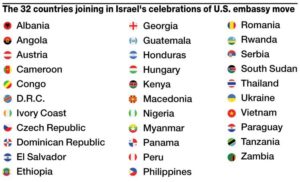
One of the many reasons an average individual is not often interested in international relations is mostly because of the inhumane trade of morality and innocent lives for power among actors in the international system. This is somewhat evident in light of the recent events in Gaza and the West Bank where more than 50 people have died and hundreds injured. More evidently, in the shameful support of some African countries for Israel’s assault on Palestinians by attending the opening ceremony  in Jerusalem. 

The question here is not whether Jerusalem is the eternal capital of Israel or not – which of course is not Africa’s question to answer – the problem is why are African leaders leaving all the problems engulfing their countries behind, and diving into a territory that does not warrant their participation?

How does choosing sides between two warring factions (Israel and Palestine) reduce Africa’s foreign debt? Alternatively, will heaven fall if they join other countries in stressing a diplomatic solution to the dispute over Jerusalem? How does this put food on the tables of millions of poor African families? We have only deep our hands into the blood and chaos in the Middle-East while leaving our own backyard unkept.

Jerusalem is not Africa’s problem to solve, fighting poverty and insecurity on the other hand is a good way to start.

The governments of Angola, Cameroon, Congo Republic, the Democratic Republic of Congo, Ivory Coast, Ethiopia, Kenya, Nigeria, Rwanda, South Sudan, Tanzania and Zambia should be ashamed of themselves. All of whom with millions of people languishing in poverty and insecurity of all categories.  

Albeit, out of these twelve countries, Rwanda, Cameroon and South Sudan had earlier abstained in the December 2017 vote on the same issue while the remaining nine voted against the US for moving the embassy from Tel Aviv to Jerusalem. So, why the sudden change in policy if not to swing the way of power and money?

One thing is however certain, it would be interesting to see how the participatory African countries would deal with a consequential isolation in the United Nations and other international treaties as only 33 out of 192 UN member-states (excluding Israel) attended the ceremony last week.

Whenever Africa is recognized as the next frontier of the global economy, they actually mean millions of small and enormous events working to create an anticipated new beginning. That is why there has never been an urgent need to understand the continent in light of its distinct features like now. Here is the platform you will find unfiltered and frank opinions on Africa with African Political Economy Pundit & ALOD Executive Director, Ibrahim B Anoba.

Read more