

FEE

A Liberty Reading List to Finish Up Your Summer

Summer is the perfect time to settle into a slower pace of life and savor a great book, whether it’s an old favorite that you continue to enjoy or an unfamiliar one with new ideas to ponder. And so before the summer ends, I have a challenge for you: I’m going to share five of my favorite books and essays with you, and I’m hoping you’ll read at least one before the beginning of the semester.

Not only are these fun summer reads, they are classic works that were foundational to my intellectual journey as an economist. They will shape the way you think about society while helping you articulate your beliefs about how to effect human prosperity and liberty across the world.

  1. “I, Pencil” by Leonard Read. This essay changed not only my views about the economy but my classroom teaching as well. It is timeless and action-packed. This short essay is written from the perspective of a pencil about how it came into being. There is so much economic thinking in this little story. It turns out that the ordinary pencil, which we take for granted and is seemingly so simple, is actually quite sophisticated: so much so that no one person, not even the CEO of the pencil company, knows how to make it. It is a story of the coordination of millions of strangers who come together to serve each other. If you haven’t read this essay, put it at the top of your list, and if you have, it’s a great one to read again!
  2. We the Living by Ayn Rand. Can you imagine the atrocities of living under Communist rule? This book takes us there, and it’s a great introduction to Rand if you are new to her work. We the Living remains my favorite Rand novel. It’s not a book about economics per say, but about economic systems and how they are so critical to whether we thrive or perish — both personally and socially.
  3. Economics in One Lesson by Henry Hazlitt. I love this short, pithy book written in 1946 by American journalist Henry Hazlitt because of how easy it is to understand — it’s both accessible and timeless. Hazlitt begins by encouraging us to think like economists by seeing the unseen and forcing us to take the long-term perspective so that we fully account for the costs of our actions. I come back to this book every year and am reminded of the power of the economic way of thinking.
  4. Basic Economics by Thomas Sowell. This book does not disappoint and is loaded with stories and evidence to help elucidate the economic way of thinking. Economist and author Thomas Sowell takes us through the market system of prices, property rights, profits and losses, and the mechanisms for increasing human productivity and prosperity. Using stories and evidence throughout, he helps us see the follies of policies that don’t properly incorporate the fundamental economic realities of the world in which we live. I not only love reading this book time and again, but it makes a great holiday gift as well!
  5. “The Law” by Frederic Bastiat. What if the law becomes a method of theft and plunder instead of an instrument of protection? In this compelling essay, Bastiat helps us see the importance of the rule of law as the foundation of a productive society. He tears down the old notions of political theorists who thought that elected officials could disavow themselves of their self-interest and greed and put on the cloak of the people to serve the common good. Bastiat shows us that the law is a force for good only when political leaders must also submit to it. Otherwise, it is a source of plunder. Originally published in 1850, Bastiat foreshadows the rent-seeking culture and special interests who distort lawmaking today.

Summer is a great time to catch up on the classics – and to reread your favorites with a new perspective. These readings will help you get a jump on the school year and engage in articulate discussion about these issues with your professors and peers.

I hope you find this list to be a helpful starting place in understanding economics and liberty. Which books and essays would make your top 5 list? And if you’ve already read the ones I’ve listed here, why do you think others should read them?

Reprinted from Learn Liberty.


Anne Rathbone Bradley

Dr. Bradley is Vice President of Economic Initiatives at the Institute for Faith, Work and Economics.
Read more

Lawrence Reed: Thoughts on a Free Market

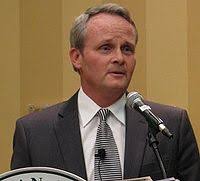
On Tuesday, March 28, Dr. Lawrence W. Reed, president of the Foundation for Economic Education (FEE), was invited by Young Americans for Liberty to speak about free trade and protectionism at the Miller Learning Center. Reed began his talk by explaining some fundamental definitions concerning economics and followed by making arguments in favor of free trade over protectionism, tariffs, and quotas.

In the past year, the question of how the United States should approach international trade has become an increasingly divisive topic, especially among conservatives. Many in the Trump camp favor his retreat from trade deals such as the Trans-Pacific Partnership (TPP) and his push to renegotiate the North American Free-Trade-Agreement (NAFTA). Concurrently, Dr. Reed and many other conservatives believe that Trump’s approach is ultimately regressive.

In his talk on the University of Georgia campus, Dr. Reed puts forth the question that was asked centuries ago by famous author and economist Adam Smith: “What makes a nation wealthy?” Reed’s answer is goods and services. He asserts that more and better choices in the market, not full employment, make a nation truly wealthy. “This is the general argument against protectionism,” says Reed. “Tariffs and quotas do not necessarily improve goods and services.”

Dr. Reed presents three arguments in favor of freer markets, confidently noting that he would say the same to a Detroit auto workers union.


THE LIBERTY ARGUMENT

He refers to his first argument as the “liberty argument.” This one is more principled than pragmatic. It declares that all potential traders have the right to voluntary exchange and that tariffs and quotas handed down by the government obstruct this right. This line of thinking is consistent with many libertarian and conservative positions dealing with individual and property rights.


THE PEACE ARGUMENT

The second argument is dubbed the “peace argument.” Here, Reed references French economist Frédéric Bastiat:

“If goods don’t cross borders, armies will.”

Many wars and conflicts in history have been catalyzed by trade disagreements, and Reed contends that diplomacy is a much preferable and more effective alternative. This argument has a basis among other free market thinkers, as well as national security theorists. Austrian economist Ludwig von Mises touted a similar theory to debunk the Marxist-Leninist contention that capitalism was a catalyst for war. Where Lenin saw the spread of worldwide capitalism as the internationalization of the eternal conflict between labor and capital, Mises posited that the interconnectedness of international trade established strong, mutually-beneficial commercial networks between countries that often served as a countervailing force against calls for martial conflict among trading nations. Ironically, though perhaps not surprisingly, a World Socialist website seemed to confirm Mises’ point back in 1999 when it noted: “The pledge to restart the talks [with China] came after a barrage of lobbying pressure by U.S. companies alarmed over the prospect of losing the billions of dollars in trade and investment opportunities.”


THE ULTIMATE ARGUMENT

Dr. Reed appropriately calls his final argument the “ultimate argument,” in which he takes a more economic look at the effects of protectionism. This argument claims that tariffs and quotas harm consumers by giving them inferior products, fewer options, and higher prices. Other trading parties also have the ability to retaliate to protectionist action. Dr. Reed closes this argument by saying, “You cannot close the door to imports without closing the door on exports.” Dr. Reed’s economic point has historical basis in our hemisphere, where “import substitution,” a much more drastic variant of protectionism, took Argentina from one of the top ten wealthiest countries at the dawn of the 20th century to an economic also-ran today. Chile, on the other hand, drastically reduced tariffs and opened its economy to the world, and has become the model economy for the region.


Dr. Reed is clearly wary of President Trump’s rhetorical tendency towards isolationism, and with good reason. It is imperative to maintain a free market for the nation’s continued prosperity. However, various conservatives believe that some countries have taken advantage of the U.S. due to its recent trade policy and that certain tariffs would put a stop to that. Our unwavering commitment to free trade is little solace to an entrepreneur whose intellectual property has been stolen by a state-owned Chinese manufacturer. To combat this, Joanne Butler, a former staffer of the House Means and Ways Committee, offers some enforcement tools that, she believes, can curb the violation of American property and intellectual rights. Butler references a law nicknamed “Special 301” as a means to punish countries that regularly engage in piracy of software, technology, high-end designer goods and other products by imposing tariffs on imported goods.

Former House Foreign Affairs Committee member Dan Burton claims that Trump was absolutely right to pull the U.S. from the TPP and renegotiate NAFTA. Burton opposes massive multilateral trade agreements that, he argues, “ceded our constitutional authority and economic autonomy to international organizations such as the World Trade Organization.” Burton goes on to stress the danger of the shift in manufacturing from domestic to globalized production has made the nation more vulnerable to international crises.

The key word in most conservative arguments for increased protectionism seems to be “fairness.” Dan Burton is not anti-trade, but he emphasizes the fact that trade only benefits the U.S. if it is free and fair. Finding a compromise in this discussion can be tricky, especially when dealing with a new president whose capacity for compromise is, at the very least, unproven. The United States has the world’s largest economy, and should not subject itself to unfair and harmful deals. However, those who argue for and orchestrate this pullback must not forget the principles of the free market and the benefits of free trade that allowed America to become great in the first place.

Republished from Archconuga.com

— J. Thomas Perdue is a sophomore studying journalism. He is a regular contributor to The Arch Conservative

Read more