
Education

James Madison: The Federalist No. 10 (1787)

James Madison was an American statesman and Founding Father who served as the fourth President of the United States from 1809 to 1817. He is hailed as the “Father of the Constitution” for his pivotal role in drafting and promoting the United States Constitution and the Bill of Rights.

To the People of the State of New York:

AMONG the numerous advantages promised by a well constructed Union, none deserves to be more accurately developed than its tendency to break and control the violence of faction. The friend of popular governments never finds himself so much alarmed for their character and fate, as when he contemplates their propensity to this dangerous vice. He will not fail, therefore, to set a due value on any plan which, without violating the principles to which he is attached, provides a proper cure for it.

The instability, injustice, and confusion introduced into the public councils, have, in truth, been the mortal diseases under which popular governments have everywhere perished; as they continue to be the favorite and fruitful topics from which the adversaries to liberty derive their most specious declamations.

The valuable improvements made by the American constitutions on the popular models, both ancient and modern, cannot certainly be too much admired; but it would be an unwarrantable partiality, to contend that they have as effectually obviated the danger on this side, as was wished and expected. Complaints are everywhere heard from our most considerate and virtuous citizens, equally the friends of public and private faith, and of public and personal liberty, that our governments are too unstable, that the public good is disregarded in the conflicts of rival parties, and that measures are too often decided, not according to the rules of justice and the rights of the minor party, but by the superior force of an interested and overbearing majority.

However anxiously we may wish that these complaints had no foundation, the evidence, of known facts will not permit us to deny that they are in some degree true. It will be found, indeed, on a candid review of our situation, that some of the distresses under which we labor have been erroneously charged on the operation of our governments; but it will be found, at the same time, that other causes will not alone account for many of our heaviest misfortunes; and, particularly, for that prevailing and increasing distrust of public engagements, and alarm for private rights, which are echoed from one end of the continent to the other. These must be chiefly, if not wholly, effects of the unsteadiness and injustice with which a factious spirit has tainted our public administrations.

By a faction, I understand a number of citizens, whether amounting to a majority or a minority of the whole, who are united and actuated by some common impulse of passion, or of interest, adversed to the rights of other citizens, or to the permanent and aggregate interests of the community. There are two methods of curing the mischiefs of faction: the one, by removing its causes; the other, by controlling its effects.

There are again two methods of removing the causes of faction: the one, by destroying the liberty which is essential to its existence; the other, by giving to every citizen the same opinions, the same passions, and the same interests. It could never be more truly said than of the first remedy, that it was worse than the disease. Liberty is to faction what air is to fire, an aliment without which it instantly expires. But it could not be less folly to abolish liberty, which is essential to political life, because it nourishes faction, than it would be to wish the annihilation of air, which is essential to animal life, because it imparts to fire its destructive agency.

The second expedient is as impracticable as the first would be unwise. As long as the reason of man continues fallible, and he is at liberty to exercise it, different opinions will be formed. As long as the connection subsists between his reason and his self-love, his opinions and his passions will have a reciprocal influence on each other; and the former will be objects to which the latter will attach themselves.

The diversity in the faculties of men, from which the rights of property originate, is not less an insuperable obstacle to a uniformity of interests. The protection of these faculties is the first object of government. From the protection of different and unequal faculties of acquiring property, the possession of different degrees and kinds of property immediately results; and from the influence of these on the sentiments and views of the respective proprietors, ensues a division of the society into different interests and parties.
Read more

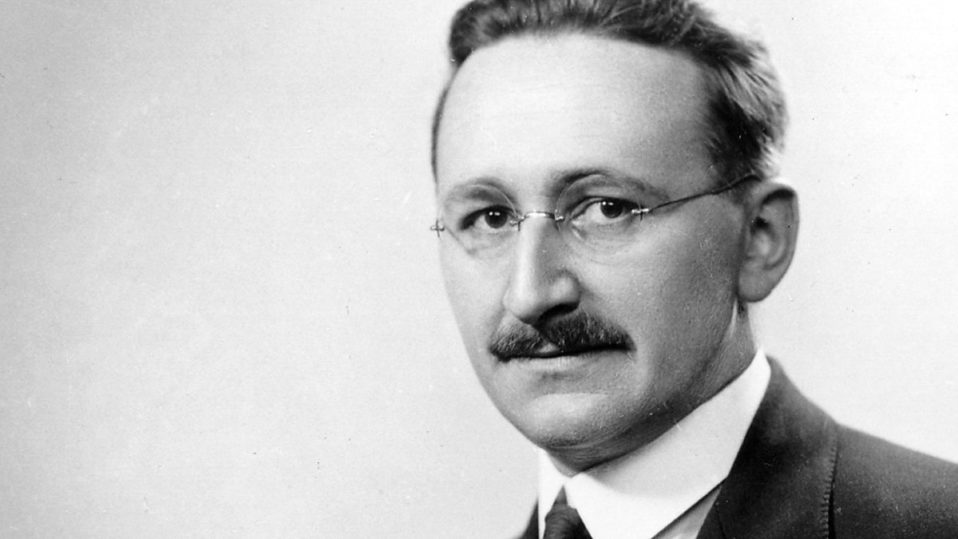
Friedrich Hayek: The Use of Knowledge in Society (II)

It will at once be evident that on this point the position will be different with respect to different kinds of knowledge; and the answer to our question will therefore largely turn on the relative importance of the different kinds of knowledge; those more likely to be at the disposal of particular individuals and those which we should with greater confidence expect to find in the possession of an authority made up of suitably chosen experts.

 If it is today so widely assumed that the latter will be in a better position, this is because one kind of knowledge, namely, scientific knowledge, occupies now so prominent a place in public imagination that we tend to forget that it is not the only kind that is relevant. It may be admitted that, as far as scientific knowledge is concerned, a body of suitably chosen experts may be in the best position to command all the best knowledge available—though this is of course merely shifting the difficulty to the problem of selecting the experts. What I wish to point out is that, even assuming that this problem can be readily solved, it is only a small part of the wider problem.

Today it is almost heresy to suggest that scientific knowledge is not the sum of all knowledge. But a little reflection will show that there is beyond question a body of very important but unorganized knowledge which cannot possibly be called scientific in the sense of knowledge of general rules: the knowledge of the particular circumstances of time and place. It is with respect to this that practically every individual has some advantage over all others because he possesses unique information of which beneficial use might be made, but of which use can be made only if the decisions depending on it are left to him or are made with his active cooperation.

We need to remember only how much we have to learn in any occupation after we have completed our theoretical training, how big a part of our working life we spend learning particular jobs, and how valuable an asset in all walks of life is knowledge of people, of local conditions, and of special circumstances. To know of and put to use a machine not fully employed, or somebody’s skill which could be better utilized, or to be aware of a surplus stock which can be drawn upon during an interruption of supplies, is socially quite as useful as the knowledge of better alternative techniques.

And the shipper who earns his living from using otherwise empty or half-filled journeys of tramp-steamers, or the estate agent whose whole knowledge is almost exclusively one of temporary opportunities, or the arbitrageur who gains from local differences of commodity prices, are all performing eminently useful functions based on special knowledge of circumstances of the fleeting moment not known to others.

It is a curious fact that this sort of knowledge should today be generally regarded with a kind of contempt and that anyone who by such knowledge gains an advantage over somebody better equipped with theoretical or technical knowledge is thought to have acted almost disreputably. To gain an advantage from better knowledge of facilities of communication or transport is sometimes regarded as almost dishonest, although it is quite as important that society make use of the best opportunities in this respect as in using the latest scientific discoveries.

This prejudice has in a considerable measure affected the attitude toward commerce in general compared with that toward production. Even economists who regard themselves as definitely immune to the crude materialist fallacies of the past constantly commit the same mistake where activities directed toward the acquisition of such practical knowledge are concerned—apparently because in their scheme of things all such knowledge is supposed to be “given.” The common idea now seems to be that all such knowledge should as a matter of course be readily at the command of everybody, and the reproach of irrationality leveled against the existing economic order is frequently based on the fact that it is not so available. This view disregards the fact that the method by which such knowledge can be made as widely available as possible is precisely the problem to which we have to find an answer.

If it is fashionable today to minimize the importance of the knowledge of the particular circumstances of time and place, this is closely connected with the smaller importance which is now attached to change as such. Indeed, there are few points on which the assumptions made (usually only implicitly) by the “planners” differ from those of their opponents as much as with regard to the significance and frequency of changes which will make substantial alterations of production plans necessary. Of course, if detailed economic plans could be laid down for fairly long periods in advance and then closely adhered to, so that no further economic decisions of importance would be required, the task of drawing up a comprehensive plan governing all economic activity would be much less formidable.

It is, perhaps, worth stressing that economic problems arise always and only in consequence of change. So long as things continue as before, or at least as they were expected to, there arise no new problems requiring a decision, no need to form a new plan. The belief that changes, or at least day-to-day adjustments, have become less important in modern times implies the contention that economic problems also have become less important. This belief in the decreasing importance of change is, for that reason, usually held by the same people who argue that the importance of economic considerations has been driven into the background by the growing importance of technological knowledge.

Is it true that, with the elaborate apparatus of modern production, economic decisions are required only at long intervals, as when a new factory is to be erected or a new process to be introduced? Is it true that, once a plant has been built, the rest is all more or less mechanical, determined by the character of the plant, and leaving little to be changed in adapting to the ever-changing circumstances of the moment?

The fairly widespread belief in the affirmative is not, as far as I can ascertain, borne out by the practical experience of the businessman. In a competitive industry at any rate—and such an industry alone can serve as a test—the task of keeping cost from rising requires constant struggle, absorbing a great part of the energy of the manager. How easy it is for an inefficient manager to dissipate the differentials on which profitability rests, and that it is possible, with the same technical facilities, to produce with a great variety of costs, are among the commonplaces of business experience which do not seem to be equally familiar in the study of the economist. The very strength of the desire, constantly voiced by producers and engineers, to be allowed to proceed untrammeled by considerations of money costs, is eloquent testimony to the extent to which these factors enter into their daily work.

One reason why economists are increasingly apt to forget about the constant small changes which make up the whole economic picture is probably their growing preoccupation with statistical aggregates, which show a very much greater stability than the movements of the detail. The comparative stability of the aggregates cannot, however, be accounted for—as the statisticians occasionally seem to be inclined to do—by the “law of large numbers” or the mutual compensation of random changes. The number of elements with which we have to deal is not large enough for such accidental forces to produce stability.

The continuous flow of goods and services is maintained by constant deliberate adjustments, by new dispositions made every day in the light of circumstances not known the day before, by B stepping in at once when A fails to deliver. Even the large and highly mechanized plant keeps going largely because of an environment upon which it can draw for all sorts of unexpected needs; tiles for its roof, stationery for its forms, and all the thousand and one kinds of equipment in which it cannot be self-contained and which the plans for the operation of the plant require to be readily available in the market.

This is, perhaps, also the point where I should briefly mention the fact that the sort of knowledge with which I have been concerned is knowledge of the kind which by its nature cannot enter into statistics and therefore cannot be conveyed to any central authority in statistical form. The statistics which such a central authority would have to use would have to be arrived at precisely by abstracting from minor differences between the things, by lumping together, as resources of one kind, items which differ as regards location, quality, and other particulars, in a way which may be very significant for the specific decision. It follows from this that central planning based on statistical information by its nature cannot take direct account of these circumstances of time and place and that the central planner will have to find some way or other in which the decisions depending on them can be left to the “man on the spot.”

Read more

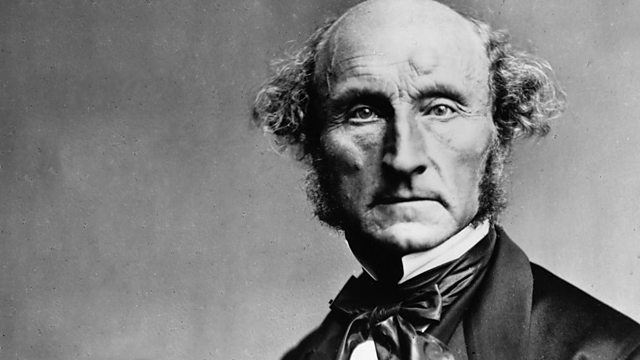
John Stuart Mill: On Liberty (1869)

John Stuart Mill (1806-1873) was the precocious child of the Philosophical Radical and Benthamite James Mill. Taught Greek, Latin, and political economy at an early age, He spent his youth in the company of the Philosophic Radicals, Benthamites and utilitarians who gathered around his father James. J.S. Mill went on to become a journalist, Member of Parliament, and philosopher and is regarded as one of the most significant English classical liberals of the 19th century.

The object of this Essay is to assert one very simple principle, as entitled to govern absolutely the dealings of society with the individual in the way of compulsion and control, whether the means used be physical force in the form of legal penalties, or the moral coercion of public opinion. That principle is, that the sole end for which mankind are warranted, individually or collectively, in interfering with the liberty of action of any of their number, is self-protection. That the only purpose for which power can be rightfully exercised over any member of a civilized community, against his will, is to prevent harm to others.

His own good, either physical or moral, is not a sufficient warrant. He cannot rightfully be compelled to do or forbear because it will be better for him to do so, because it will make him happier, because, in the opinions of others, to do so would be wise, or even right These are good reasons for remonstrating with him, or reasoning with him, or persuading him or entreating him, but not for compelling him, or visiting him with any evil, in case he do other wise.

To justify that, the conduct from which it is desired to deter him must be calculated to produce evil to some one else. The only part of the conduct of any one, for which he is amenable to society, is that which concerns others. In the part which merely concerns himself, his independence is, of right, absolute. Over himself, over his own body and mind, the individual is sovereign… The objections to government interference, when it is not such as to involve infringement of liberty, may be of three kinds.

The first is, when the thing to be done is likely to be better done by individuals than by the government. Speaking generally, there is no one so fit to conduct any business, or to determine how or by whom it shall be conducted, as those who are personally interested in it. This principle condemns the interferences, once so common, of the legislature, or the officers of government, with the ordinary processes of industry. But this part of the subject has been sufficiently enlarged upon by political economists, and is not particularly related to the principles of this Essay.
The second objection is more nearly allied to our subject. In many cases, though individuals may not do the particular thing so well, on the average, as the officers of government, it is nevertheless desirable that it should be done by them, rather than by the government, as a means to their own mental education — a mode of strengthening their active faculties, exercising their judgment, and giving them a familiar knowledge of the subjects with which they are thus left to deal.

This is a principal, though not the sole, recommendation of jury trial (incases not political); of free and popular local and municipal institutions; of the conduct of industrial and philanthropic enterprises by voluntary associations. These are not questions of liberty, and are connected with that subject only by remote tendencies; but they are questions of development. It belongs to a different occasion from the present to dwell on these things as parts of national education; as being, in truth, the peculiar training of a citizen, the practical part of the political education of a free people, taking them out of the narrow circle of personal and family selfishness, and accustoming them to the comprehension of joint interests, the management of joint concerns — habituating them to act from public or semi-public motives, and guide their conduct by aims which unite instead of isolating them from one another.

Without these habitsvand powers, a free constitution can neither be worked nor preserved, as is exemplified by the too often transitory nature of political freedom in countries where it does not rest upon a sufficient basis of local liberties. The management of purely local business by the localities, and of the great enterprises of industry by the union of those who voluntarily supply the pecuniary means, is further recommended by all the advantages which have been set forth in this Essay as belonging to individuality of development, and diversity of modes of action. Government operations tend to be everywhere alike. With individuals and voluntary associations, on the contrary, there are varied experiments, and endless diversity of experience. What the State can usefully do, is to make itself a central depository, and active circulator and diffuser, of the experience resulting from many trials. Its business is to enable each experimentalist to benefit by the experiments of others, instead of tolerating no experiments but its own. 

The third, and most cogent reason for restricting the interference of government, is the great evil of adding unnecessarily to its power. Every function superadded to those already exercised by the government, causes its influence over hopes and fears to be more widely diffused, and converts, more and more, the active and ambitious part of the public into hangers-on of the government, or of some party which aims at becoming the government. If the roads, the railways, the banks, the insurance offices, the great joint-stock companies, the universities, and the public charities, were all of them branches of the government; if, in addition, the municipal corporations and local boards, with all that now devolves on them, became departments of the central administration; if the employés of all these different enterprises were appointed and paid by the government, and looked to the government for every rise in life; not all the freedom of the press and popular constitution of the legislature would make this or any other country free otherwise than in name.

Read more

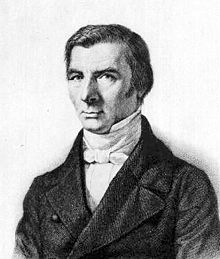
Frederic Bastiat: The Candlemakers’ Petition (Part 2)

There is no needy resin-collector on the heights of his sand dunes, no poor miner in the depths of his black pit, who will not receive higher wages and enjoy increased prosperity.
It needs but a little reflection, gentlemen, to be convinced that there is perhaps not one Frenchman, from the wealthy stockholder of the Anzin Company to the humblest vendor of matches, whose condition would not be improved by the success of our petition.

We anticipate your objections, gentlemen; but there is not a single one of them that you have not picked up from the musty old books of the advocates of free trade. We defy you to utter a word against us that will not instantly rebound against yourselves and the principle that guides your entire policy. Will you tell us that, though we may gain by this protection, France will not gain at all, because the consumer will bear the expense? We have our answer ready:
You no longer have the right to invoke the interests of the consumer. You have sacrificed him whenever you have found his interests opposed to those of the producer. You have done so in order to encourage industry and to increase employment. For the same reason you ought to do so this time too.

Indeed, you yourselves have anticipated this objection. When told that the consumer has a stake in the free entry of iron, coal, sesame, wheat, and textiles, “Yes,” you reply, “but the producer has a stake in their exclusion.” Very well! Surely if consumers have a stake in the admission of natural light, producers have a stake in its interdiction.
“But,” you may still say, “the producer and the consumer are one and the same person. If the manufacturer profits by protection, he will make the farmer prosperous. Contrariwise, if agriculture is prosperous, it will open markets for manufactured goods.” Very well! If you grant us a monopoly over the production of lighting during the day, first of all we shall buy large amounts of tallow, charcoal, oil, resin, wax, alcohol, silver, iron, bronze, and crystal, to supply our industry; and, moreover, we and our numerous suppliers, having become rich, will consume a great deal and spread prosperity into all areas of domestic industry.

Will you say that the light of the sun is a gratuitous gift of Nature, and that to reject such gifts would be to reject wealth itself under the pretext of encouraging the means of acquiring it?

But if you take this position, you strike a mortal blow at your own policy; remember that up to now you have always excluded foreign goods because and in proportion as they approximate gratuitous gifts. You have only half as good a reason for complying with the demands of other monopolists as you have for granting our petition, which is in complete accord with your established policy; and to reject our demands precisely because they are better founded than anyone else’s would be tantamount to accepting the equation: +×=+–; in other words, it would be to heap absurdity upon absurdity.

Labor and Nature collaborate in varying proportions, depending upon the country and the climate, in the production of a commodity. The part that Nature contributes is always free of charge; it is the part contributed by human labor that constitutes value and is paid for.

If an orange from Lisbon sells for half the price of an orange from Paris, it is because the natural heat of the sun, which is, of course, free of charge, does for the former what the latter owes to artificial heating, which necessarily has to be paid for in the market. Thus, when an orange reaches us from Portugal, one can say that it is given to us half free of charge, or, in other words, at half price as compared with those from Paris.

Now, it is precisely on the basis of its being semigratuitous (pardon the word) that you maintain it should be barred. You ask: “How can French labor withstand the competition of foreign labor when the former has to do all the work, whereas the latter has to do only half, the sun taking care of the rest?” But if the fact that a product is half free of charge leads you to exclude it from competition, how can its being totally free of charge induce you to admit it into competition? Either you are not consistent, or you should, after excluding what is half free of charge as harmful to our domestic industry, exclude what is totally gratuitous with all the more reason and with twice the zeal.

To take another example: When a product—coal, iron, wheat, or textiles—comes to us from abroad, and when we can acquire it for less labor than if we produced it ourselves, the difference is a gratuitous gift that is conferred upon us. The size of this gift is proportionate to the extent of this difference. It is a quarter, a half, or three-quarters of the value of the product if the foreigner asks of us only three-quarters, one-half, or one quarter as high a price. It is as complete as it can be when the donor, like the sun in providing us with light, asks nothing from us.

The question, and we pose it formally, is whether what you desire for France is the benefit of consumption free of charge or the alleged advantages of onerous production. Make your choice, but be logical; for as long as you ban, as you do, foreign coal, iron, wheat, and textiles, in proportion as their price approaches zero, how inconsistent it would be to admit the light of the sun, whose price is zero all day long!

Read more

ALOD Alumni Promoting the Idea of Liberty

Jennifer Umeh (Nigeria) Hope for African Girls Initiative – HAGi
Jennifer is an enthusiastic advocate of Girl Child Freedom and Education. She have been organizing campaigns across Nigeria to draw attention to the deplorable state of girl child rights in the country.

Read more

2016 Essay Contest for Undergraduates in Africa

We announced the applications for this year’s Rising Tide Foundation’s essay contest for African Undergraduate students is open.

Read more

Unveiling alodpolicy.org, Our Online Domain

African Liberty Organisation for Development (ALOD), presents to advocates of liberty and the public her new online domain, www.alodpolicy.org. 

Read more

ALOD’S 2016 Liberty & Entrepreneurship Camp Attracts 61 Students Form 18 Nigerian Institutions

The African Liberty Organisation for Development (ALOD) in collaboration with the Language of Liberty Institute (LLI) held a liberty and entrepreneurship camp at the Lagos State Polytechnic, Ikorodu. 

Read more